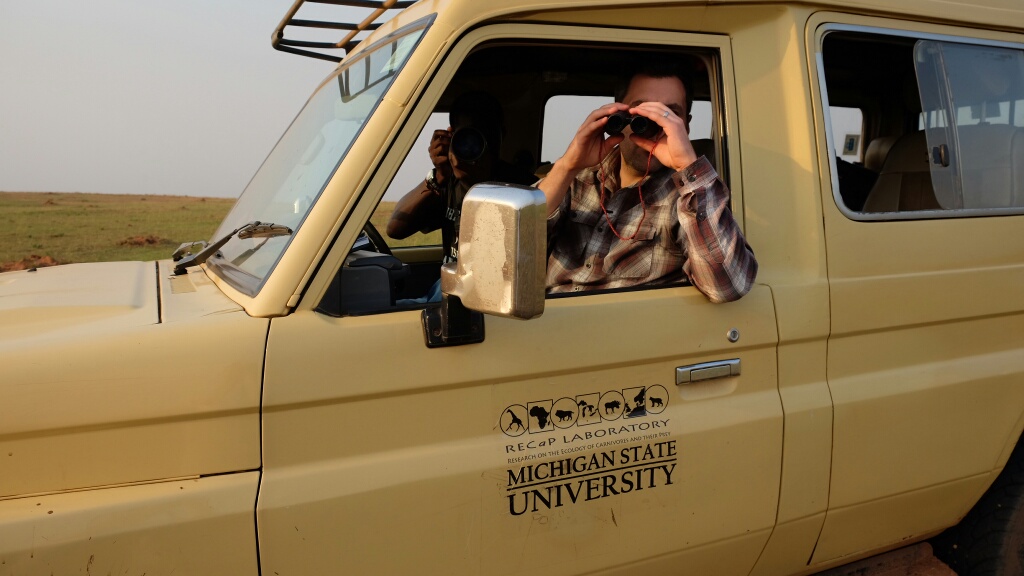
RECaP Laboratory Research on the Ecology of Carnivores and their Prey
  • Home
  • Lab Members
  • Research
  • Publications
  • Snares to Wares
  • Focus on Wildlife
  • LIVEstock Initiative
  • Notes from the Field
  • Lab News
  • Contact Us

My New Field – Kyle Redilla

5/10/2016

0 Comments

Well, it's early May, which is an exciting time for research laboratories in Fisheries and Wildlife (FW) and many other departments here at Michigan State. Field season is here! Most FW graduate students are already in the field or in the midst of making final preparations for that field work. And during such field seasons students collect substantial amounts of data between now and the start of school in late August. These data collection efforts involve hours spent securing research permits, preparing field equipment, and establishing all data collection protocols. Making the transition from classrooms to the field can be challenging, as students have become adapted to hours in office chairs with minds conditioned to final exams and research papers. These responsibilities can be further masked by the sights, smells, and sounds (or really, lack thereof) on our beautiful campus in early summer. Not to mention the Pavlovian deterrence of most graduate students developed from previous hardships experienced during fieldwork.
​

It's debatable whether the actual work in the field or the necessary preparation for field work is more draining. But I think many will agree that no matter how severe a poison ivy rash or how many tsetse fly bites you get, you'd rather be scratching them in the field than when dealing with the prerequisite logistics. Luckily here in RECaP, my fellow students are ahead of the game. Tutilo Mudumba is currently joined by our PI (Bob Montgomery) and new research assistant Sophia Jingo in Murchison Falls National Park, where they are setting things up for his field work focusing on lion conservation, and kicking off the Snares to Wares Initiative . Steve Gray is getting ready to again conquer the hoary frosts of Northern Michigan until and beyond when that frost no longer comes. Last year, Steve made it through a very mentally exhausting field season – I think he’s due for some better fortune this time around. I know Arthur Muneza must be feeling some serious relaxation, as he doesn't have the same load of field work, but has just successfully defended his master's thesis. However, given that he is starting his Ph.D. this January, field work is right around the corner for him. Remington Moll and Waldemar Ortiz have been busy preparing and communicating with personnel at the Cleveland Metroparks, eagerly awaiting another field season in which they will set up even more camera traps throughout the Emerald Necklace this summer. As for me, I couldn't be more excited for my first field season in my new "field" - the RECaP offices.
Picture
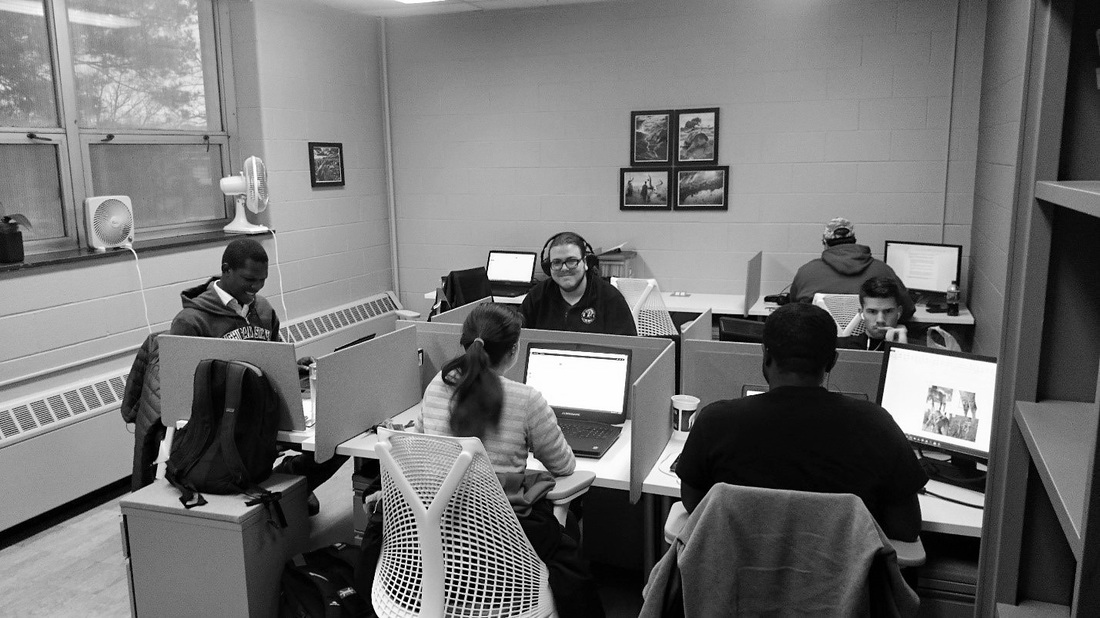
One of the new RECaP offices, picturing lab members who have since transitioned to a life of field work.
Alright, I have been working here since August, and my research as an aspiring quantitative ecologist is generally independent of seasonality (you could say certain aspects are slightly correlated … but then you'd be me, dropping statistical puns – you are forewarned). Nevertheless, it is my first summer since 2011 that will not revolve around data collection in Michigan forests, and I am quite geeked about this transition! For one, the field of quantitative ecology is a relatively new discipline blending principles from computer science, mathematics, statistics, and ecology. Of course, ecologists have relied on the fruits of these disciplines for decades now, but the ubiquity of cheap computing power has led to a revolution that enabled a myriad of new techniques for collecting, manipulating, and analyzing all sorts of data. These fundamental changes in the ways we observe and study ecological systems have resulted in a shortage of ecologists who are technically trained to actually use many of these techniques. There are gaps between the quantitative methods available and what is feasible for ecologists to implement in their research. The application of these techniques for ecological problems requires researchers who have a balance of quantitative technical knowledge as well as familiarity with ecological theory and an appreciation for the idiosyncrasies of ecological data.
​

My work here in RECaP is characterized by two broad roles; that of i) quantitative ecologist and ii) statistician. As a quantitative ecologist I help investigate questions that require sophisticated quantitative methods or custom programing to assess. In this capacity I can apply my skills in a variety of ways, from assisting a colleague with modeling expertise for a component of their overall research project, to pursuing my own projects! In both scenarios, it is often the case that I will work with data that has already been collected. For example, in my current project I am part of a large team interested in exploring the relationship between moose movement and ambient temperature. This general idea is of interest because many have suggested that rising ambient temperatures associated with global climate change threaten the conservation of moose. Along with colleagues at the Norwegian institute for nature Research we are trying to determine whether there is any evidence of heat influencing moose movement, with implications for their survivability.
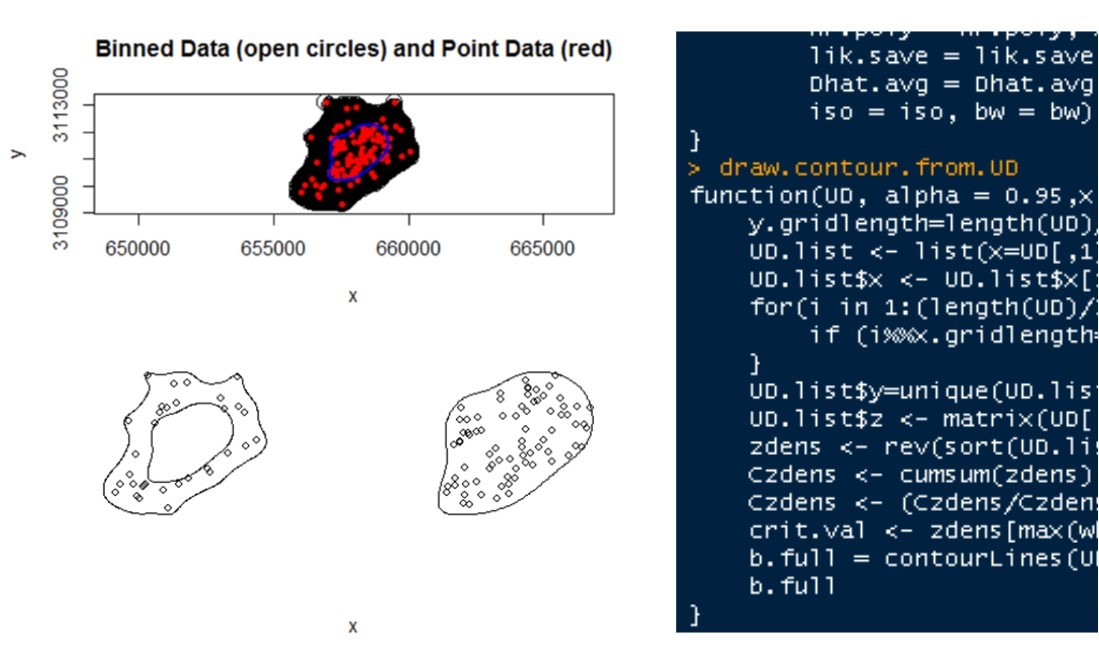
Picture
An example of how I can help with the analysis portion of study. This involved combining source code from two different software packages to analyze the core area utilization of mallards in the Midwest.
Progress in science is a community effort, and when confronted with challenging questions, researchers are often eager to collaborate. In my opinion, this is really one of the most beautiful aspects of the field I’ve entered – data-sharing! This drive to share resources is further intensified by the growing abundance of sophisticated data-collection technologies. From GPS collars that record auxiliary information (like heart rate ) to nationwide sensor networks like the National Ecological Observatory Network ( NEON ), many projects are generating TONS of information to use in models that describe  complex systems. However, there are only so many analyses that can be feasibly performed by a research group in a given amount of time, given methodological limits. In other words, we’re up to our eyeballs in data, and there are many other ways to analyze existing datasets; so many different questions that can be explored! Enter the quantitative ecologist, with the ecological background necessary to explore important questions along with the technical knowledge for selecting and applying the best tools for the job.

The other role I am hoping to play is more akin to the idea of an ecological statistician. As important as furthering ecological theory is the development and testing of the techniques that are used to do so, and there is progress to be me made in expanding our analytical toolboxes to handle such fundamentally different data types and volumes. The age of big-data in ecology is here, and like so many other disciplines, research involving statistical methods in ecology has become highly diversified.
​

To translate progress to practice, innovation in design of new analytical methods also requires innovation in implementation of these methods. Open-source statistical software platforms such as R have become the norm for doing so. This is because they are completely FREE! Free in two senses: free as in it does not cost any money to download and use the software; and free as is anyone can access, manipulate, and redistribute the source code. Thus, many of the contributions I hope to make will involve design and documentation of the actual software tools ecologists can use to analyze data. This idea – that I can create packages to be used by researchers in their own projects – is perhaps what I am most excited about. ​
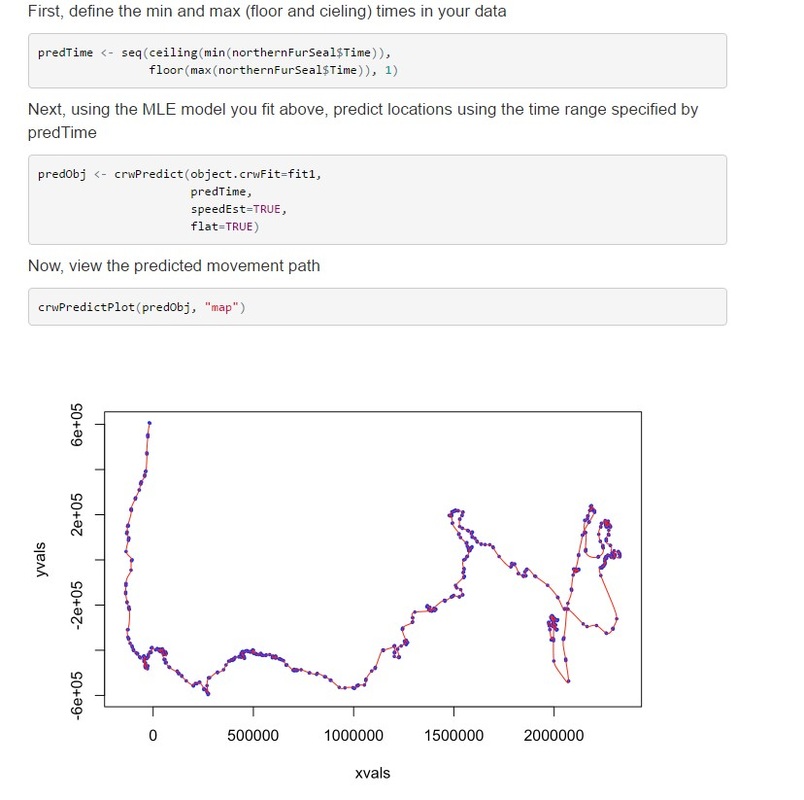
Picture
A crucial component of providing new software for ecologists to use is creation of companion documents to demonstrate its implementation. This is an example of a vignette, or brief demonstration of use, for the R package “crawl” used to model movement paths of telemetry-tracked animals.
Whether it be exploring new questions in applied ecology, modification of some existing method, development of a new method, or creation of a novel software package, my time spent conducting traditional field studies will likely be minimal, at least in the near future. I find this funny, as I didn’t get into ecological research five years ago because I loved the challenge of programming and mathematics. I was just a kid that said, “What? I can actually get paid to conduct research in some of the most beautiful areas of Michigan? Where do I sign?” I was then off to a good start to pursue one of my truest passions: to be part of the global community working to manage and conserve our natural systems despite immense anthropogenic influence. But in discovering my strengths and weaknesses as an undergraduate, I realized I might have my greatest impact if I can use my quantitative skills to make new methodologies accessible to researchers. I have found my home here at RECaP where I can pursue this goal, trading in my outdoor work for an office and a machine. Together (and with the aid of my trusty Dell monitor!), they act as a portal into the vast reaches of cyberspace that harbor research journal and textbook databases, Q&A forums, blogs, software repositories, and virtually all other sources of information needed to achieve my research objectives. i.e., my new field sites.
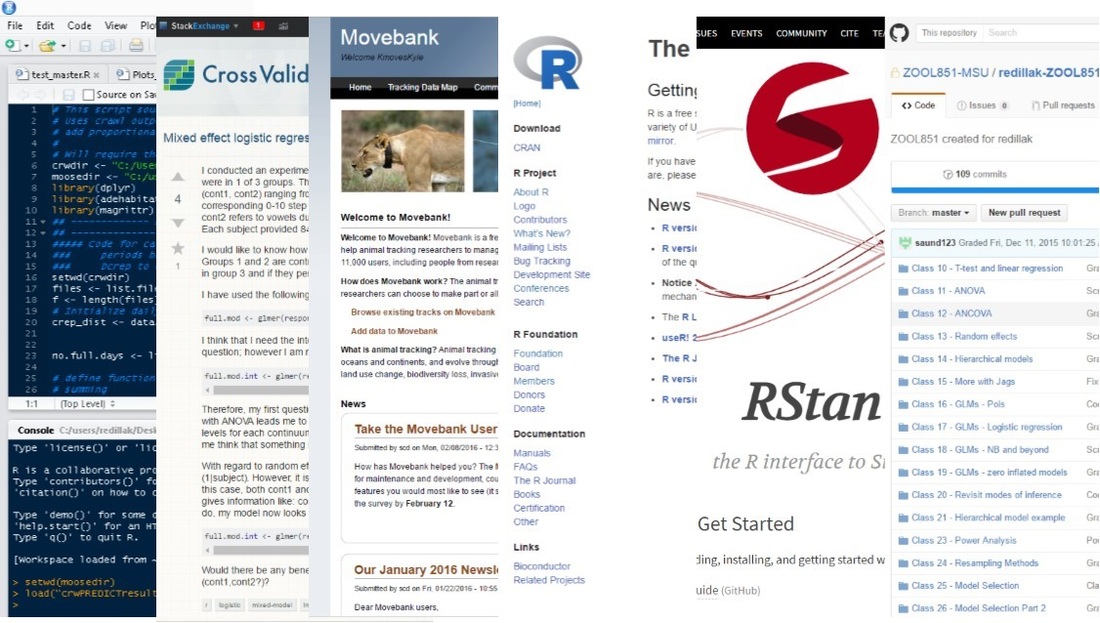
Picture
Some of my “field sites” I’m regularly visiting during a typical day’s work.
0 Comments

The Snare to Wares Initiative – Tutilo Mudumba

2/4/2016

3 Comments

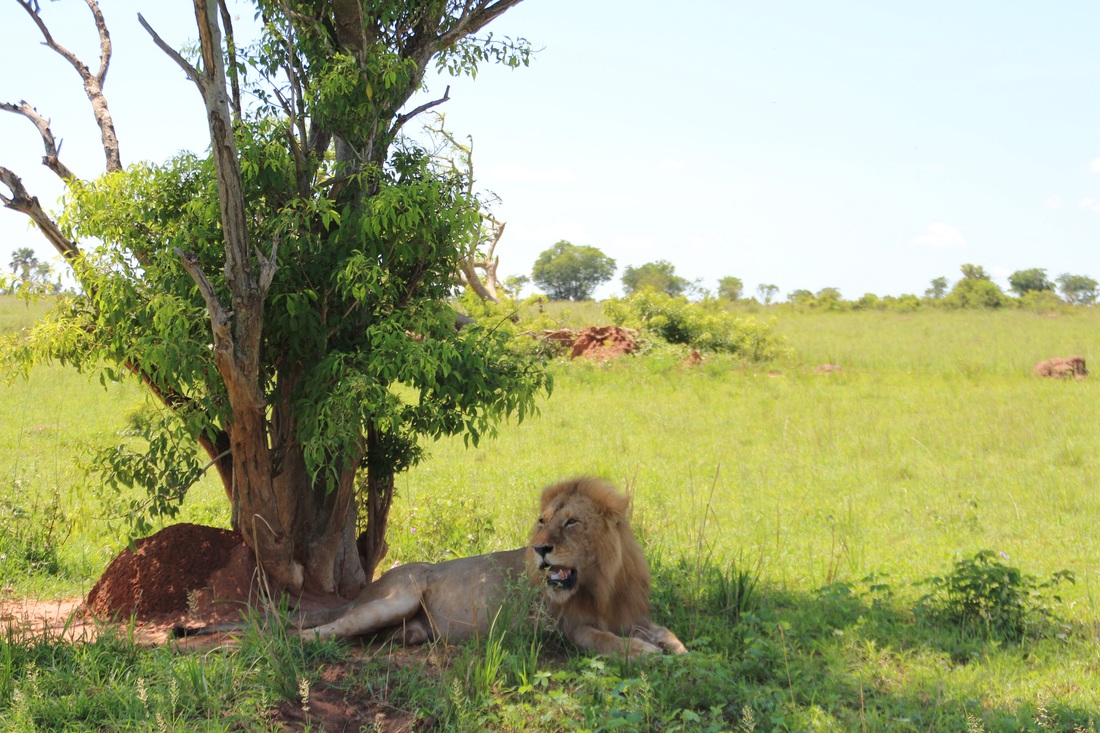
Butcherman, the three-legged former alpha male of the Delta Pride in Murchison Falls National Park (MFNP), and I parted ways at about the same time. I headed for the United States to seek my graduate education in the RECaP Lab at Michigan State University. Butcherman, on the other hand,… well…no one really knows what happened to Butcherman. The only thing that we understand is that he vanished after his alpha male position was taken by the brotherly tandem of Rafael and Ricki.

Since my return to MFNP I have been desperately searching for the old boy. Why have I been consumed by this preoccupation of finding Butcherman? Why have I found this to be an emotional pursuit? These are good questions that I have been pondering as my ability to locate Butcherman has waned. The answer is pretty simple: Butcherman and I came up at about the same time.
Picture
Butcherman had been an alpha for just 7 months, when he lost his lower left leg in a wire snare.
Butcherman is now somewhere in the vicinity of 9-years old (very much an adult in lion years), but when he challenged for the alpha male position in the Delta Pride all those years ago he was better defined as an impressionable young male. Pretty similar to the position that I found myself at that time. I was just a kid trying to realize my dream of becoming a wildlife biologist seeing the amazing MFNP landscape for the first time. My bosses tasked me with following the Delta Pride taking diligent notes on what they did, where they went. Essentially, my responsibility was to describe how Delta Pride made their living. And so, I got to know Butcherman pretty well. Looking back, I realize that Butcherman and I became better acquainted than he and I would have liked.
​
You see, I was part of the first response team that found Butcherman, an alpha for just 7 months at that point, in the snare which claimed his lower left leg. I was part of the team that brought his excruciating agony to an end when we conducted that amputation. I was part of the team that enabled Butcherman to make a fantastic recovery where he somehow managed to rule over the Delta Pride for a further 3 years post-surgery. To put it succinctly: Butcherman would not have been… without the small contribution that I provided. But to be honest with you, Butcherman played much the same role for me. I would not be me without Butcherman.
Picture
Butcherman recovering from the amputation that UWA rangers, veterinarians, and me conducted.
This animal taught me what it was like to be a biologist. He was patient with me as I struggled to keep up with the movements of the Delta Pride. He allowed me to study every aspect of his life and to document every movement, however painful on three limbs, he made. And so searching for this majestic creature, this legendary animal, this three-legged beast born more out of myth than reality has been my fixation.
Picture
Butcherman helped me develop the necessary expertise to feel confident presenting my conservation ideas in front of UWA rangers.
​Do I think we will find Butcherman? Part of me confidently says ‘yes.’ And we intend to continue the search. Sophia Jingo, RECaP research assistant, has agreed to keep up the search for Butcherman as I resume my studies in the states. But a big part of me is coming to the conclusion that Butcherman is most likely lost. How could a three-legged lion hunt? When he was alpha, Butcherman had a harem of females that would conduct the hunts and then vocalize to him so that he could find the kill and maintain his fitness. The only hope for Butcherman is if he was able to convince one of the females to abandon the comfort of the pride. That is exactly what Sophia thinks has happened.
Picture
If Butcherman is anywhere, he is most likely north of the Nile River beyond the range of the Oil Pride.
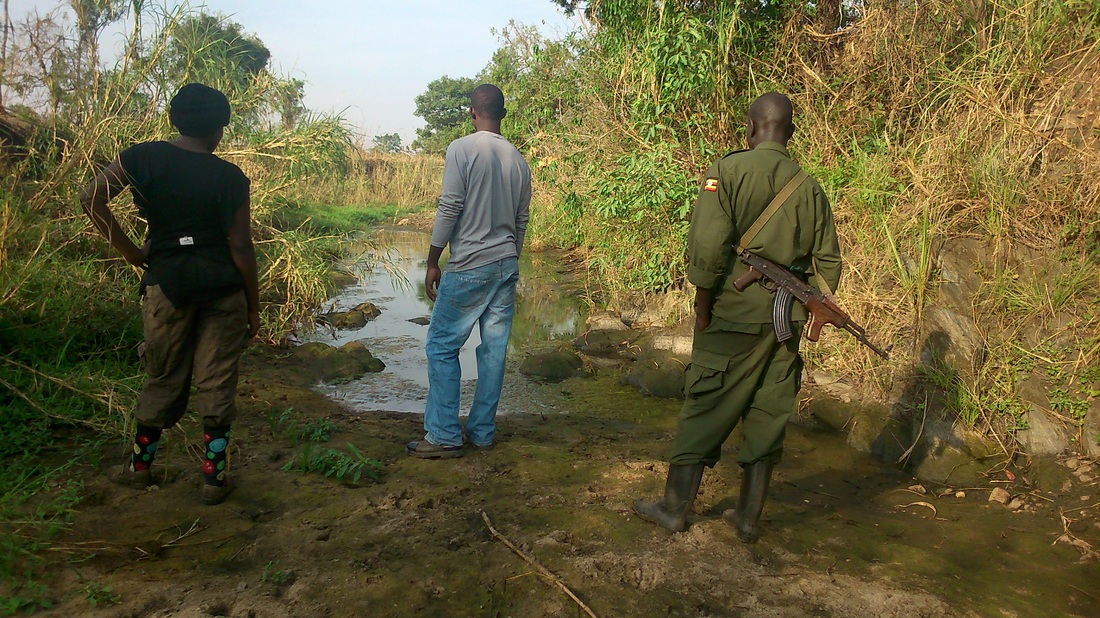
​Sophia thinks that Butcherman has found himself a lady and that the two of them have decided to enjoy retirement in the outskirts of the park north of an area maintained by the Oil Pride of lions. It is there that Butcherman could conceivably avoid detection from defensive lions and inquisitive biologists alike. This region lies north of Paraa and east of the borassus forest. There has not been much activity in the oil region since July last year. The oil region has areas near the Albert Nile river bank that are not occupied by any lion prides. So it is there that Sophia will center her efforts. She will head to the oil pride and then venture north scanning the myriad of animal tracks in the dirt looking for that distinctive three-legged hobble of Butcherman.
Picture
Sophia, myself, and a UWA ranger searching for Butcherman.
Sophia has worked in MFNP forever and is well suited to guide rangers to the most probable search sites. But I am starting to realize that finding Butcherman might be a smokescreen for the fundamental underlying need that we have in MFNP. We must find a way to reduce the devastating and indiscriminate effects of snaring on the wildlife in this landscape. During his reign Butcherman stood as a symbol of that need. Biologists at conferences in comfortable hotels used to say things like, “Did you hear that there is an alpha male in Murchison with three legs! In what place could there be a disabled alpha male lion?” Butcherman was an anomaly, a miracle. Maybe that is also why I need to find him. Because I was others to share that disbelief and be motivated to make a difference by supporting anti-snaring initiatives. But hasn’t Butcherman, if he is still with us, deserved the right to decide for himself if he wants to be visible? Maybe he doesn’t want to be found? Maybe he would prefer to live the remainder of his life as a recluse. Who couldn’t relate to that, given what he has been through? And if that is the case, then I will cheer him on. But regardless, I will always be Butcherman’s champion.

At RECaP we are officially launching our “Snares to Wares” initiative. For the past 7 years I have been working with Lost Boys, those individuals recruited into the poaching trade at very impressionable ages, to find alternative ways to make a living. I have been working to convert these boys from Lost Boys to Crafts Boys centered in the village of Pakwatch. Prioritizing the targeted removal of snares from MFNP via the most cutting-edge science, we supply these craftsmakers with disused wire snare which they capably convert to wares for sale in the market. We are launching this initiative with brand new spirit. The UWA rangers and other senior staff as well as the local hoteliers are ready to participate in this effort to get snares our of MFNP region for good.

This trip has also awakened in me the need to have a long-term and uninterrupted lion monitoring project in the MFNP so as to quickly determine threats to lions and devise mitigation measures. How else can we determine whether our Snares to Wares initiative is being successful? The lost boys of Pakwach mentioned of need to establish a steady market for their wares. We need to get these wire sculptures of lions, giraffes, and elephants in front of people who would like to buy them. Without a market for the wares, we will have failed to complete the circle in the conversion of a deadly snare into art. In this way art may be imitating life, but life is dependent upon art. Also, the initiative would then provide alternative income to the reformed boys, giving value to the conservation of wildlife via wire snare removal, and reducing the likelihood that these wires would be used to capture wildlife.
​
I return to East Lansing to share with the rest of Spartan Nation the challenges of wildlife conservation in this iconic African national park. Spartans Will! Snaring is but one of the challenges that Spartans are best suited to confront. I am therefore confident that my next trip to Uganda (starting in May of this year) will involve the application of practical solutions that will enable me to not only tell my children bed time stories of Butcherman, but to show them what Butcherman’s sons, daughters, and grandchildren are now getting up to in Murchison Falls National Park: my own backyard.
Picture
I remain confident that the old boy is enjoying his retirement deep in the heart of Murchison Falls National Park.
3 Comments

Operation Twiga: The bigger Picture - Arthur Muneza

2/1/2016

2 Comments

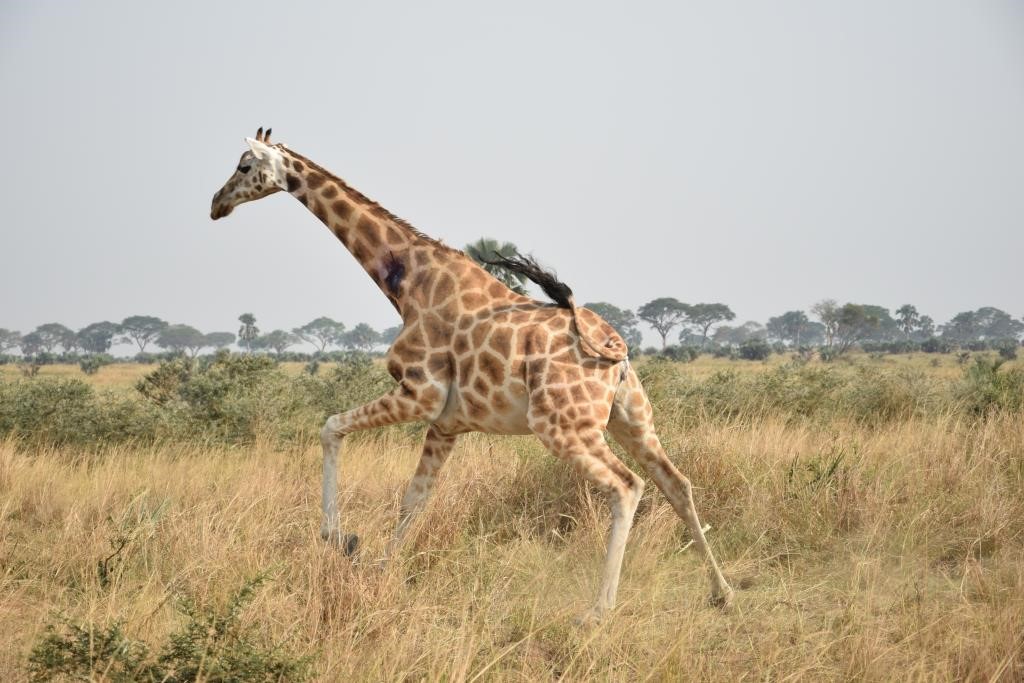
The 2016 chapter of Operation Twiga is coming to a close and what an honor it has been for me to learn from professionals committed to securing the future of an endangered population of giraffes in Murchison Falls National Park (MFNP), Uganda. During the past two weeks, I have worked with veterinarians, rangers, and ecologists from across the world, who have given everything that they have for giraffe conservation. They have expended every ounce of energy in chasing down, roping, monitoring, loading, and translocating giraffes to a new and hopefully better home. Operation Twiga has had its ups and downs, which is part of the emotional roller coaster that seems to accompany every field season. For instance, the story of Melman and his successful translocation was a high point; a very fruitful experience for everyone involved in Operation Twiga. Not every capture was as successful. For instance, last week we captured an adult female giraffe. While we were collecting data on her, one of the vets noticed that she was lactating. This irrefutably identified that this female had recently given birth and was caring for a dependent calf. The vets advised to free her so that she could attend to her calf. Before release, we also noticed that the giraffe was suffering from a skin disease on her neck. We applied an antiseptic spray on the lesion in the hopes that the treatment would help her heal. Then we freed her so that she could be reconnected with her doting calf. We all know just how difficult it is to capture an adult giraffe and translocate the animal to another region. Every part of the journey is one that is associated with anxiety and stress. We care for these animals. We want their population to expand. We want them to be successful. Looking around into the eyes of my colleagues I saw no disappointment at the fact that we had to release this female. Instead, I saw satisfaction. We had not realized that the female had a calf when we captured her. But we would be sure that the female and her offspring were not separated for one minute longer than that had to be. Every member of Operation Twiga has shared one unifying mission: to devote their energies to helping these precious animals. And every animal counts. With just 1,250 Rothschild’s giraffes in MFNP, the conservation of one life matters tremendously.
Picture
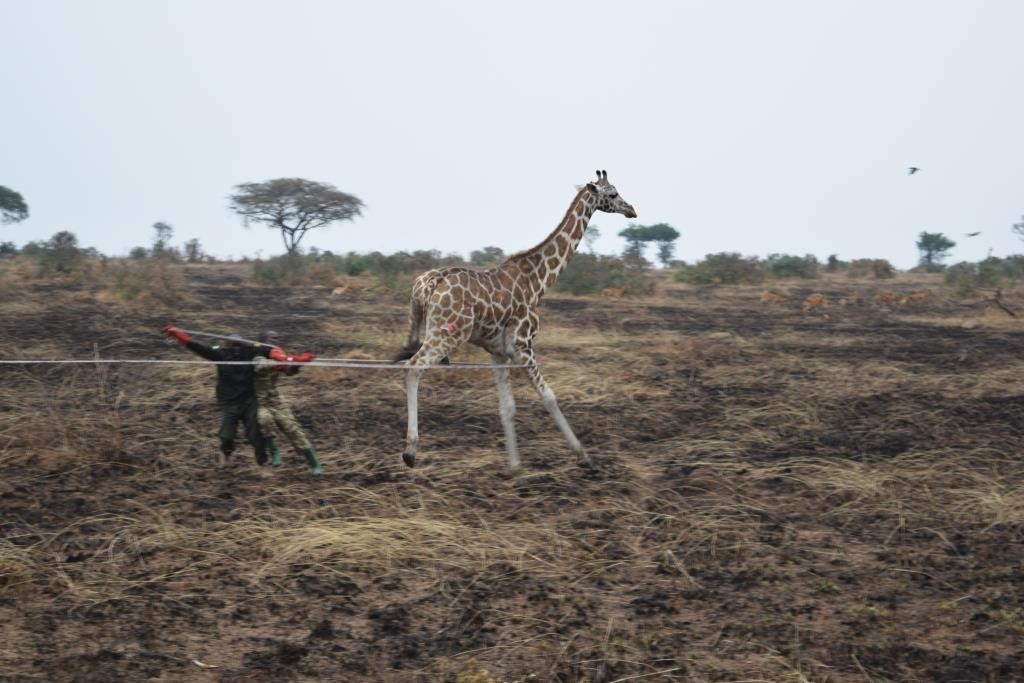
The female giraffe running off in search of her calf. Note the purple stain on the neck, which is an antiseptic to control the spread of microorganisms on the GSD lesion.
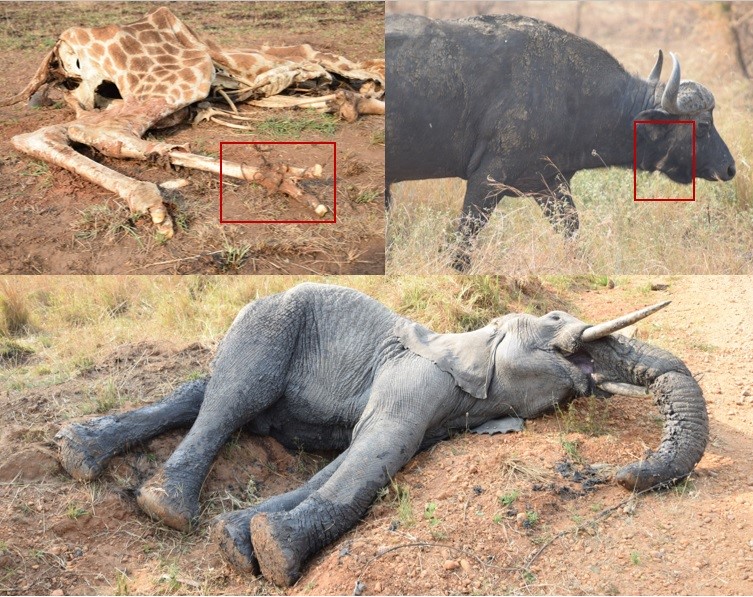
So why is this population of giraffes having a difficult time expanding? There are a number of reasons, but snaring is a major contributor to the decline of giraffes and other wildlife in MFNP. Earlier in the day, we came across two animals that had been victims of snaring. The first one was a giraffe. We found only the remains of this animal, with a snare around its hind leg sealing its fate. The second animal was a male buffalo who had somehow managed to free itself from a snare around its head, as evidenced by a large scar on its neck. We were all left to wonder how the animal could have survived a snare around its neck. There are several human settlements around MFNP and poachers use snares mainly for bushmeat to capture animals such as kob, hartebeests, and oribis. However, snares are indiscriminate and lead to severe injuries in larger animals as evidenced by the case of Butcherman , the famous lion that Tutilo, my colleague at RECaP, has been tracking. In most cases, snares lead to the death of the trapped animals, but in so many of these cases, death is neither swift nor immediate. Snares are particularly problematic for elephants, because the trunk is almost invariably the part of the animal that is caught. Even if an elephant could survive a snare, to have a damaged trunk is a death sentence. The bottom of an elephant’s trunk is an extremely dexterous area (essentially the lips of the animal) where food items can be manipulated with great care and brought into the mouth. It is almost impossible to sustain oneself without an intact trunk. Not only is the trunk crucial for breathing, feeding and drinking, it also plays important roles in cleaning and cooling down the animal, and also in self-defense. Today, Uganda Wildlife Authority (UWA) received a tip that an elephant was caught in a snare and they used all of their efforts to locate the animal. Unfortunately, they did not find the elephant in time. When arriving on the scene we saw a horrific sight. A horribly-maimed and emaciated elephant takes one’s breath away. It is hard to process what you are seeing. How could a giant of the animal world be reduced to this by an indiscriminant snare? Uganda Wildlife Authority buried the elephant in an undisclosed location. It was truly a sad day for everyone involved in the search and even though not every animal can be saved, losing even one is very painful.
Picture
Snares, usually meant for smaller animals, end up trapping larger animals and either injure them or kill them as illustrated in these photos above.
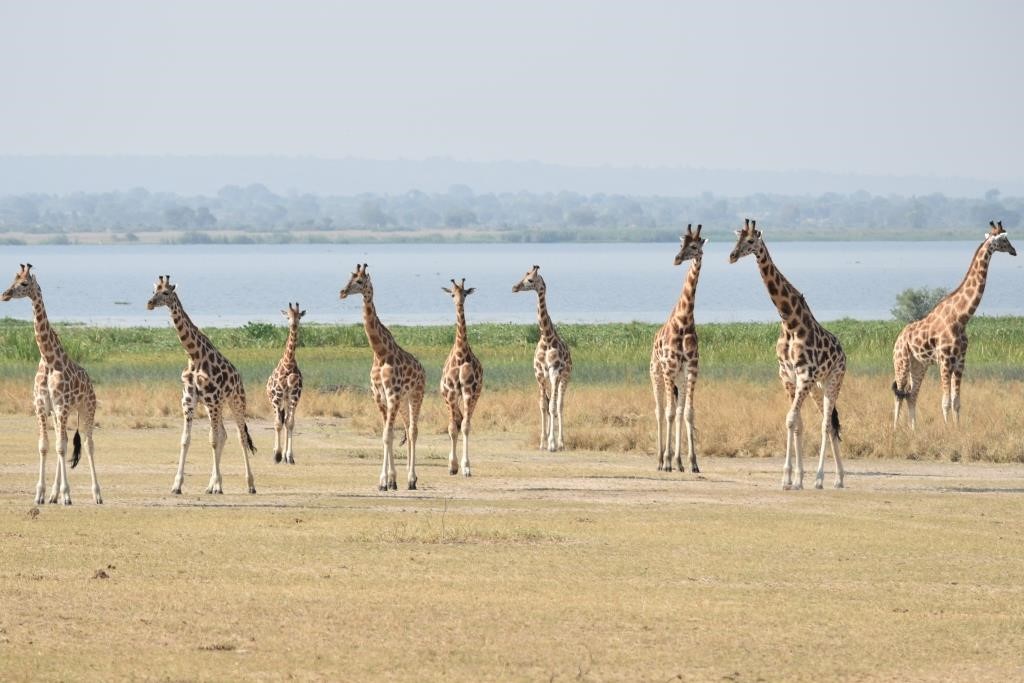
​Encountering such animals cemented the importance, in my mind, of Operation Twiga. The giraffe population in the northern sector of MFNP is the largest wild-living population of Rothschild’s giraffe. The southern bank of MFNP, across the River Nile, is larger than the northern sector and in this region, where the giraffes are further away from sources of human disturbance, these animals have a great opportunity to be successful. In the area where we translocated the giraffes, the vegetation is dense with fewer predators. It is our hope that with a series of subsequent future translocations, the giraffe population in the south will steadily grow. Having giraffes in the southern bank of MFNP will also increase biodiversity in the area and boost the tourism industry. Most of the tourism activities are concentrated in the northern area of the park and more tourism ventures in the southern bank will increase revenue for UWA, benefiting both the people in the area and the giraffe population. Now, the next step is to monitor Melman and the other members of the new southern population. The monitoring will be carried out by UWA and we hope that the population will grow to ensure that the Rothschild’s giraffe will persist for generations to come.
Picture
A herd of male Rothschild’s giraffe in the northern bank of MFNP. Their southern counterparts will help increase the population in the south.
2 Comments

Glimpsing the Coyote: Camera-traps Reveal the Secret Lives of Urban Carnivores - Remington Moll

2/1/2016

0 Comments

There is a mysterious allure to nature. There is the sense that things are hidden, layered. You see a tree, you call it by its common name, “maple”. You don’t see the seed it once was, smaller than a penny, or the gust of wind that brought that seed to just the right place on the ground, a place with an ideal mixture of sun, water, soil acidity and temperature – the delicate conditions that enabled the inconsequential seed to become an 8,000 pound giant, towering over you with mighty arms spread to the sky, now a bastion for birds and a source of colorful inspiration for humans each autumn. The tree exemplifies nature’s hidden layers: we tend to view things as they appear, but a simple poke at the surface reveals a new world underneath the nature in front of our perceptions.

As an ecological researcher, I like to poke at the surface of things. I look for the rabbit holes – both real and metaphorical – that lead into the invisible infrastructure that undergirds nature. Once there, I ask questions: Why does the animal dig out a den here and not there? What do the communities of critters do in the dark of night? How do ecosystems change as winter snow gives way to spring sunshine? Investigating these questions reveals astonishing beauty, and answering them enables us to conserve our natural resources so that all creatures, humans and wildlife alike, can flourish.

To this end, I study the secret lives of carnivores. A city-dweller my whole life, I am fascinated by those carnivores that make a living among us, carving out a niche between the humans going about their daily business: raccoons and skunks and coyotes and foxes and, yes, the occasional bobcat. Despite sharing our cities with them, we know precious little about these species. The central theme of my PhD dissertation research in the RECaP Laboratory is to describe and predict the factors associated with the decision-making of these elusive urban carnivores.

But there is a problem: urban carnivores are among the most hidden of all nature’s beasts. They make their living on being shy and sly and cunning. So how can we learn about them?
​
Enter technology. I am part of a wonderful team of collaborators that relies on the latest cutting-edge technologies to peer into the layered world of carnivores. We at RECaP work together with the Cleveland Metroparks in Cleveland, Ohio, and one of our go-to technologies for studying urban wildlife is the camera-trap.
Picture
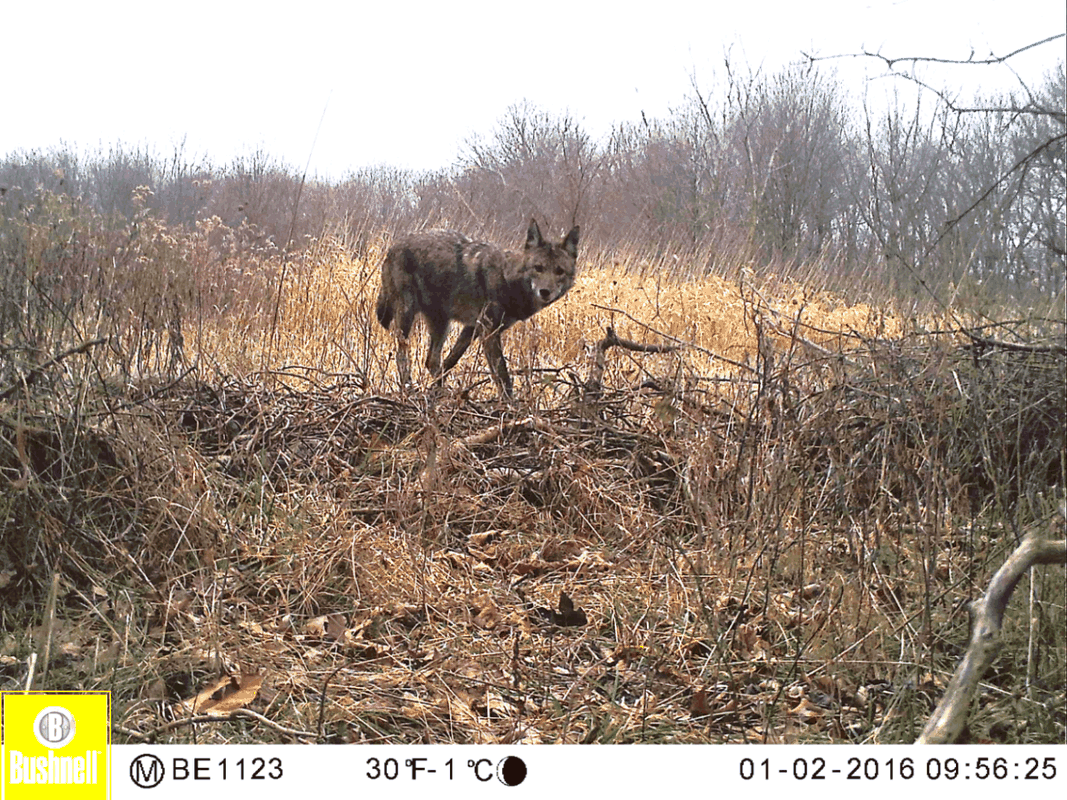
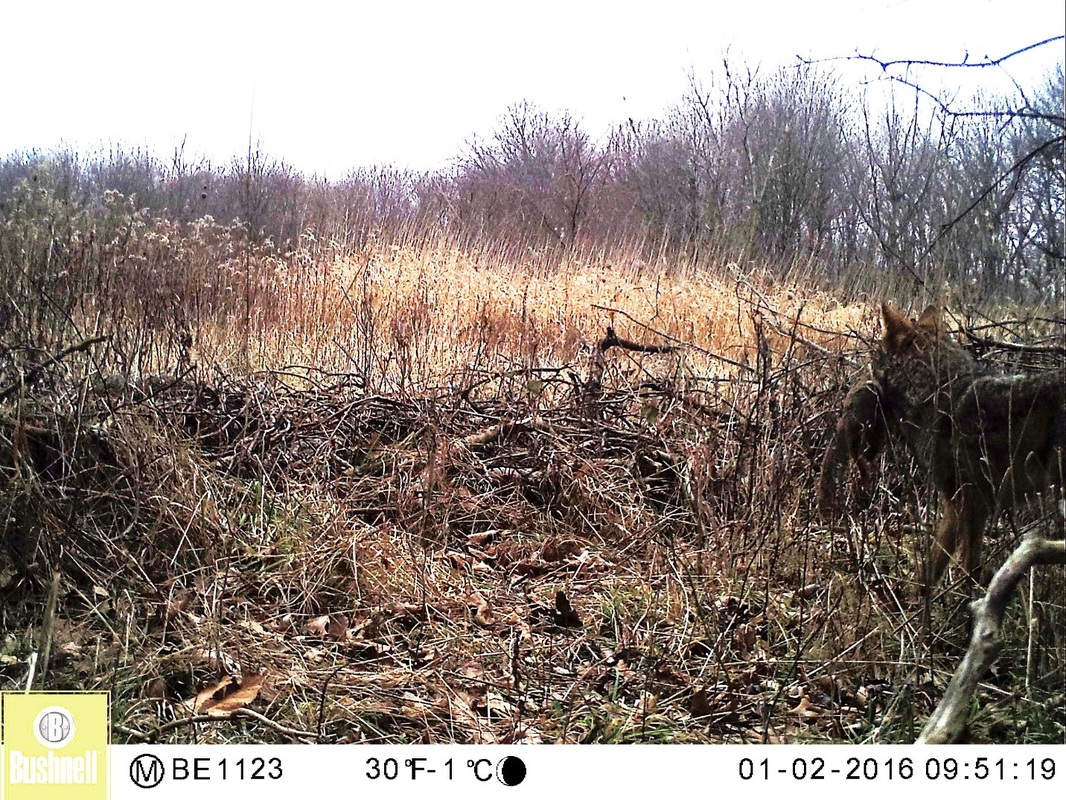
The coyote, a shy and secretive urban carnivore, as caught by one of our camera-traps in the Cleveland Metroparks.
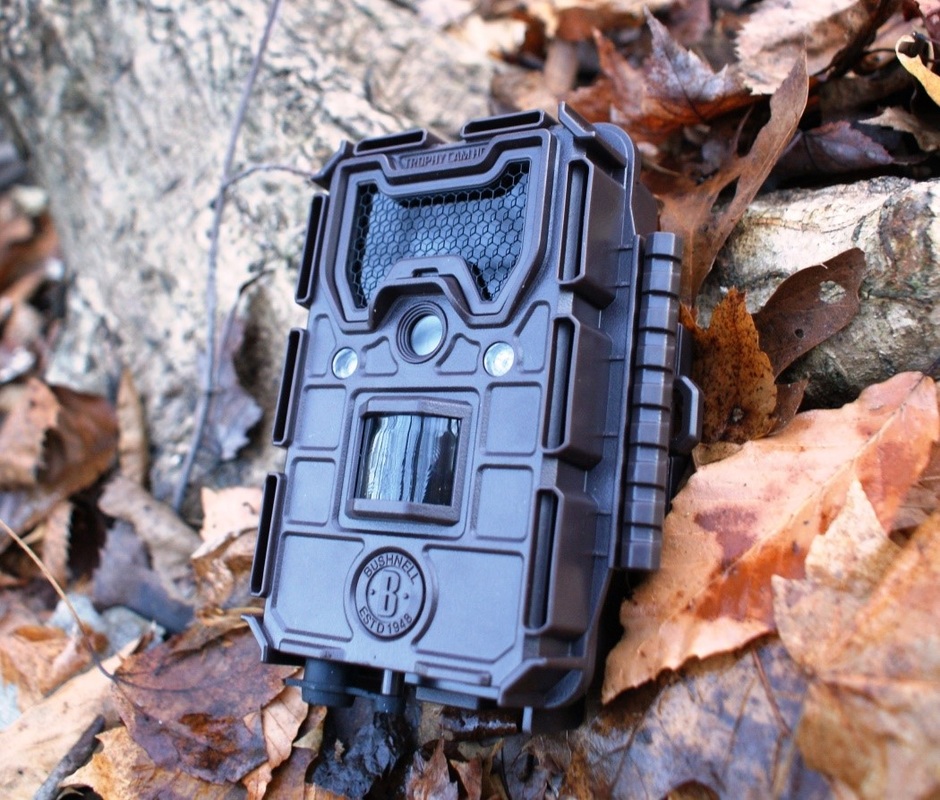
The camera-trap looks rugged on the outside, but on the inside contains a constellation of delicate computer connections. It is delightfully sensitive – built specifically to detect our furtive wildlife friends. Camera traps sense changes in heat and movement from over 100 feet away. When something is detected, the camera snaps a picture in a mere tenth of a second. Even during a moonless winter night, our camera-traps document the secret lives of animals with brilliant clarity thanks to an array of infrared LEDs –  the camera gets a crisp picture and the animals are not bothered by the infrared flash.
Picture
Our camera-trap, the Bushnell Aggressor. Fully equipped with a 14 megapixel camera that records pictures and videos, all triggered by a motion- and heat-detecting sensor.
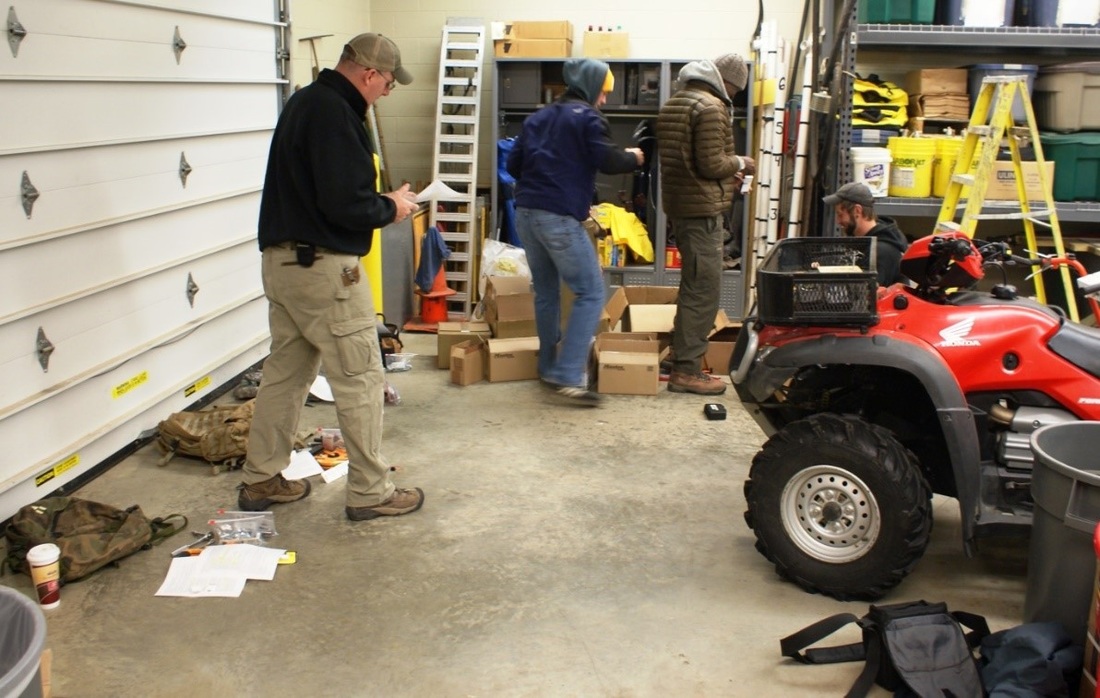
​This morning, our research team is heading out into the field to place three dozen camera-traps throughout the expansive Cleveland Metroparks system, which covers a massive 23,000 acres of urbanity. We gather at 7:00am in a decidedly unnatural place: a storage garage cram-packed full of field equipment. Cleveland Metroparks Wildlife Ecologist Jon Cepek provides us with instructions: “Alright, each team has an equipment set all ready to go – GPS units, datasheets, a cordless drill, bolts, an iPad, cablelocks, and, of course, cameras. Double-check everything and get geared up.” We assemble into our two-person teams, grab our equipment and load into trucks. The iPad, another crucial piece of technology, directs us to the locations throughout the Metroparks where we will place cameras in the landscape.
Picture
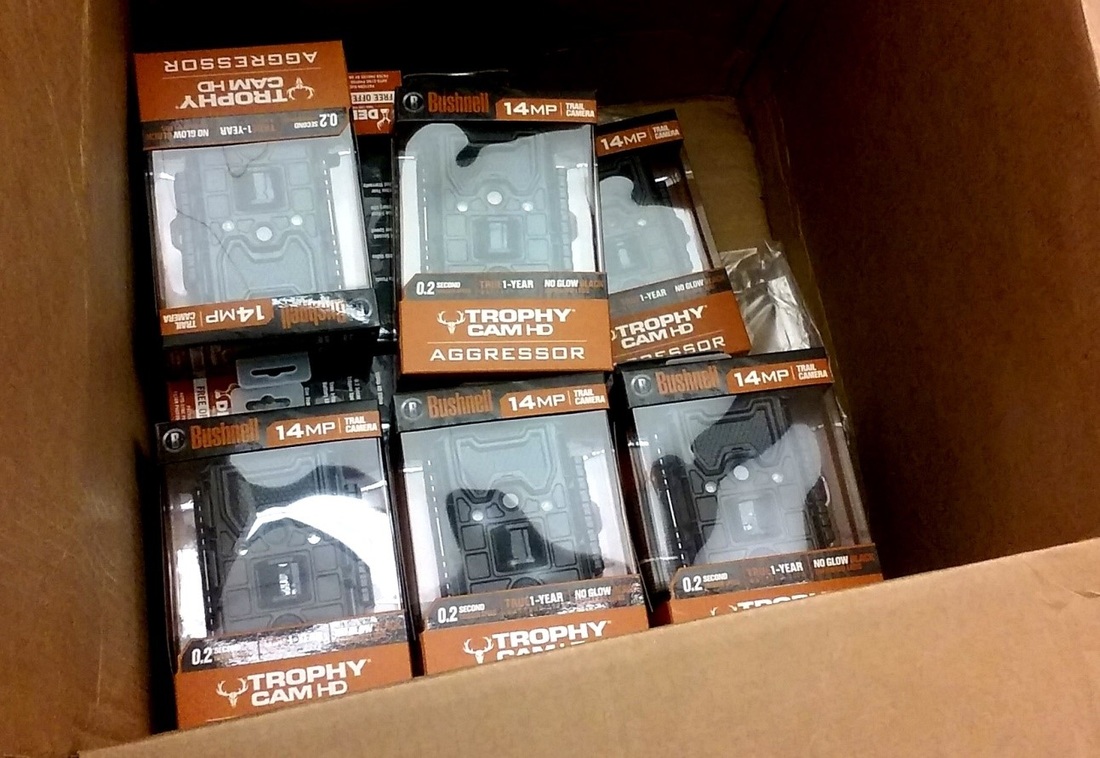
Our camera-traps ready to head to the field.
Picture
Some members of our awesome research crew. L-R: Cleveland Metroparks Wildlife Ecologist Jon Cepek, RECaP graduate students Kyle Redilla and Tutilo Mudumba, and Metroparks Field Technician Ben Piazza.
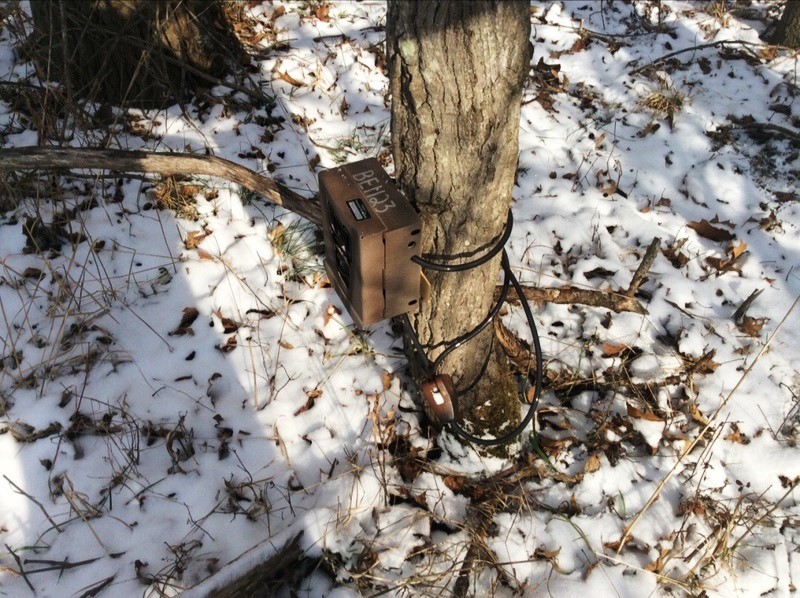
We head out. The next few hours are a blur of excitement. Cameras out of the box. Settings checked and re-checked (there are lots of them: time, date, shutter speed, flash intensity, megapixels, GPS coordinates). Cameras and SD storage cards labeled. Notes taken. Gear into backpacks. In and out of the truck. Navigating to research sites. Troubleshooting unanticipated situations (we have to climb up that ?). Sites found. More checking. More notes taken. Finally, at each site, once we become satisfied with our work we leave our trusty camera-trap to keep watch over nature in our absence: sentinels out in the urban wild that will give us a glimpse into what that coyote is doing, where she is going and why she might be going there.
Picture
Finished product: this is “BE123”, a camera-trap established in the Bedford Reservation all ready to record the secret lives of urban carnivores.
So what does our camera-trap have to say about that beautiful coyote with dark eyes at the top of this blog post? What was she up to? It seems she was looking for dinner. On this occasion, our camera-trap network reveals her success. Tonight she will dine on a squirrel that she carries in her mouth, abating her hunger for at least one more winter night. Perhaps she will take it back to a den, eat it alone under a starry sky. Perhaps she will gobble it down while on the move, looking for a mate in this January breeding season. We will likely never be able to peel back all the layers of nature or know the full stories of these wonderful urban creatures. But, what a view we can get! We peer into the window of their world through the lens of our camera-traps. Some questions we answer, and a multitude of others emerge. With modern science, we will stitch together the stories of wildlife using not only camera traps, but the other technological innovations that we possess in RECaP. I, for one, feel privileged to take these glimpses, and I am filled with anticipation to see the other wonders our camera-traps will reveal over the course of this fascinating research project.
Picture
A coyote in the Bedford Reservation in the Cleveland Metroparks passes by our camera-trap with dinner in her mouth.
0 Comments

Operation Twiga: The Story of Melman - Arthur Muneza

1/25/2016

2 Comments

Giraffes are sometimes referred to as the ‘gentle giants of the African Savannah’. They are well known for their graceful walk and peaceful demeanor. However, as I have learned over the first few days that I have been assisting in the translocation of 22 giraffes across in Murchison Falls National Park (MFNP), giraffes are extremely powerful and strong-willed animals, while simultaneously sensitive and fragile. When planning to capture and translocate a giraffe, every second during the capture process counts and the veterinaries and the recording teams need to work very fast to collect their data so as to get the giraffe back on its feet as quickly as possible and comfortable in its’ new surroundings. As one could imagine, it is a very foreign experience for a giraffe to be restrained and animals are prone to agitation and frustration powerfully kicking out. Thus, as a scientist you have to be aware of your surroundings. Of course, animal behavior is highly variable and some animals respond differently to others. As an example, yesterday we darted a young male giraffe in the morning and during the capture, he did not kick out even once. While on the ground and blindfolded, he used his prehensile tongue to grab a few blades of grass and ate while we were busy collecting data on him. Dr. Liza Dadone, a veterinary from Cheyenne Mountain Zoo who was assisting the Uganda Wildlife Authority (UWA) vets, confirmed that his vital signs were the best of any giraffe we have captured to date. Further, this giraffe was also the easiest to offload from the cart once we arrived at the boma. To recover from the stress of capture, we allow the giraffes to rest for two days in a boma before translocation to the southern part of MFNP. This male walked straight into the boma, joined the other giraffes, and started feeding. He seemed social, comfortable, content – as if he was accustomed to the experience. That was the point at which Dr. Julian Fennessy of Giraffe Conservation Foundation (GCF) recognized the giraffe. Last year, Julian was studying giraffe skin disease in MFNP and discovered a very remarkable looking giraffe. The young male had an oddly protruding jaw with an asymmetrical structure that might indicate a healed wound or a genetic abnormality. Malady or not, one thing was clear: this was a very cute and charismatic male that bore a striking resemblance to Melman, the giraffe from the Madagascar films voiced by David Schiwmmer. Among a population of giraffe in MFNP that hover right around 1,000 what are the odds that UWA and GCF would capture Melman! And yet here he was walking about the boma making friends with the other giraffes and talking to them about his concerns of hypertension and whether or not giraffes can contract lupus.
Picture
Melman inside the boma on the day of his capture.
Because of his distinctive looks, Melman became an instant favorite of everyone in camp. Identifying individual giraffes is usually difficult and requires one to learn spot pattern recognition since each giraffe has a unique coat. However, Melman could readily be identified from a distance. Melman became the talk of all of the researchers and everyone was excited that he was part of the first cohort of giraffes to be successfully translocated to the southern part of MFNP.
​
The day of the transfer dawned clear and bright, but tension was in the air. We were all a bit nervous and hopeful that Melman and the other giraffes would make the trip without incident. Fortunately, luck shined upon us. All giraffes were easily located into the transfer truck. The journey from there would be arduous. It would take 30 km to get to the ferry and then an additional 40 km from the ferry to reach the release site. Melman was by far the most curious giraffe of the group. He walked a circuit in the truck trying to see every part of MFNP from an unprecedented angle, towering above the savannah in a slow moving truck. I couldn’t help but notice that Melman annoyed the other giraffes with his eagerness. He just seemed so keen to make the most out of his experience. It was great to see his curiosity but we worried all the while as 24 giraffe legs in one cart can easily get tangled up causing one or the other of them to fall down. This did happen at one point as a giraffe stumbled and fell. The truck immediately stopped to check on the condition of the giraffe. The stillness allowed the animal to recover its position without injury. No one was certain whether Melman was involved in the fall in any way, but we did notice that he was the first to check in with the fallen giraffe. Perhaps he was apologizing. If you have watched Madagascar, you can imagine what an apology of this type would have sounded like.
Picture
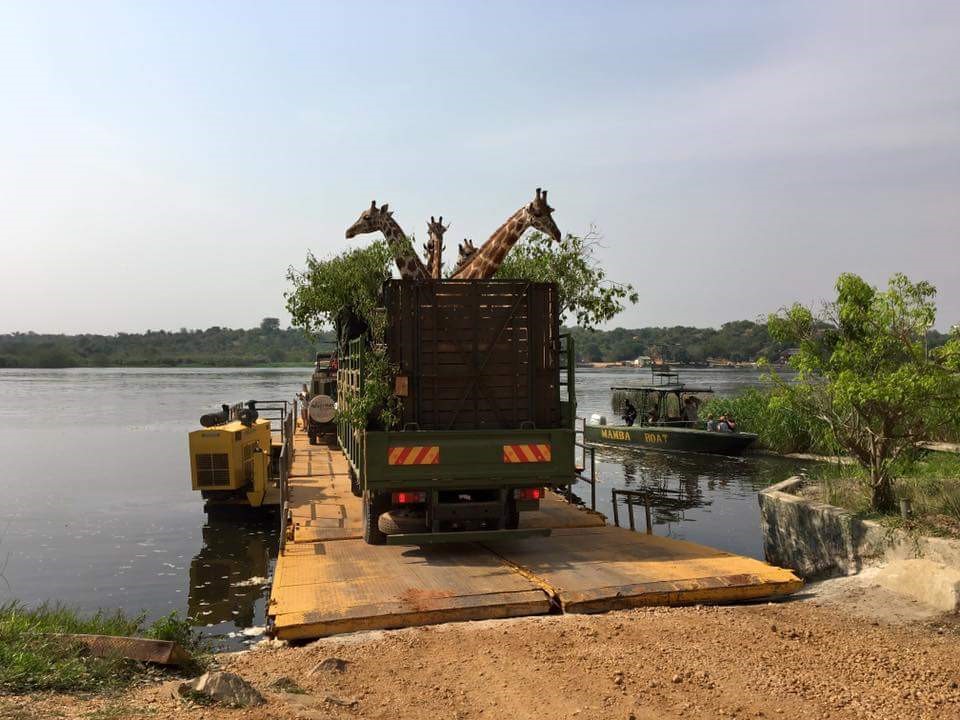
Melman and the other giraffes getting on the ferry to cross the Nile. Photo from Liza Dadone.
As we pulled up to the River Nile, the look on Melman’s face was positively priceless. Many of the giraffes seemed perturbed to be riding onto a car ferry. Melman, on the other hand, seemed enthralled! He moved from side to side, he looked straight down gazing into the crocodile and hippo-infested waters, he cuddled into the other giraffes like an excited child preparing to go on an amusement park ride. Melman made the crossing like a champ and I believe, in his own way calmed the other giraffes. How could you be fearful of the water was a young kid was this excited! The rest of the trip was made without incidence and we arrived in good time at the release site.
​
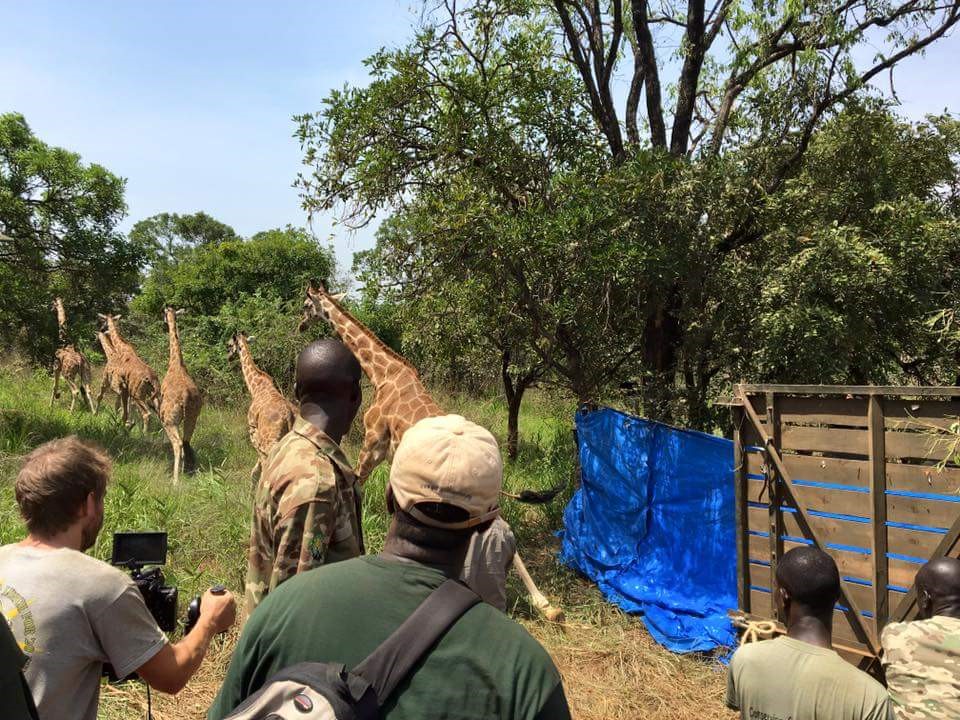
At the release site, UWA rangers cleared the area and we prepared the truck for unloading. At first, the giraffes stood stock still. A large female was first at the opening of the door. She would decide when the group would move. Melman was tucked away in the back excitedely pushing the others forward. We knew that at least one giraffe was very ready for this new adventure in some foreign land. After a couple of minutes of disbelief that there was nothing blocking their way, the female lurched forward dashing off in a sprint. She was quickly followed by the 5 additional giraffe, including Melman, who all set off in single file, as if they were part of a long distance running event. We anticipate that the new population will steadily grow and increase the range of these endangered Rothschild’s giraffe. Their new home would be far away from human activities such as tourists vehicles, oil exploration, and poachers snares.
Picture
Melman and the other giraffes running off into their new home at the release site. Photo from Liza Dadone.
Once the initial jubilation of a successful release wore off sentimentality set in. I wondered whether I would ever see Melman again. I wondered what would become of him. I wondered whether he would become a father or remain a single hypochondriac. I sincerely hope to see him again.
​
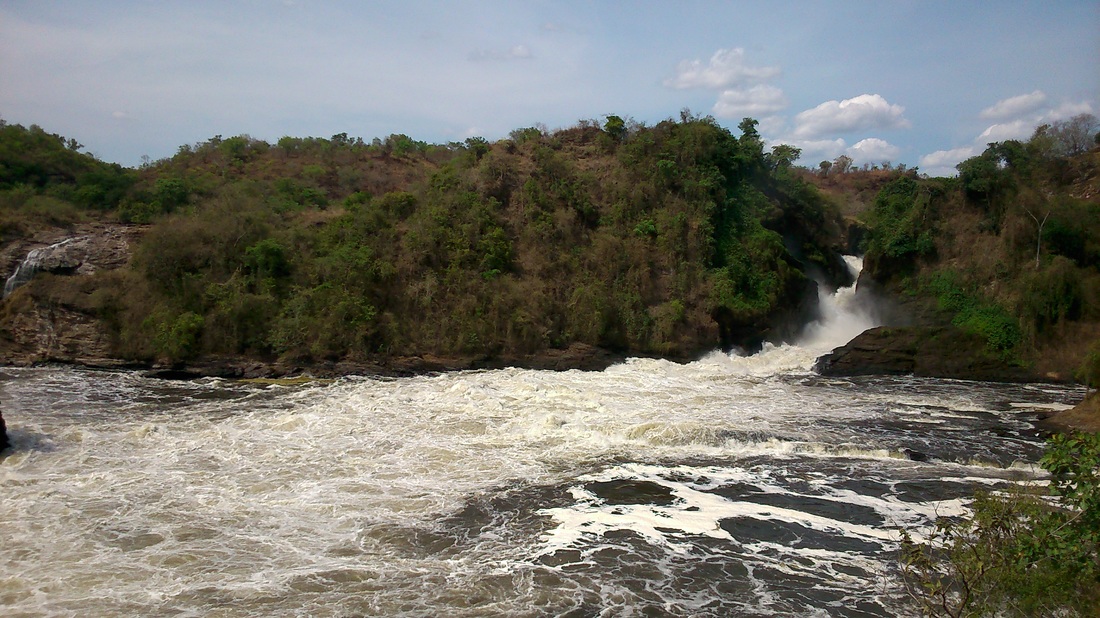
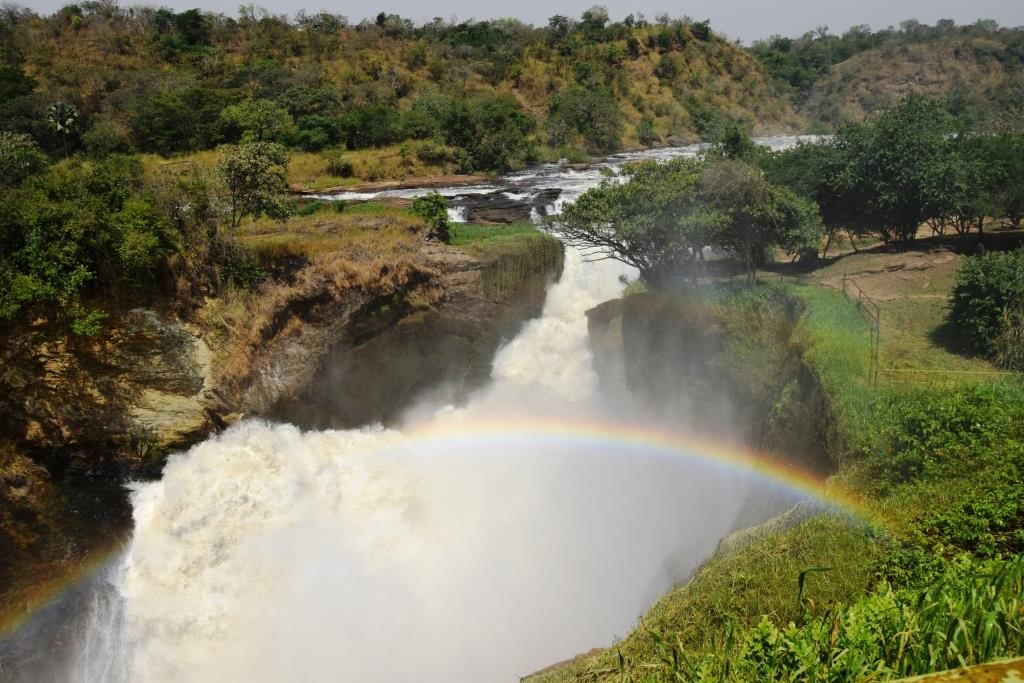
My fellow lab mate Tutilo and our advisor Dr. Bob Montgomery were involved in Melman’s translocation and all shared these same feelings that this was a very special giraffe. To celebrate the day we all decided to go, along with UWA Rangers Robert and Samson, to visit the majestic Murchison Falls. In this way we were following the advice of the Park Warden of MFNP (Tom Okello) who told us, “You haven’t been to Murchison unless you have been to the top of the falls!” I guess I really have been to the falls as this particular trip was my second, but I still needed to fall Tom Okello's advice and get myself to the top. The first time I was lucky enough to visit the falls with Liza as well as Tom and Kathy Leiden from the Leiden Conservation Foundation. After the release of Melman and the other five giraffes, I saw the falls from a completely different perspective. This time we hiked around to the top of the falls and the views were simply breathtaking. Everyone should seek the Warden’s advice. This is a spectacular and transformative place. As Tom Okello says, one has to visit the top of the falls. Who knows, perhaps Melman will decide that he needs an adventure at some point in future and make his way up here. I certainly wouldn’t put it past him.
Picture
View from the top of Murchison Falls.
2 Comments

On the trail of Butcherman – Tutilo Mudumba

1/24/2016

1 Comment

​It is day 3 since my return to Murchison Falls National Park (MFNP). The jet lag has worn off. I am settling back into my field research routine. And I have become reacquainted with most of my friends again, though everyday there are still one or two handshakes that are particularly warm given extended time apart. But, the question everybody asks when I see them is ‘have you found Butcherman yet?’ Butcherman is an extremely famous lion in Uganda. He is a beautiful large-maned individual who fought for his position and became the alpha male of the Delta Pride – which dominates extremely productive habitat in the northern part of MFNP along the Victoria Nile River Delta – in 2009. But Butcherman’s story is not simply one of hierarchy and dominance. No, Butcherman’s is a story of savagery, redemption, and mystery. You see, the habitat in the Delta Pride is not only productive because of proximity to water (water brings primary production, primary production brings ungulates, ungulates support lions), it is also dangerous for the same reason. Poachers tend to access this park via the waterways, where they come on shore and walk inland planting wire snares along the way.

Butcherman was an alpha male for just 7 months when his rear left foot made a fateful and inadvertent step into a poacher’s snare. Wire snares are unfortunately widely used in this region for bush meat (mainly hartebeest, waterbuck, or kob) but are indiscriminate weapons that are just as capable of capturing an ungulate as they are an elephant. I was part of the team that helped to free Butcherman from this snare all those years ago. When we found him he was exhausted from his hours-long effort of trying to get clear of the leg hold. The snare constricted so tightly around his leg that it shut off all blood supply causing the tissue to become necrotic. We had to amputate Butcherman’s entire lower leg, from the knee down. I remember clearly thinking at that moment that Butcherman’s days as an alpha were done. It would not be possible for a 3-legged lion to defend his alpha male status. Or would it?

Though Butcherman was licking his wounds, he returned to the safety and comfort of his Delta Pride where he was looked after by both the pride females and a beta male named Bernie. Butcherman made a relatively swift recovery, but had great difficulty moving as he hobbled along through his territory. What became clear was that he was completely unable to hunt preferred lion prey (medium to large ungulates) independently. But the skill that Butcherman fell back on was his cleverness. He knew that his roar, his mane, and his capability for intimidation were not affected by his leg. In this way he mated, reared, and ruled over the Delta Pride for an unbelievable 3 additional years. Now this story brings us almost to the present when just 3 months ago Butcherman was overthrown by two rival males (Ricky and Raphael) and vanished into thin air.

Dr. Robert (Bob) Montgomery, both the director of RECaP and my graduate advisor, has traveled half way around the world to join in the search for Butcherman. We are interested in understanding exactly how snaring effects the ecology of lions. We are pursuing questions such as; What proportion of the MFNP lion population is affected by snares? How does snaring cause change alpha male tenure? What are the effects of snaring on the ability of lions to survive and reproduce?
​
Today, Bob and I drove out of our remote camp site at day break heading southwest. Our plan was to visit the core range area of the Delta pride first, then work our way outwards in a sweeping and ever-increasing circle. At over 200 km2, the Delta Pride home range is vast and comprised of a mix of expansive open savannahs dotted with thicketed acacia bushes. The western edge of the pride range is the Albert Nile which also marks the northwestern part of the park edge lined with swamp marshes where prehistoric looking shoe-bill storks reside. The sky is lit in golden strands, an oribi (a small antelope) races across the road drawing our attention. We briefly stop to investigate the cause of alarm but see nothing interesting. Without exchanging words about this, I gently ease my foot off the clutch pedal and guide the land cruiser off the road and along the ridge on high ground. If we are going to find Butcherman, we are going to use every trick in our basket.
Picture
Tutilo and Bob searching for Butcherman in the RECaP truck.
Buffalos, waterbucks, kobs, reedbuck, and hartebeest are feeding on the moist shoots of freshly burnt fields. Elephants in groups, are browsing on short acacia trees. Beautiful views drape our perspective in every direction which eases the tensions on our mind, somewhat. Where can Butcherman be? And then… we pick up a guttural sound quite a ways off in the distance. The sound is distorted by the local din of birds squabbling over breakfast. But the sound is unrecognizable. A male lion. A lion’s roar is something that you not only hear, but you feel. When the sound of a lion’s roar echoes across the savannah the sound waves meet your body thundering through your core, emanating from your stomach up until it reverberates in your heart. Once experienced – it is always with you. The experience of a lion’s roar cannot be undone. This could be it, I thought, let this be Butcherman! From the depth of the roar, I could tell that the lion was at least 3 miles in the general direction of Pakuba airstrip, a small flat piece of land several kilometers from the Delta Pride where planes bring tourists into the park. Unfortunately, a direct path to the sound was blocked by an impassably-steep dried-up river bed. Our distance to the point would now double and our tension would do the same. As we drew closer to the airstrip I kept thinking to myself “This is going to be it.”
​
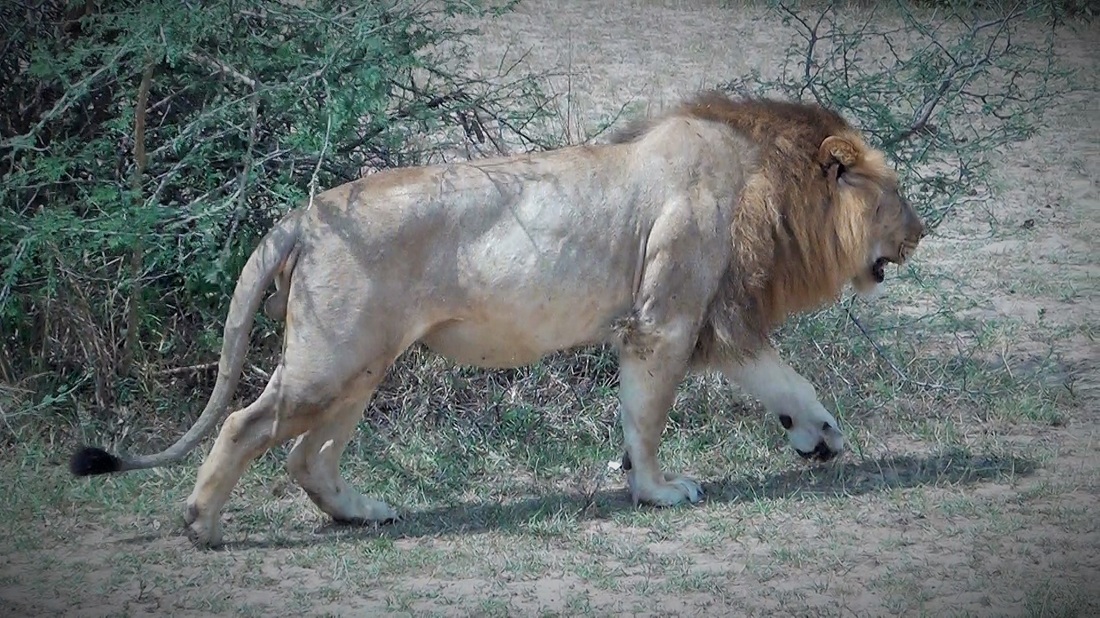
Pakuba airstrip is a marram surface 1.5 km long runway with service housing on its side. The entire infrastructure is protected by an electric fence to keep wildlife out. The area around Pakuba airstrip has got open fields with few trees and occasionally a young borassus palm thicket. With the kob whistling and displaying forward vigilance behavior, we were almost certain in which borassus bush concealed this lion. As we drew near, we held our breath. When I positioned the RECaP truck into full view of the lion, it became clear that this was not Butcherman but another male lion. This lion had all the four limbs and a much darker mane. With large exhales, we re-grouped. A couple of snaps of the animal’s whisker pattern to identify him (we will compare the image with a booklet of identities of lion in this system) and we were off.
Picture
We found the roaring male. Unfortunately, it is not Butcherman.
​We continued heading westwards along the Victoria track towards the delta. We should check out the hippo pool, the land that legendary Butcherman formerly stalked, I thought. With the sun beating down upon us we had a quick field lunch of roasted ‘jungu’ (Swahili for peanut) washed down with pineapple juice as we watched a school of hippos yawn and play. I found it difficult to hide my disappointment from Bob. I got the distinct impression that he felt much the same. Not even the presence of an incredibly-large buffalo herd with mamas nursing their young could raise my spirits. The delta region lies at the lowest part of MFNP right in the north most tip of western arm of the rift valley. Working here for many years has taught me to find lions quickly as the place gets unbearably hot even during mid-morning when lions disappear into thickets to avoid the heat. It was approaching 10 am and I knew that within 30 minutes our chances of finding lions would plummet, dampening my burning desire to find Butcherman today.
Picture
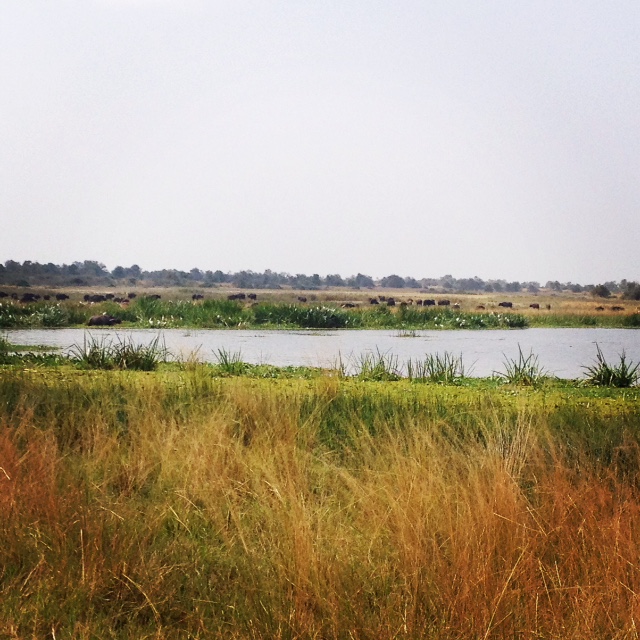
The hippo pool which is an extremely productive habitat for the Delta Pride lions, but also a risky one given increases in snaring along the shore.
My thoughts were broken by the encouraging voice of Bob, ‘Alright, where should we go now bwana (Swahili word for sir)?’ I responded by sliding into the driver’s seat and driving off along the Nile river track. Where could Butcherman be?! Ten minutes of silent driving and a thought struck me. We should try a series of thickets near a water pool just north of the delta. This is an area that the pride females like using for the cover that it affords their young. Once we got past the delta point sign post on the western-most tip of MFNP, I instinctively slowed and we began our search looking under the bushes on either side of the car. Look for the dark shade, then look for a lion shape…look for the dark shade, then look for a lion shape. It became our mantra.
​
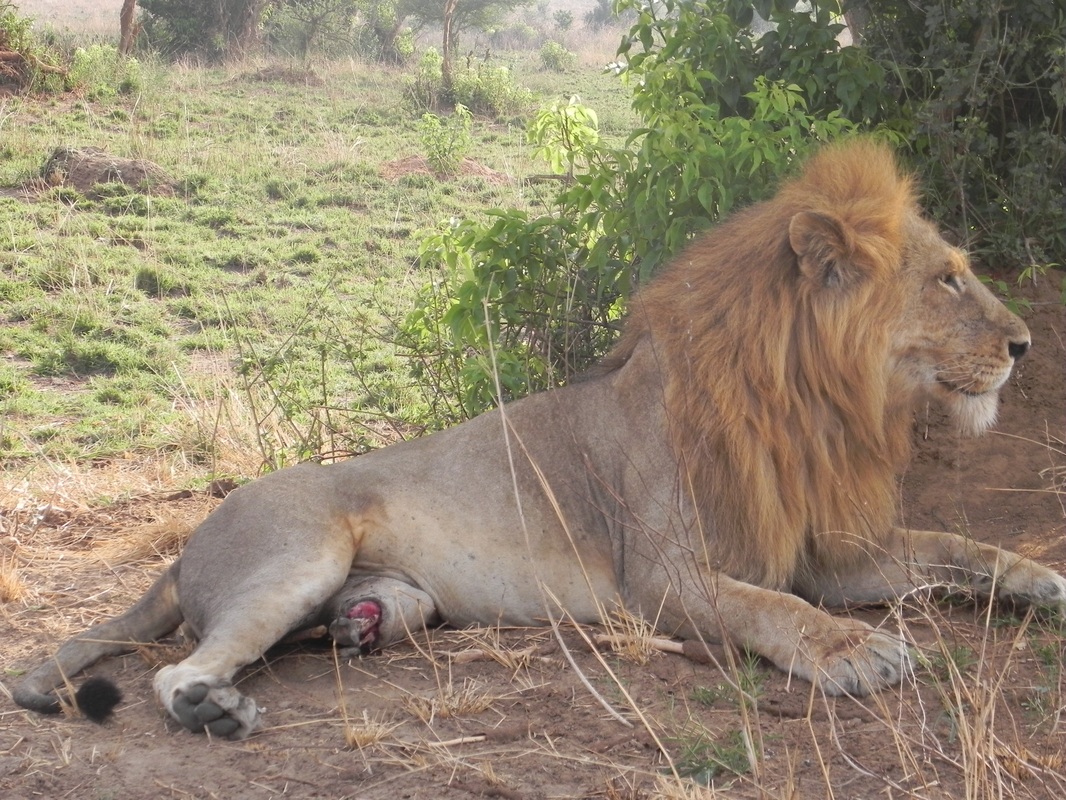
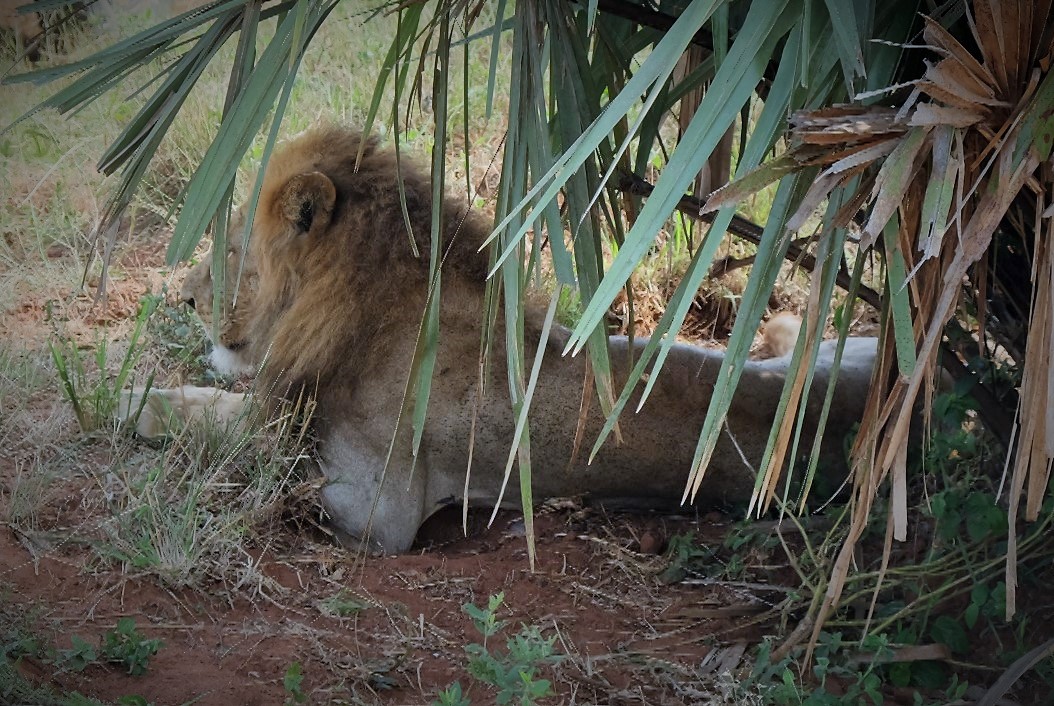
Then suddenly Bob said, “Here we go.” Directly off the left-hand side of the car just 20 feet from our position was a huge male panting heavily in the cooling shade of a large bush. The mane looked like Butcherman, but we couldn’t yet see his legs. I repositioned the vehicle so that the animal revealed more of himself. The mane looked dark. Like a rock falling through water, a sensation went through my gut.  This wasn’t Butcherman. Not only was it not Butcherman, but I strongly suspected that it might be the exact lion that displaced him from the Delta pride leadership. Before making my pronouncement I asked Bob to tell me what this animal’s hind legs looked like.  Bob said, “This one is missing all of the toes on one of his hind feet.” Damn, I was right after all. This was Raphael who, along with his brother Ricki, knocked Butcherman off of his pedestal.
Picture
Raphael, the new alpha of the Delta Pride and the lion that displaced Butcherman. Note the snaring damage on the hind leg. All toes are gone.
We watched Raphael, gutted about the myriad of events unfolding. A short while later, with the shade fast-receding, Raphael lifted his head off the ground and glanced across the empty patch at the bushes a short distance away. Reading lion behavior this motion tells you exactly where other pride members are located. Without further notice Raphael, keen to reacquaint with his pride-mates, got off the ground traveling in the exact direction that he was glancing. Less then 100 meters away concealed in an extremely dense bush we saw Ricki. I know these lions well. The brothers were only 2-week old cubs when I first met them 4 years ago when I was collar-tracking their mother Pamela.
​
After some more observation and the sun now firmly above our heads, I accepted the fate that today was not the day that we were going to find Butcherman. I slowly drove us back to our camp site with a flood of questions still lingering my mind. What happened when Butcherman was toppled by these brothers? Was it a fatal takeover of the delta pride? If not, then how could he find food in exile? One thing that I am sure of is that the search for Butcherman is far from over. We will be widening the search to include parts of the park that I know to be out of current pride ranges. These would be the safest places for Butcherman to live in exile. Though I desperately want to find this male that I have known for the entirety of my professional career, I am beginning to think that we might only find the ghost of the 3-legged lion of Uganda that once reigned over the Delta Pride. But until we determine that for sure, the search continues.
1 Comment

Operation twiga: the need for speed - arthur muneza

1/22/2016

1 Comment

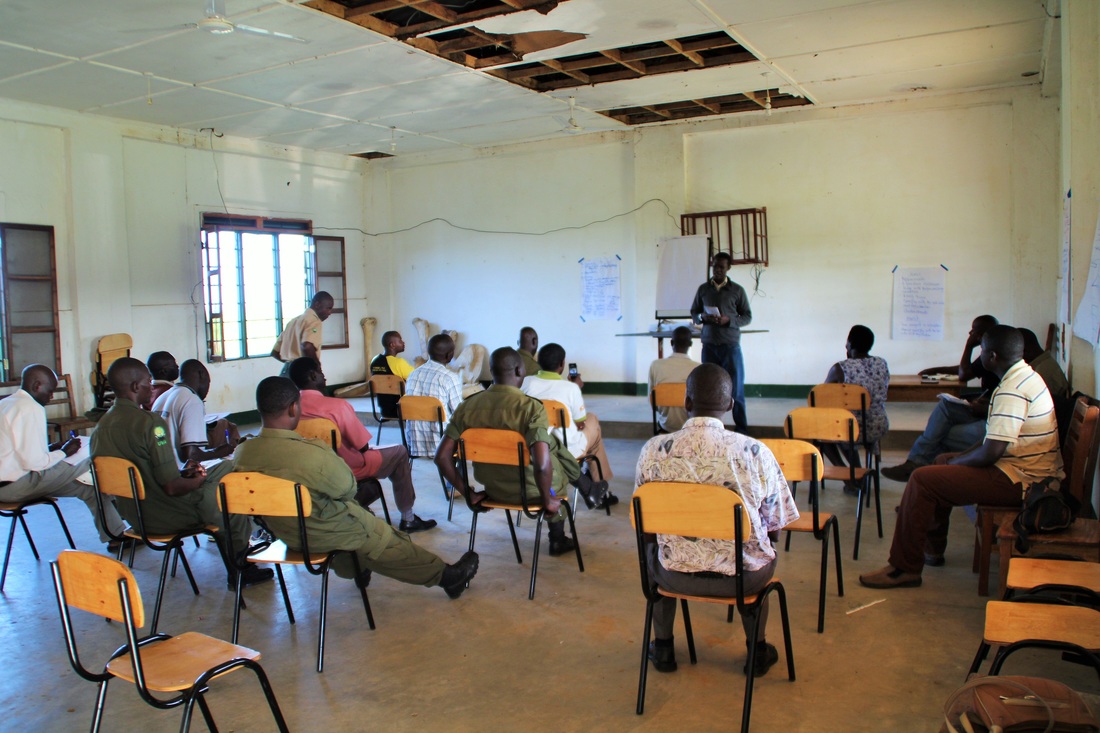
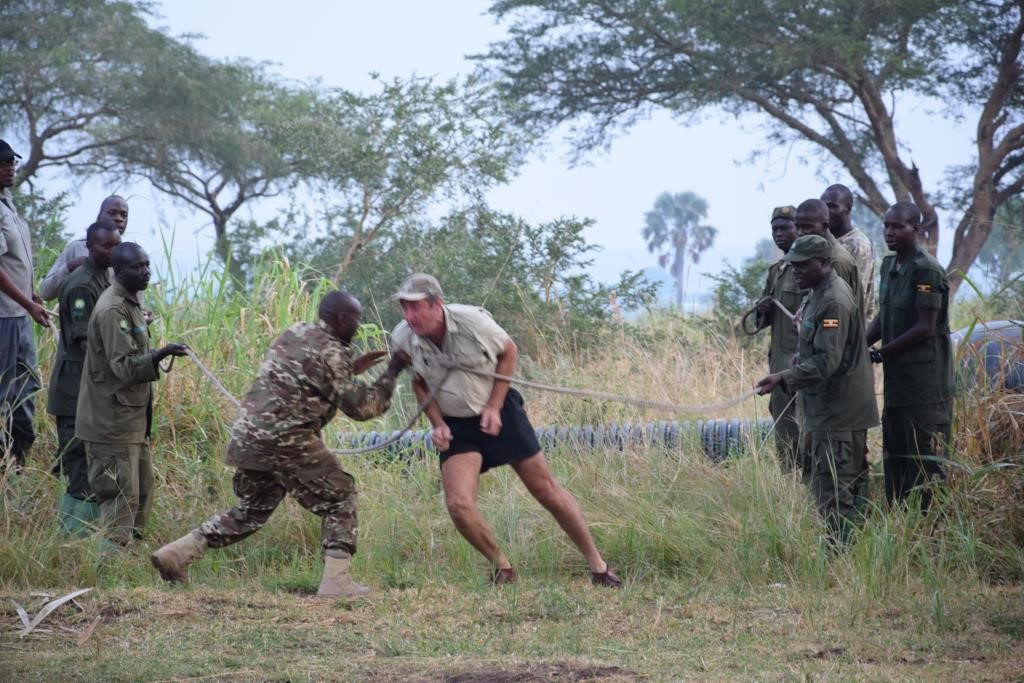
Our team, compiled to translocate 22 Rothschild’s giraffes, is now a well-oiled machine adjusted to the sights and sounds of Murchison Falls National Park (MFNP) in northwestern Uganda. Translocation is necessary to ensure the continued persistence of Rothschild’s giraffes into the future. It has been 4 days since we arrived in the park and we wasted no time getting down to the task at hand. While the main objective of this operation is to relocate giraffes, Giraffe Conservation Foundation (GCF) and the Uganda Wildlife Authority (UWA) see this as an opportunity to simultaneously train students and rangers in large mammal capture and handling protocols so as to build capacity in the area. Today, just like the last three mornings, we assembled at dawn for a team meeting. In these meetings, everyone is told, and in that way understands, exactly what is expected of them on any given day. After we receive our orders, we assemble into action units. These units involve specific jobs all relating to the giraffe captures. These jobs include darting, roping, monitoring of giraffe at the capture site, monitoring of giraffe at the boma (enclosure), measuring physical characteristics of each individual animal, and carting (transporting) the giraffes. I am part of the unit that is tasked with measuring the physical characteristics and recording data on the captured giraffe. Earlier this week Dr. Peter Morckel, with himself acting as the captured giraffe, led an intensive training session which mimicked the moment shortly after a giraffe is darted and requires restraint. Playing the role of the giraffe Dr. Morckel was fast to emphasize that giraffes are far stronger than he is, underscoring the importance of learning good solid techniques and working cohesively as a unit. The training lasted between 3 and 4 hours in which everyone gained familiarity with their roles and with how best to work efficiently in a small group capacity.
Picture
Peter and Robert (of UWA) demonstrating how to rope a giraffe and guide it to the ground. Dr. Morckel is kindly playing the role of the giraffe.
​When it comes to the practice of capturing real giraffes in the wild landscape of MFNP, what we accomplished over the course of several hours would need to be handled in minutes. The moment a giraffe is darted, the roping team needs to slow down the animal and temporarily restrain it on the ground.
Picture
Training wheels off, UWA rangers roping the first giraffe. The 'braking' rope needs to be above the knee and near the chest of the giraffe. The dart can be seen on the right leg of the giraffe.
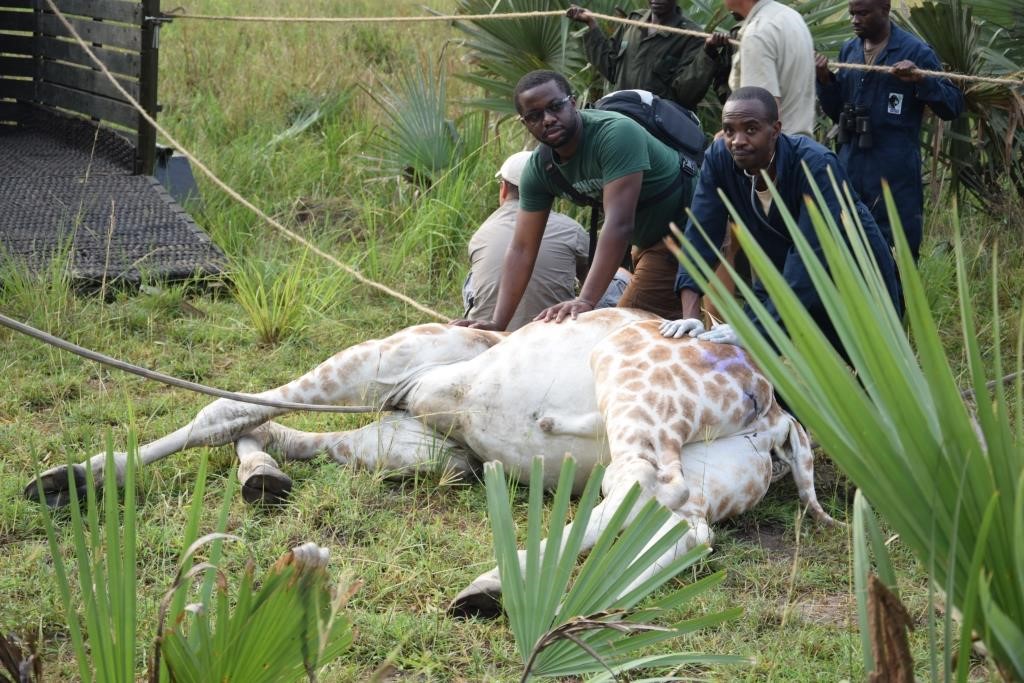
​With the giraffe on the ground, the monitoring unit and measuring unit (my individual unit) step in, blindfold the animal (to decrease the individual’s stress) and collect data on the animal’s vital rates. These include heart rate, respiratory rate, and temperature. We also collect blood samples, ossicone (the horns on top of giraffes’ heads) length, head length, neck length, and body length, among others. At the same time, a reversal drug is administered into the giraffe to counteract the effects of the dart. Therefore, when the measuring and monitoring units complete their work, the animal is almost fully aware. As part of the monitoring unit, I risk injury from the giraffe while collecting these important pieces of information. Dr. Morckel and Dr. Julian Fennessy of GCF are quick to point out that the safest place to be is near the shoulder of the giraffe where we can avoid the animal's powerful leg kicks.
Picture
Myself and Fred (a vet from Gorilla Doctors, a project based in Bwindi, Uganda) holding down a male giraffe, while others man the ropes before carting.
For this translocation process some animals are fitted with GPS collars, donated by GCF, so that we can monitor their movement and habitat selection once they have been relocated to the southern part of the park. Once the GPS collar has been fitted on the head of the animal, the giraffe is carefully guided into the cart. Once in the cart, the giraffe is transported to the boma for temporary confinement before release. We use this time period to continue to monitor the giraffes to ensure that each animal is in good health and condition. As of today, we have successfully captured 8 giraffes all of which are doing great in the boma. The days are long and the work is usually fast, but well worth it! ​
Picture
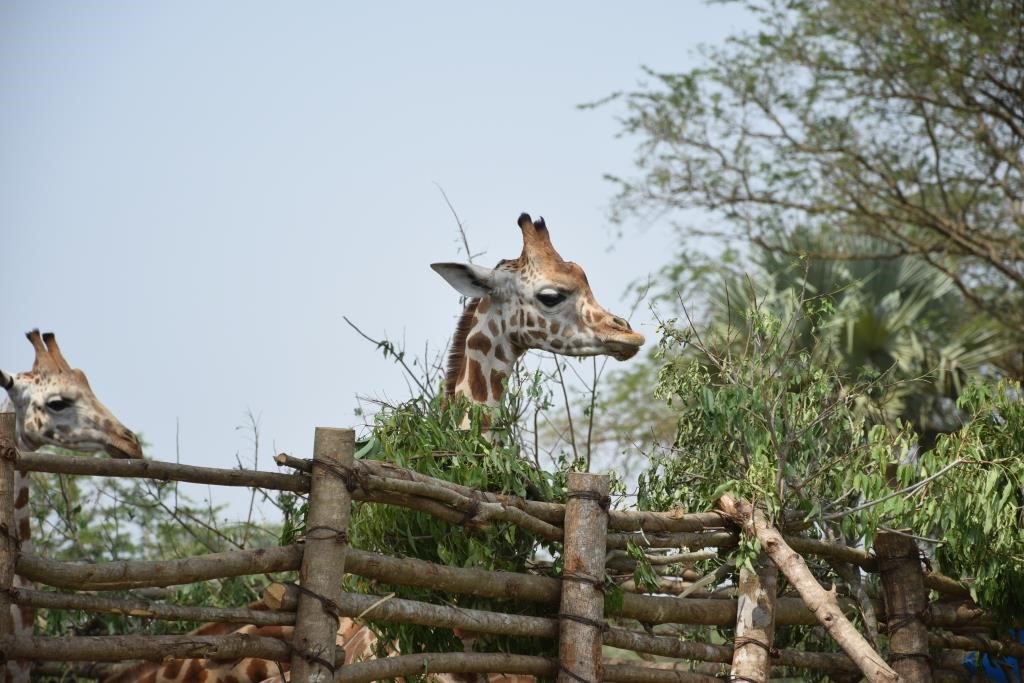
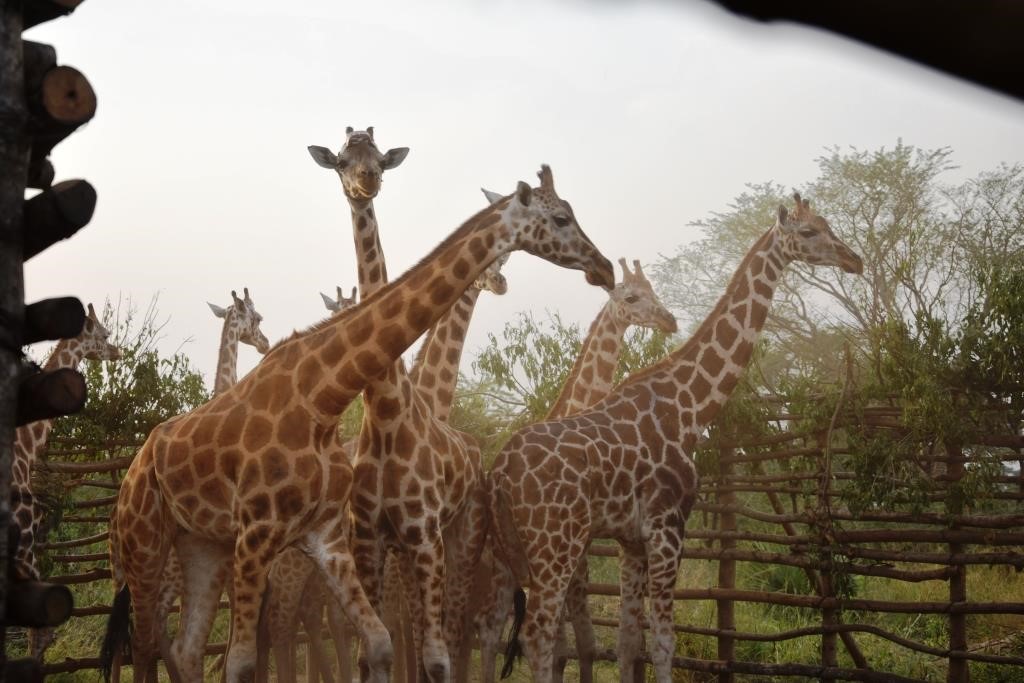
The first eight giraffes temporarily held in their boma before release south of the Victoria Nile. A GPS collar can be seen on the head of the giraffe that is gazing directly into the camera.
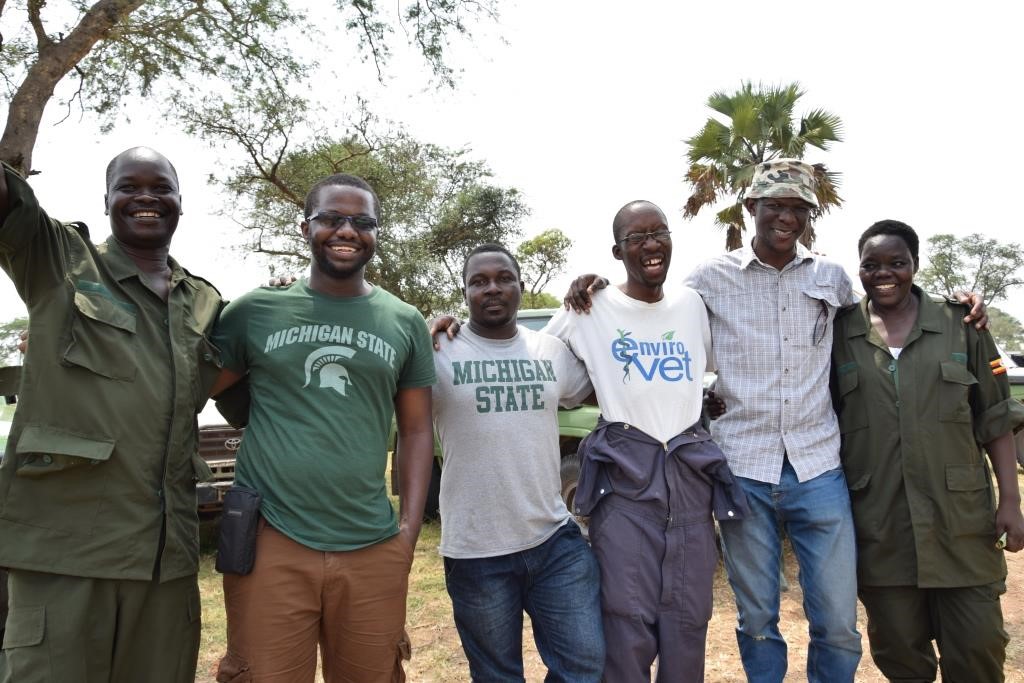
Another benefit of the training session was the opportunity to establish new friendships. And who would have thought that I would meet a fellow Spartan in the remote reaches of Uganda. Today I met Dr. Celsus, a veterinary doctor at Makerere University. Dr. Celsus recently finished a 4-month stint working at Michigan State University (MSU) honing his skills in large animal care and geographic information systems research. It was a great feeling to see someone else in MSU Green and White dedicating their time to the practice of securing the future of giraffes: this iconic species of Africa. Speaking of which, Tutilo Mudumba, a fellow member of the RECaP Laboratory at MSU, stopped by to say hello on his journey to find a group of young men who were once poachers but now make a living by making and selling crafts created from illegal wire snares. You can read more about Tutilo’s work here in these Notes from the Field. Tutilo is a great friend of so many people here in MFNP and was warmly welcomed by all, but perhaps none more warmly than the rangers. The rangers are particularly appreciative of the work that Tutilo has done in this region focusing on lion conservation and anti-snaring initiatives. Snaring is a big problem in this landscape threatening the conservation of all large mammals. And yet is Spartans that are searching for answers to the problems that plague conservation biology. Go Green!
Picture
From left: Eric, senior vet at MFNP, myself, Dr. Celsus and Dr. Muhangi of COVAB, Tutilo of RECaP, and Margaret senior vet at UWA.
1 Comment

The Craft Boys of Pakwach - Tutilo mudumba

1/20/2016

1 Comment

Picture
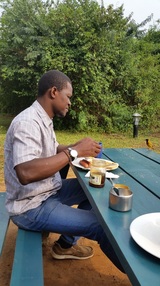
Enjoying a delicious Ugandan meal on my first day back in Murchison Falls National Park.
Settling into my first night back in Murchison Falls National Park (MFNP) following a 5-month absence I have pitched my tent under the expansive shade of a sausage tree right in the heart of this incredible national park. January is a very peaceful time to camp under this tree because sausage trees do not fruit during this time of year. If I elected to camp under this same tree during the fruiting season, I would be a very foolish man indeed. You see, sausage tree fruit is a favorite of elephants and when in-season, scores of elephants will travel from sausage tree to sausage tree gobbling up every bit of fruit that they can find. But for now, I can fall asleep in the peaceful quite of an African evening with the understanding that my tent will not be trampled by a herd of elephants on this night.

As I set my head down on terra firma my eyelids are heavy with the physical weight of a long day’s work and my mind is clouded with the emotional weight of being back in a place that I so love and because I love it so much (for that very reason) I have been separated from it for over 5 months. I have spent these past 5 months pursuing my graduate degree in the RECaP Laboratory at Michigan State University (MSU). In this way I have left my home so that I can ultimately stay at home. I am working to gain the necessary academic credentials to ensure that I can have a long and productive career studying wildlife conservation in East Africa. Despite these relative weights upon my eyes and mind, sleep does not immediately come. I am unsettled. In the last 5 months, snaring in MFNP has been steadily climbing. I am concerned about this pattern. I am concerned about the negative effects on the wildlife in this park if snaring continues to rise. To put it plainly, I am concerned that my ‘Snares to Wares’ initiative may have suffered during my 5-month absence abroad.
​
Earlier today I traced the youth group involved in the Snares to Wares initiative. Today I was looking for the ‘Craft Boys’. These are boys and young men that were once part of the illegal snaring of wildlife in the park. They did not participate in poaching because they were keen to kill wildlife. They were recruited into this activity at highly impressionable ages, when their access to other opportunities was minimal. Via the Snares to Wares initiative I have helped, in my own way, to convert Lost Boys into ‘Craft Boys’, making toys and goods which they can sell for a profit in the market from the wire snares which defined their previous occupations.

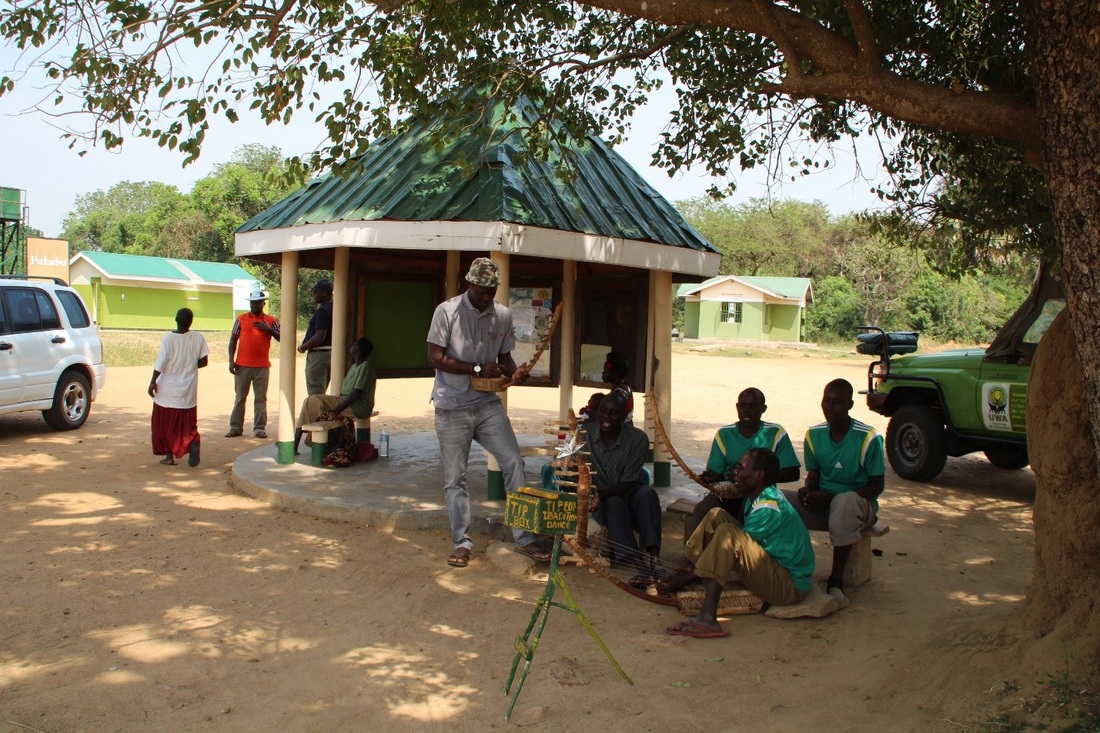
In tracking down the Craft Boys I wanted to know if the Snares to Wares initiative is still functional and to talk about how these young men now experiencing their lives having left poaching behind. My first interaction with the Craft Boys was facilitated by a traditional East African music group that taught me how to play the African harp. This traditional music group plays regularly at the MFNP northern bank ferry landing to entertain visitors as they wait the hourly ferry crossing. Tips and other handouts from visitors are used to fund band member’s joint development projects offering a risk-free legal mechanism to cater for the livelihoods of their relatives who reside in the villages around the park. This is but one mechanism to promote community-based conservation. The Snare to Wares initiative is another such effort. One band member is a close relative of the group leader of the Craft Boys.

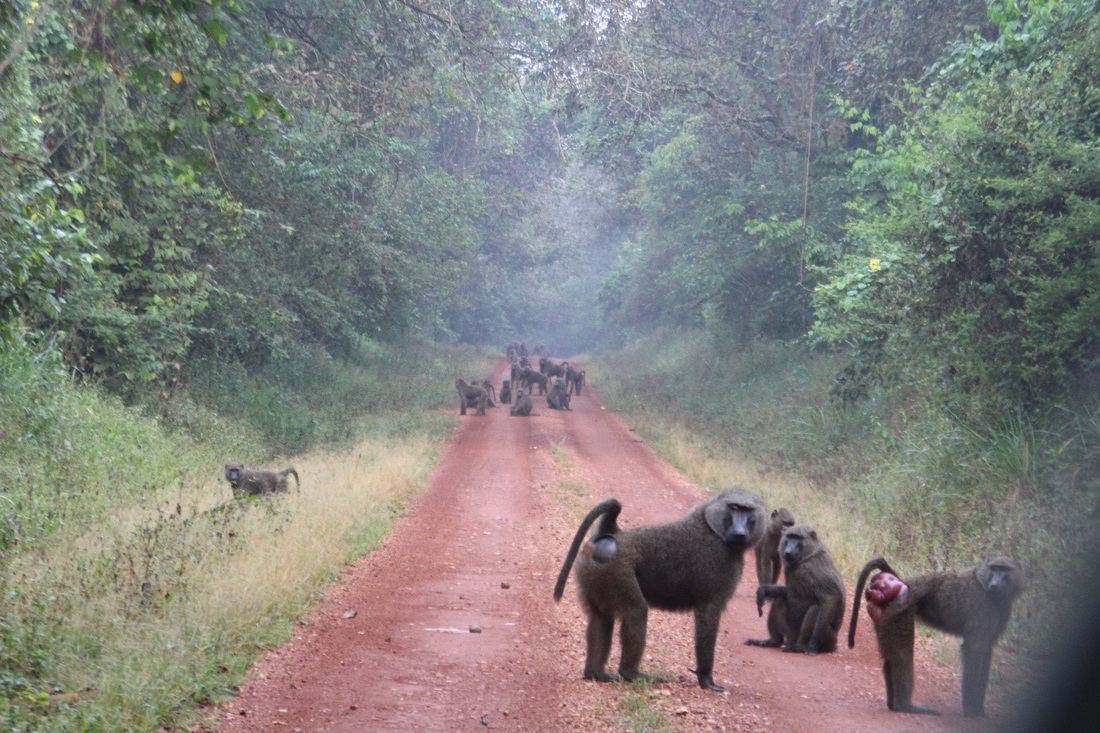
Thus, to find the Craft Boys, I first had to find the band. And that, as you might expect, was relatively easy. Follow the beautiful sound of traditional East African music floating across the air. While following this melody, my 4x4 was temporarily detained by some determined-looking baboons. What became rather obvious was that the alpha male was far too preoccupied with a sexually-receptive female to get off the road and let us pass. The alpha male gave us an incredulous glare demonstrating that his mind was on another matter entirely. After a couple of minutes we were on our way.

Picture
Baboons block our path in the heart of MFNP. The look on the alpha male’s face says it all; “What do you think you are looking at?”
​Back on the road, we were just a few minutes from the ferry landing. Once again I was met with more smiles and delight from the band members that I had not seen for some time. One by one, we exchanged pleasantries after which I was asked by Bongomin, the base harp player, if I could join in and play the ‘simba na guruma’ song. Literally translated this song means ‘the lion roars’. With months of no practice away at MSU, I couldn’t seem to find the right note and struggled to keep pace with this expertly-practiced team. Fortunately for me, I was saved by the tenor harp player, Ochaya, who took lead and soon the ferry landing was filled with the joyful sounds of harps and vocals. The ‘simba na guruma’ song was composed by this team on my behalf. Shortly after making friends with the team and chatting about my research, they wrote this song to seamlessly represent the bond that we had formed. The song showers praise upon lions, representing my own fascination with lion ecology, with a chorus that reiterates the phrase ‘simbaaaaaa na gurumaaaa!’ ‘the lionnnnnnn roarrrrrrrrs!’ Hearing this song again transports me back in time to the days when the Snares to Wares initiative first began with biologists and park rangers alike humming this tune as we searched the undergrowth of MFNP for the treacherous snares which threaten the persistence of lions and numerous other species of wildlife in this region.
Picture
Playing the African harp with the traditional East African music team.
Transfixed by my memories I realized that my anxiety over being rusty in playing the harp was gradually drifting away. I caught up to the pace of the song and found that locals and tourists alike were enjoying the music, bobbing their heads and tapping their feet to the rhythm. With music raging over a 30-minute period though, my reawakened harp playing skills began to fade. I passed the harp over to a more-skilled player and enjoyed the music as an observer. When the ferry was fully-loaded and the tourists gone, the base harp player gave the signal and the band came to a swift and magical stop. With small beads of sweat forming on my forehead and lower arms, I found a large stone in the midst of the band to act as my seat and called on the band to chat about the current state of the Snare to Wares initiative. I learned from the band that the reformed poacher craft group had recently made some additional sales in the market. The carving of wooden craft, I now understand, is more profitable than conversion of wire snares to goods. The band encouraged me to talk to the leader of Craft Boys directly. With the recent and exponential growth in mobile phones in this region, the leader was simply a phone call away. Unlike the days of old when it would take me hours to track him down.

I quickly and eagerly dialed the number and was disappointed to find it unavailable. The team reassured me that the group leader can be found in Pakwach town, 25 kilometers from the ferry landing, and that if the phone is unavailable, it is simply because the phone ran out of charge. With renewed spirits, I thanked the team and headed further north to Pakwach town.
​
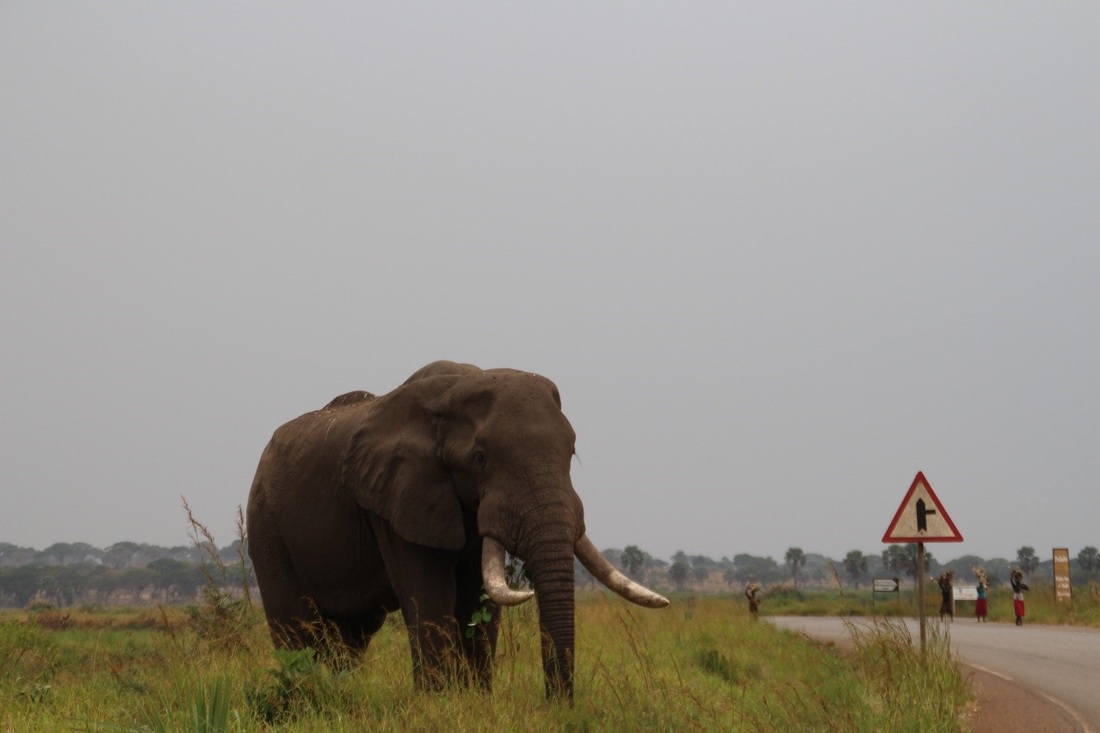
Pakwach is a small town right on the boundary of MFNP at the exact spot the river Nile threads its way into the park. The town has a human population that could comfortably fit into Spartan Stadium on an autumn Saturday. Pakwach is linked to the rest of Uganda via a large road that skirts the northern rim of MFNP and forms a boundary between the park and community. Within sighting distance of the iconic bridge over the Nile leading into Pakwach, I came across a huge African elephant whose presence by the road had stopped the return of village women from a firewood trip inside the park. Elephants rarely cross the bridge into Pakwach town but are a common sight in this part of the park where they hang in the swampy marshes during hot days. The village women kept their distance and I pressed on gently, gliding past this impressive animal.
Picture
An African elephants stands between local village women and their village.
Once in Pakwach, I headed for the Craft Boys open-air craft workshop and found Robinson –the groups’ leader arched over a used-car tire cutting flip-flop shapes amongst a busy team of youth bent over and absorbed in their work. Dropping his tools, the youthful and energetic Robinson rose and met me half way into the workshop. As he and I embraced I could hear the rustle of the other group members whispering among themselves with older boys explaining to the recent recruits who I was and how I had come to work with them before. The first thing that I did was reiterate my continued interest in working with the team and telling them that I was very happy the team was still maintaining their business. Robinson countered with details of the problems the boys had experienced maintaining the Snares to Wares initiative. The central problem, as I was made to understand, is this: wire crafts primarily only appeal to tourists who appreciate the story of making a craft out of an element of destruction: a snare. But tourists rarely, if ever, visit Pakwach. So there was very little market for these goods in town. Given the lack of a market for the wire snares goods, the Craft Boys had to diversify their trade. This is why they moved into wooden carvings, which are much for appealing to local residents of Pakwach. We talked about what could be done, about how we could make plans to gets these snaring crafts into the park so that they would be more accessible to tourists. I left Robison promising that I would develop some creative solutions to ease these troubles and embolden the initiative once again.
​
After that meeting, I drove back to my tent site inside the park with mixed feelings. I take joy out of knowing that the Craft Boys are making headway as crafts-makers and earning a living via a diverse business. But I can’t help but be saddened by the fact that we have not yet made the progress that we need to via the Snares to Wares initiative. Without such innovative solutions more wildlife will die in MFNP. I strongly believe these crafts could readily be sold to tourists in MFNP or even in stores throughout the United States and Europe. My resolve now is to link the Craft Boys to all of the local hotel owners and other tourist centers in MFNP. I must find a market for the snare crafts to complete the circle – From Snare to Wares – simultaneously conserving wildlife and preserving human interests. This is the mission statement of the RECaP Laboratory and I accept that banner of responsibility. Tomorrow is a new day and I will keep you posted as to my progress in tracking down the long lost three-legged lion. But for now I will let my eye lids drop.
Picture
Butcherman: The search begins at dawn.
1 Comment

A Homecoming in MFNP – Tutilo Mudumba

1/19/2016

1 Comment

As Sophia, my long-term field assistant, and I pull up to the River Nile in our 4x4 truck I feel my heart pounding in my chest. It has been 5 months since my eyes have last seen the incredible landscape that is Murchison Falls National Park, since my nose has smelled the splash of this great river gouging out its earthen banks, since my ears have heard these mixed sounds of birds, boat motors, and car engines. For the past 5 months I have been working as a graduate student in Dr. Robert Montgomery’s RECaP Laboratory which conducts research on the ecology of carnivores and their prey. This lab is based at Michigan State University (MSU) which feels a world away from the banks of the Nile. I am smiling as I embrace this sensory overload and suddenly there is one sound, the voice of a friend that I have not seen in some time, which immediately wakes me from my almost meditative state.
Picture
I am excitedly waiting to get across the Nile to see my friends…to return home.
“ Butcherman, the three-legged Delta pride head lion is long lost! George Atubo (20 + year Uganda Wildlife Authority (UWA) ranger) has retired. Tutilo Mudumba is lost and yet here you are my friend. Back to Murchison at last !!!”

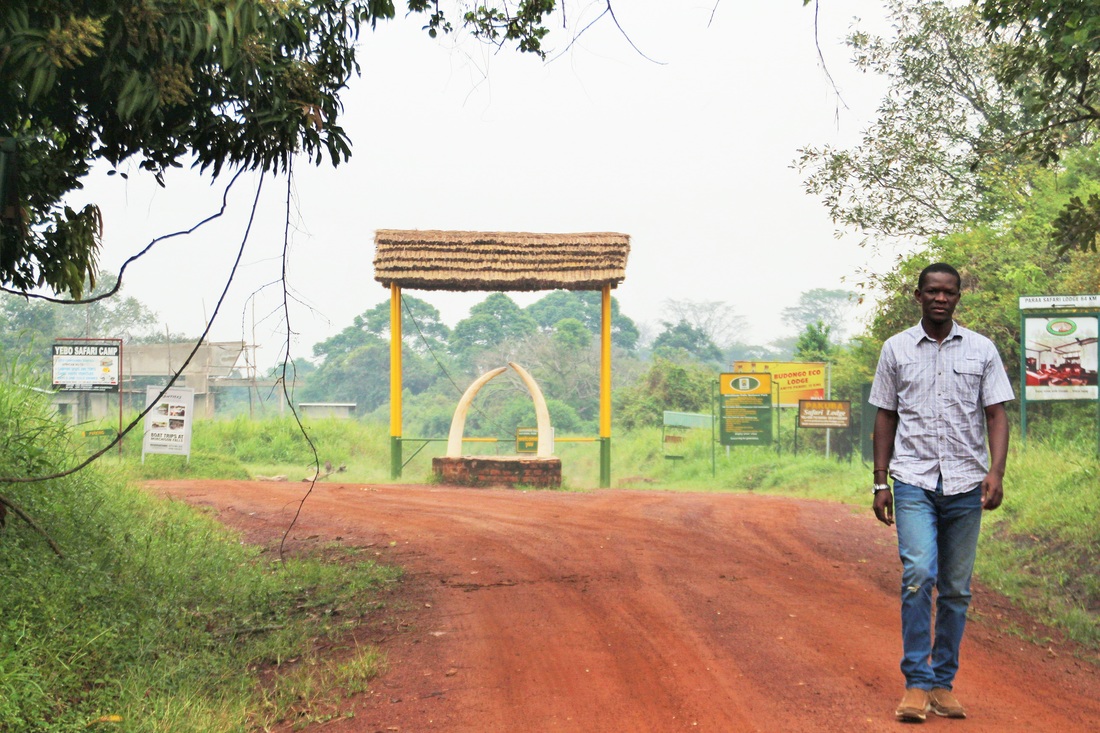
That is voice and words of my great friend Kwezi as he rushed forward with open arms embracing me after my long absence. This point marks the culmination of a 300 km drive, an 18-hour flight, and 5 months spent diligently working in East Lansing, Michigan preparing for my field work. Despite my long journey, I am back in the exact spot where I initiated my career in wildlife conservation all those many years ago: Murchison Falls National Park (MFNP).
In addition to being my good friend, Kwezi is a senior UWA range guide. He is a seasoned veteran in these parts eminently knowledgeable on all things MFNP. Kwezi heard a rumor that I would be returning to MFNP today. He was tipped off by lab mate and co-wildlife conservation conspirator Arthur Muneza. Arthur has been in MFNP working with Giraffe Conservation Foundation and UWA on Operation Twiga as detailed in our Notes from the Field. When Kwezi got wind of my return he did not sit idle. Instead, he found all sorts of our friends and organized them at the ferry crossing to meet me as I came into the park. To say that I was overcome by this welcome would be an understatement.
Picture
Greeted upon my arrival in MFNP by friends of myself and of Spartan Nation.
These people have been my friends for many years. We have dined together. We have laughed together. We have been deep in the field together. We have encountered lions and hyenas in the dead of night together. I guess with such experiences comes an unbreakable bond. I am glad to be here among friends. I am glad to be back in the field. I am glad to be home!
​
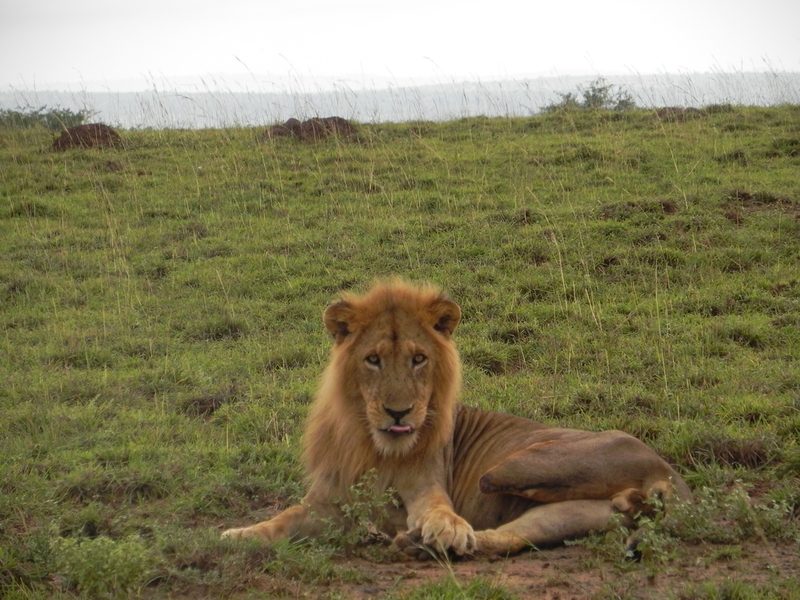
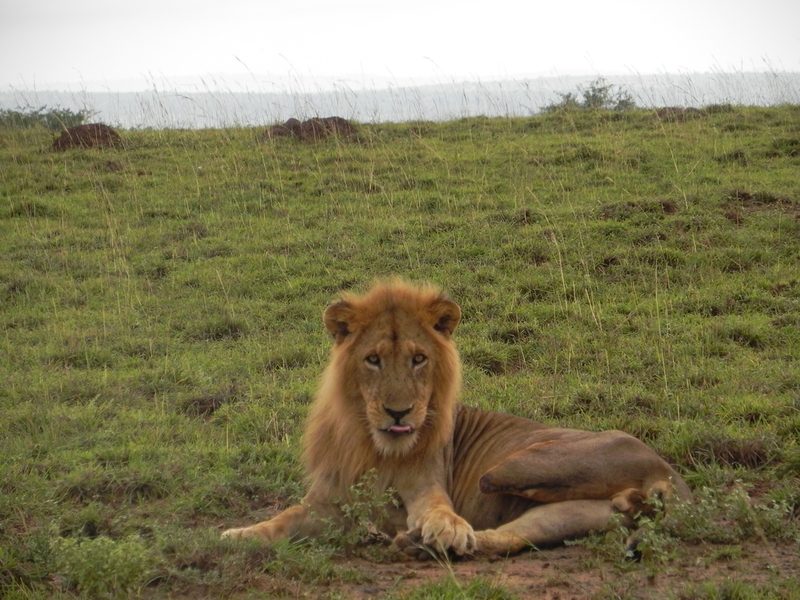
But why am I here, you may ask? I am here to quantify the effect of various disturbances on the ecology of lions. Murchison Falls is the largest national park in Uganda and the only protected area in Africa with active oil mining ongoing. Before the onset of the oil works inside MFNP, I was embedded in this beautiful park studying lions to understand key threats to their survival. The results of my study lead to the establishment of a snare removal program, called the ‘Snares to Wares’ initiative. Illegal snares are widely used by poachers, many of them are children recruited into this industry because they lack other opportunities, in MFNP to capture mammals for bush meat. In this way, small metal wire rings are placed along game trails and concealed where they indiscriminately capture and maim any unsuspecting animal that walks past, including lions. That is how Butcherman, the former alpha male lion of the Delta pride, impressively managed to guard over his territory for more than 3 years with just three legs. Imagine a lion being capable of defeating rival males when missing the better part of one of his hind legs?
Picture
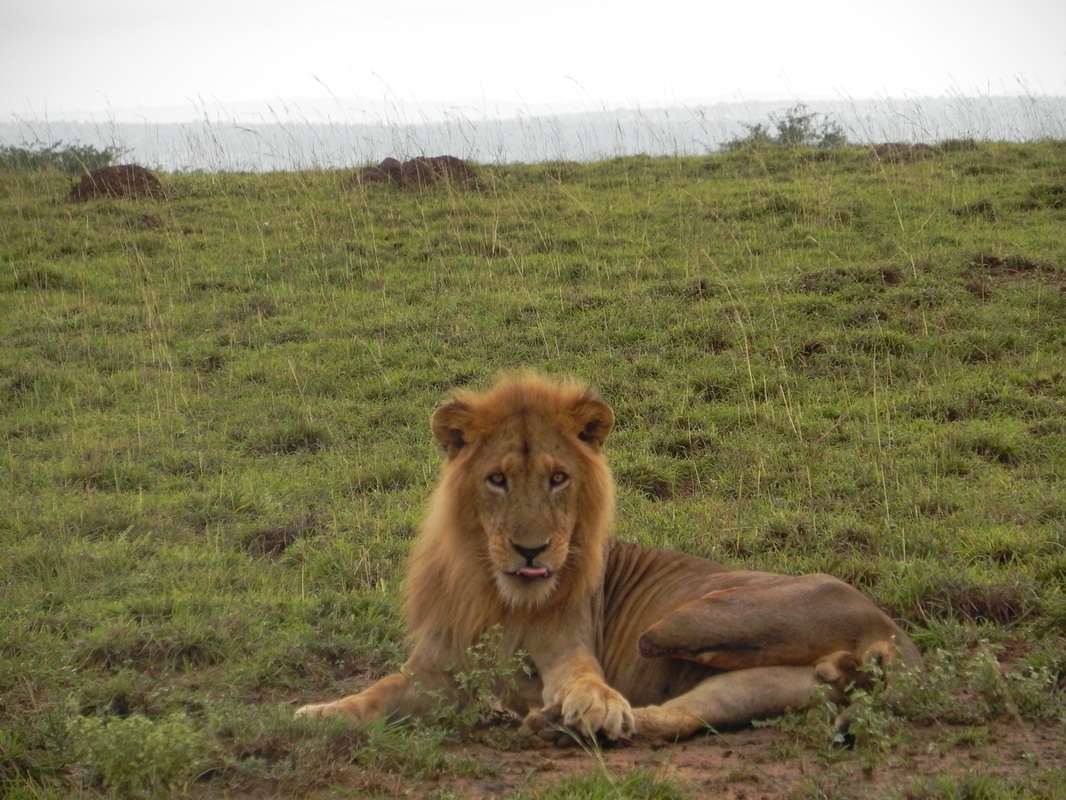
Butcherman, the famous 3-legged alpha male lion of Murchison Falls National Park. Butcherman’s rear left leg was taken by a poacher’s snare but he somehow managed to defend his territory from challengers to his throne for over 3 years. But Butcherman has now gone missing and we are keen to determine what has become of him.
Via the Snares to Wares initiative, I am keen to transform something that can do so much harm into something that can do so much good. In this way, I develop sophisticated quantitative models to most effectively retrieve snares from the landscape. Once these snares are removed I donate the metal wire to craftsman (those same boys who used to participate in poaching) in the market who turn this agent of death into a ware or craft that has a value and can be sold for profit. My return to MFNP is a follow up to this initial success story. I want to re-connect with the ex-poacher youth groups and document their amazing use of metal wires for crafts and sandals. And there is not time like the present. Despite my efforts, poaching via wire snares has increased during my absence from the park. Therefore, it is vital that I re-assess the Snares to Wares initiative and expand this fundamentally-important program with additional support from interested members of the public. Without the critical effort, there will be more three-legged lions, or three-legged kob, or leopards, or hyenas. Without this effort, tourists to this park will see the sights of horribly-maimed wildlife more often than is tolerable.

One of the other responsibilities that I feel is the need to share with the broader MSU community the pressing and important research that we are conducting in RECaP. You should know that Spartan Nation is strong in Uganda. “Go Green, Go White” works just as well in Breslin Arena as it does in this region as the Uganda Wildlife Authority uniforms share our school colors. Over these next two weeks and beyond, I will give you a window into what it is like to conduct research in East Africa searching for the large carnivores that stalk this landscape in the twilight. I will document how in RECaP we are using technological innovations to study carnivores and their prey with ever-more impressive detail. And I will provide you with photos of MFNP with its flowing savannah hills, thicketed combretum bushes, and lush impenetrable forests.
​
The joy of being back home in MFNP is overwhelming for me! And the first thing that I need to do, as Kwezi told me earlier today, is pay respect to my friend George Atubo. We know where George is: he is at his village home enjoying retirement. The next job will be a bit harder. We need to track down that missing three-legged lion Butcherman whose popularity is only eclipsed by his rival Cecil. We don’t know where Butcherman is or what has become of him. We can only hope that he too is enjoying his own type of retirement from the strenuous life of an alpha male. Stay tuned as we search for this impressive animal. We are glad to have you aboard!
Picture
Murchison Falls National Park…This is where I call home.
1 Comment

Operation Twiga: Full Steam Ahead - Arthur muneza

1/18/2016

0 Comments

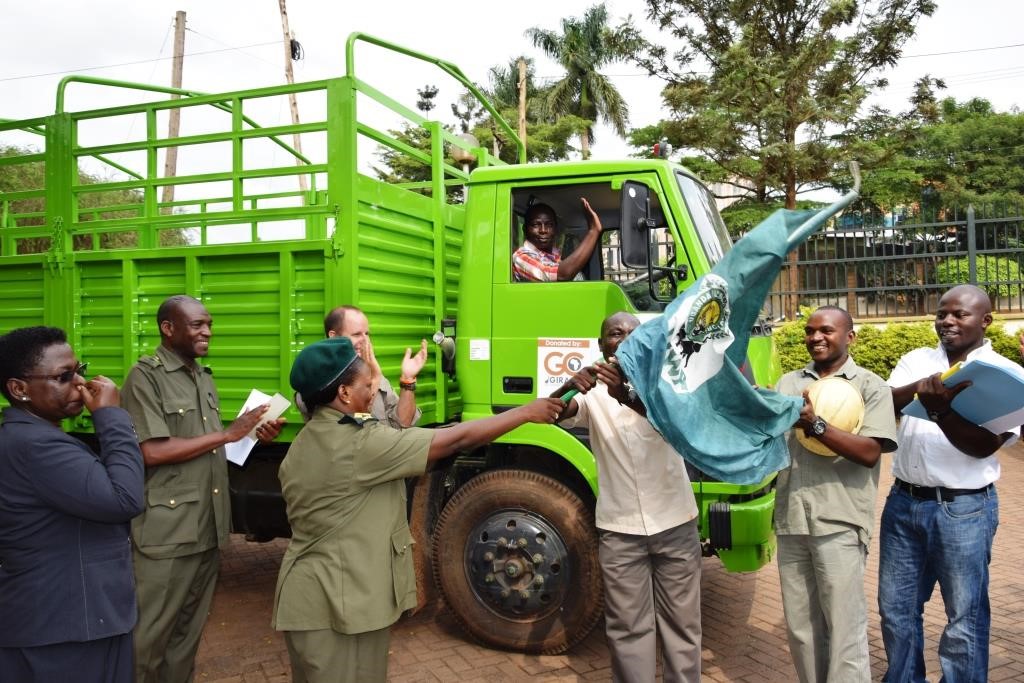
After years of planning and fundraising, Giraffe Conservation Foundation (GCF) and Uganda Wildlife Authority (UWA) have finally launched Operation Twiga. Twiga is the Swahili word for giraffe and Operation Twiga is an initiative to protect the critically endangered Rothschild’s giraffe ( Giraffa camelopardalis rothschildi ). The operation was launched at the headquarters of UWA where Dr. Julian Fennessy, the Director of GCF, handed over a truck to UWA that will be used to transport giraffe from the northern side of Murchison Falls National Park (MFNP), Uganda to the southern side where these animals have not existed in perhaps the last 100 years (it is hard to say for sure). It was a special occasion that was spearheaded by the acting Executive Director of UWA, Dr. Nightingale Mirembe, Head Veterinary of UWA Dr. Patrick Atimnedi and the Director of Uganda Wildlife Education Center (UWEC), James Musinguzi. I am here to help in this effort as part of the continued collaboration of Michigan State University’s RECaP (Research on the Ecology of Carnivores and their Prey) Laboratory and GCF via Dr. Fennessy. Today we had a team meeting where we learned that we are going to translocate a total of 22 giraffes. We will move 20 of these giraffes to the southern bank of the Victoria Nile River that bisects the park, and 2 giraffes will be moved to UWEC in Entebbe.
Picture
Nightingale Mirembe flags off Operation Twiga in front of the truck that was donated by GCF.
The main objective of Operation Twiga is to secure the future of Rothschild’s giraffes in their natural habitat and range. With human activities threating the survival of giraffe subspecies across sub-Saharan Africa, such programs are key to the conservation of this incredible species. For instance, there is ongoing oil exploration in northwestern Ugandan, adjacent to MFNP, and the effects of such activities on the local flora and fauna are, as yet, unknown. Uganda is home to 75% of the remaining Rothschild’s giraffe population and MFNP is home to the largest population of the subspecies, numbering slightly over 1,000 individuals. Thus, a team of veterinaries, ecologists, rangers, and volunteers, made their way to MFNP to begin the translocation process of these precious animals. The team spent a day assessing the terrain and materials needed for the translocation. Park rangers and UWA officials also held a brief training session to make sure that everyone knew their roles beforehand.
Picture
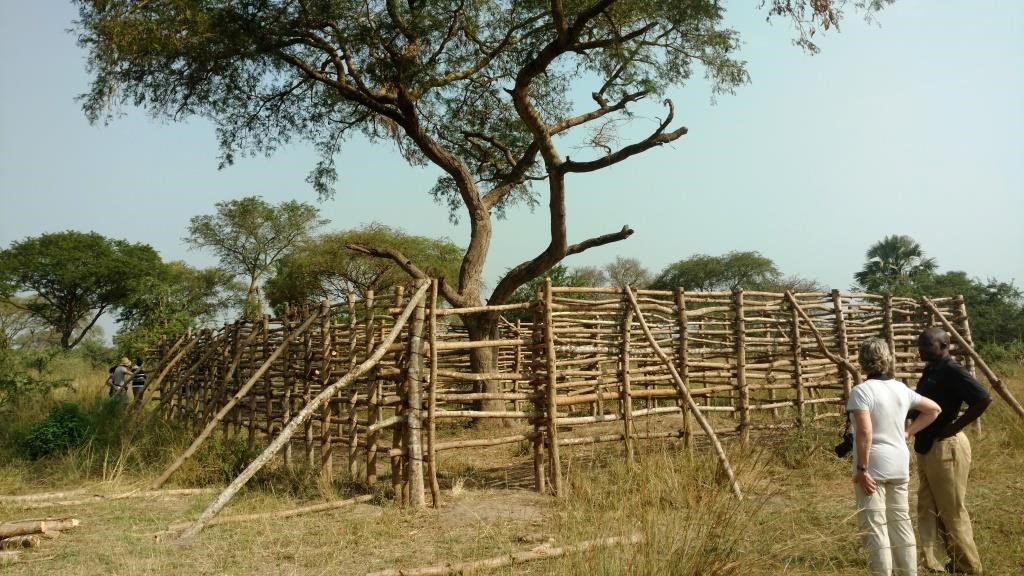
An UWA official showing Kathy Leiden (of Leiden Conservation Foundation) the enclosure where giraffes will be kept to habituate them to human presence before release.
​The training was led by Dr. Peter Morckel, an expert who has assisted in the translocation of African megafauna for several decades. Moving any large mammal, especially one as large as a giraffe, is easier said than done. The training was very helpful as everyone was reminded what to do at each stage and in good time. Wild animals are not used to human presence and they can become easily agitated or aggressive when humans get too close. Therefore, it was important that we (the whole team of ecologists, vets, rangers, and volunteers) were made aware of the risks and what was expected of each one of us. We were shown the tools that would be used for the operation and got up close with them before they were in use. One particular item that grabbed everyone’s attention was the cart for transporting giraffe that was donated by UWEC. Everyone is excited about Operation Twiga and is anxiously waiting for the moment when the enclosure, which was built by UWA rangers, has a couple of tenants!
Picture
Tom Leiden, of Leiden Conservation Foundation and me in front the giraffe cart.
Picture
Operation Twiga truck on the ferry, crossing the Victoria Nile. A later journey will see giraffes making this exact crossing.
0 Comments
<<Previous
Forward>>

    Author

    Follow our 'Notes from the Field' as we document RECaP's research globally.

    Archives

    August 2018
    January 2018
    September 2017
    May 2017
    March 2017
    December 2016
    June 2016
    May 2016
    February 2016
    January 2016
    December 2015
    September 2015
    August 2015
    July 2015
    June 2015
    May 2015

    Categories

    All

    RSS Feed
Powered by Create your own unique website with customizable templates.