I have always been mesmerized by nature. As a child growing up in Puerto Rico, my attention was captivated not only by vast tropical forests that would consume me while hiking, but also by seemingly insignificant tiny bugs – and everything in between. Even though Puerto Rico is a small island, the diversity of Puerto Rico is impressive. Most people don’t realize that in just an hour’s drive, you can go from visiting our National Rainforest (El Yunque) with its towering ceiba trees booming with the sounds of a tremendous variety of tropical birds, to a Dry Forest dominated by low hanging shrubs that shade the camouflaged reptiles slithering around in the blistering heat. With these environments, and the enduring support of my parents, Puerto Rico was an absolute playground for the young naturalist in me. So, quite “naturally,” I grew up loving the outdoors and everything that had to do with it.
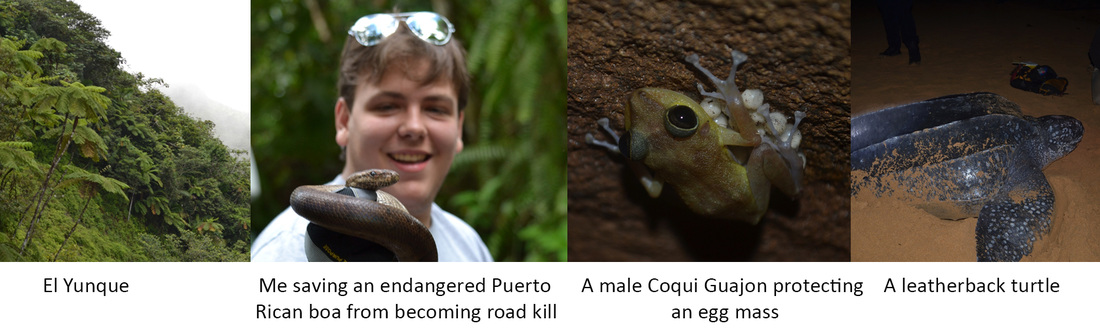
As I matured, so did my interests, and my excursions into nature graduated from mere curiosities to an undying passion for wildlife and wild things. In high school, my interests became more refined as I volunteered with wildlife organizations, talked with wildlife professionals and indulged myself in scientific wildlife literature. After much searching, I found my calling to be a spatial ecologist and now I feel as though I am in the midst of achieving this career objective. I am fascinated by the ways in which animals move across vast swathes of land over months or years, how they make decisions about where to eat or hunt, and how they settle on productive habitat to make a living. It is questions like these that I would like to devote my professional career to assessing.
With my interests refined, I began searching for a place that would enable me to follow my dreams and provide me with the education that I needed to be successful: a place where I could initiate my wildlife apprenticeships. And that is precisely where Michigan State University (MSU) comes in. As soon as I saw the university’s vast and diverse programs in Wildlife Management and Conservation Biology, I immediately fell in love with the university and I knew that it was the place I needed to be. As a kid from Puerto Rico the transition into life on a Big Ten campus was certainly an adjustment. But I immediately found a community of like-minded students in the Department of Fisheries and Wildlife. The one challenge that I did find in my first year at MSU was exactly how I could best focus my energies on research. To be honest, there was hardly anything that I learned in my classes that did not interest me. But as time went on and I was exposed to more fields in conservation biology, I began to fall in love with relatively new field of spatial ecology and how it was in constant development. Knowing this, I searched for a place around campus that I could explore and learn more about my interests in the real life setting of scientific research. The end of this August (2016) will mark one year since I joined the RECaP lab in pursuit of becoming a spatial ecologist.
With my interests refined, I began searching for a place that would enable me to follow my dreams and provide me with the education that I needed to be successful: a place where I could initiate my wildlife apprenticeships. And that is precisely where Michigan State University (MSU) comes in. As soon as I saw the university’s vast and diverse programs in Wildlife Management and Conservation Biology, I immediately fell in love with the university and I knew that it was the place I needed to be. As a kid from Puerto Rico the transition into life on a Big Ten campus was certainly an adjustment. But I immediately found a community of like-minded students in the Department of Fisheries and Wildlife. The one challenge that I did find in my first year at MSU was exactly how I could best focus my energies on research. To be honest, there was hardly anything that I learned in my classes that did not interest me. But as time went on and I was exposed to more fields in conservation biology, I began to fall in love with relatively new field of spatial ecology and how it was in constant development. Knowing this, I searched for a place around campus that I could explore and learn more about my interests in the real life setting of scientific research. The end of this August (2016) will mark one year since I joined the RECaP lab in pursuit of becoming a spatial ecologist.
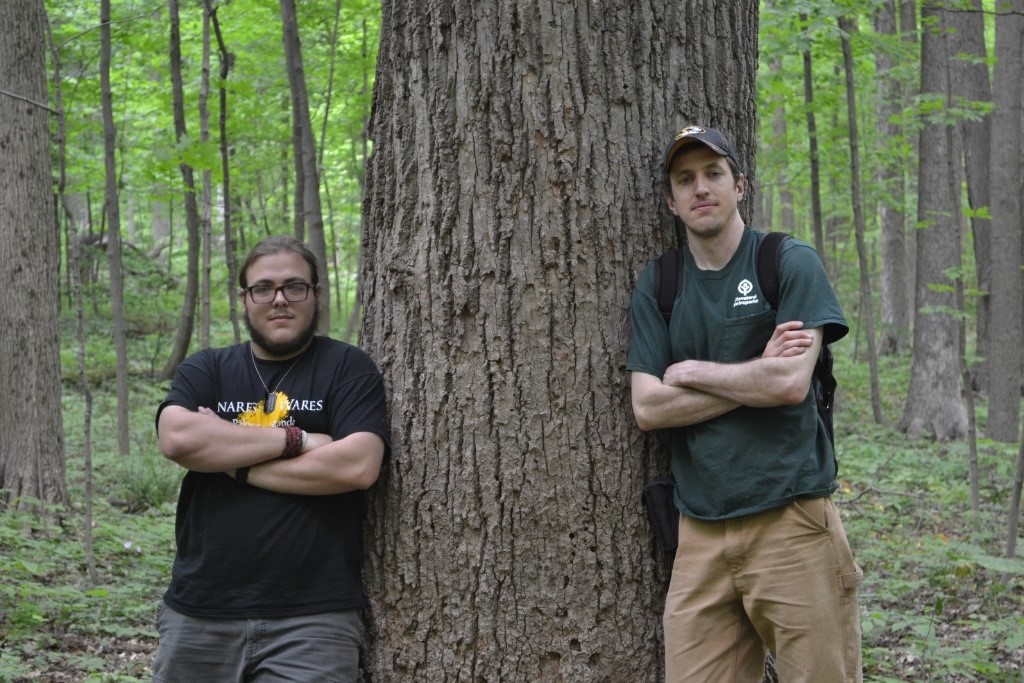
Me (Left) and Remington Moll (Right).
My experience in RECaP began by working under the guidance of 2nd-years masters student Arthur Muneza. Arthur’s interests were centered on mapping and quantifying the prevalence of Giraffe Skin Disease in Ruaha and Serengeti National Parks. Working with him was one of the best experiences of my life because I learned numerous skills essential for an aspiring researcher and future spatial ecologist. Skills that involved things like learning R, a statistical analytics program, and applying photogrammetry analysis techniques to images of giraffes to identify individual giraffes by the unique spot patterns on their coats and to quantify the severity of Giraffe Skin Disease on them. But as our work reached its culmination last winter, I began to wonder what I would be doing next.
I turned my attention to getting a summer internship that would build my field skills and solidify the ecological concepts I had been learning in the classroom such as predator-prey relationships and human-wildlife interactions. These positions can be hard to come by. Thousands of undergraduates across the US actively compete for a handful of coveted technician internships that are offered, and only a select few get a spot. I applied to countless opportunities all around the United States, all of them being extraordinary opportunities to experience if I had the chance. As summer approached, I sent out more and more applications but had received no response. The pressure was on. A technician position was exactly what I needed to make me a more competitive applicant for future positions especially due to my interests in continuing my education through graduate school. Just when it seemed I would never land a position, everything fell into place and I was offered an internship that I could never refuse. Dr. Montgomery and Remington Moll offered me the opportunity to transition into doing research on Remington’s Urban Ecology Project and to work for him during the summer as a technician in the Cleveland Metroparks. The Metroparks are a one of a kind park system, consisting of over 23,000 acres of land divided among 18 different reservations. These reservations, which form a rough semi-circle around downtown Cleveland, are best known to native Clevelanders as the “Emerald Necklace.”
I turned my attention to getting a summer internship that would build my field skills and solidify the ecological concepts I had been learning in the classroom such as predator-prey relationships and human-wildlife interactions. These positions can be hard to come by. Thousands of undergraduates across the US actively compete for a handful of coveted technician internships that are offered, and only a select few get a spot. I applied to countless opportunities all around the United States, all of them being extraordinary opportunities to experience if I had the chance. As summer approached, I sent out more and more applications but had received no response. The pressure was on. A technician position was exactly what I needed to make me a more competitive applicant for future positions especially due to my interests in continuing my education through graduate school. Just when it seemed I would never land a position, everything fell into place and I was offered an internship that I could never refuse. Dr. Montgomery and Remington Moll offered me the opportunity to transition into doing research on Remington’s Urban Ecology Project and to work for him during the summer as a technician in the Cleveland Metroparks. The Metroparks are a one of a kind park system, consisting of over 23,000 acres of land divided among 18 different reservations. These reservations, which form a rough semi-circle around downtown Cleveland, are best known to native Clevelanders as the “Emerald Necklace.”
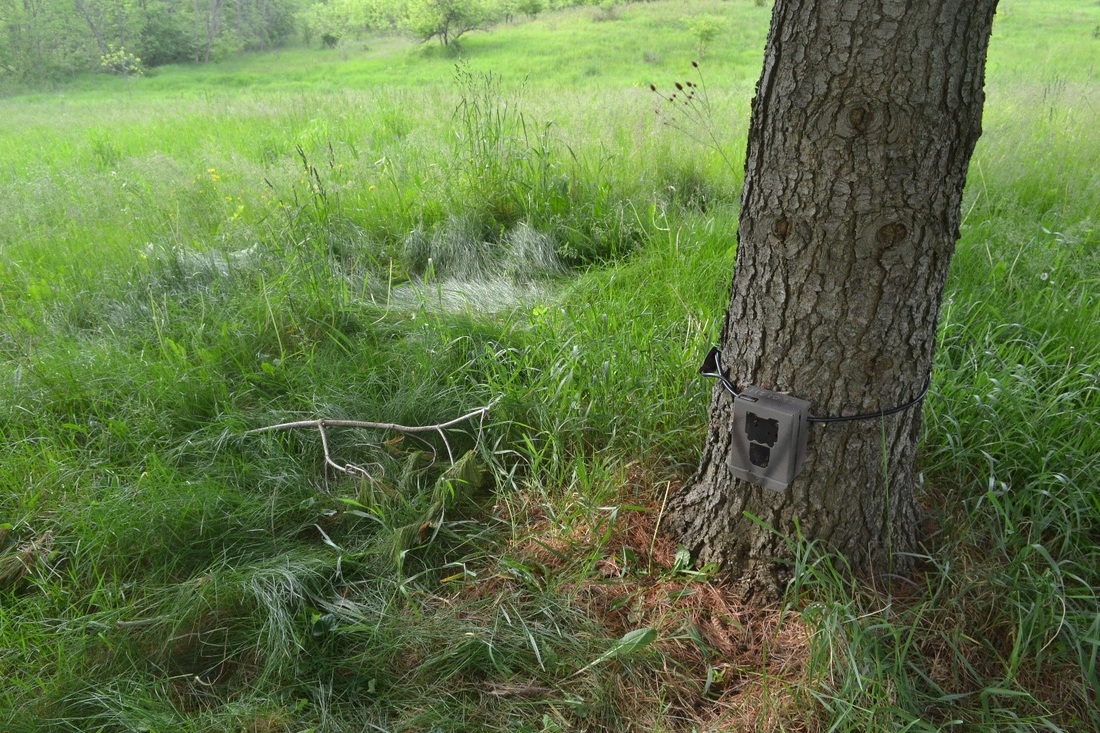
Here is an example of when something is there but is not being detected. A deer bed only 2 meters away from one of our camera. Unfortunately for us, the deer made its bed behind one of our cameras.
It has been 4 weeks since my position began and I can’t even begin to describe how eye-opening this experience has been. With all my time in Cleveland, I have observed how much the residents of this area appreciate these parks. Every day I see people enjoying the natural beauty that each reservation provides. But I wonder: how much does the average user really know about these parks? People’s opinions are informed by what they see most often. But sometimes things are not always as they seem. From coyotes to weasels, the parks are teeming with an abundance of wildlife and each species has a different story to tell. But a lot of these stories are not obvious to the naked eye. Everything from a paw print found on the banks of the Chagrin River to claw marks on the bark of a young maple tree…these things tell the unseen story of the animals private lives. And these untold stories are exactly what we hope to capture with our camera-trapping project.
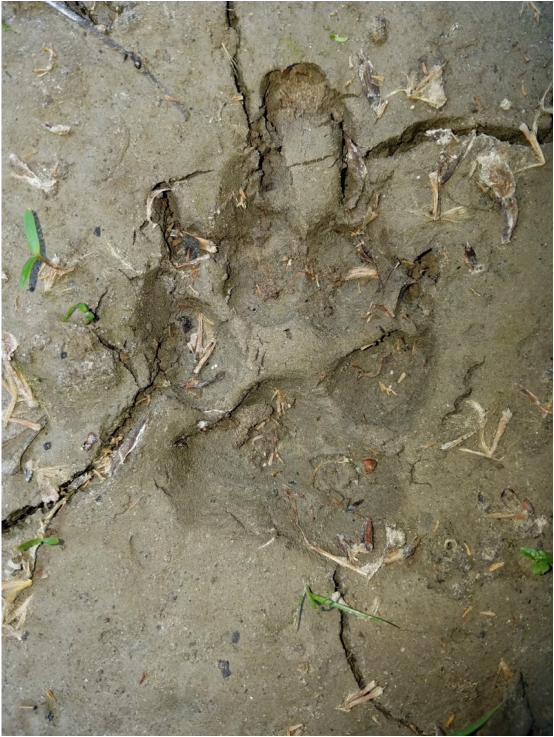
A coyote print on the banks of the Chagrin River. One of many ways to track the untold story of these secretive creatures.
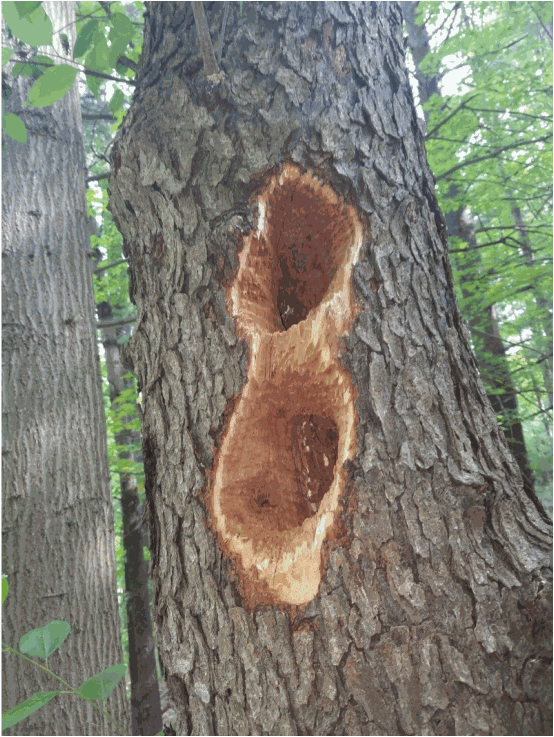
The marks left behind by a Pileated Woodpecker.
To do that, my job here is to deploy 103 wildlife cameras throughout the park system in addition to
104 that have been taking pictures since last November
. These 207 cameras would then serve as tools to capture the secretive lives of the animals that live in the reservations by discreetly taking pictures of them in their natural habitat. Alongside the deployment of the new cameras, I will also be measuring the visibility at all 207 cameras in their respective sites to study how biotic and abiotic factors can directly influence how well we can detect species. For example, we don’t know how often an animal is actually in front of the camera but manages to sneak by without triggering its motion detector. If this happens frequently, we need to correct for this error so we don’t underestimate our calculations of animals’ distributions and population sizes in the parks. By doing these visibility tests I will have the opportunity to not only gather extensive data on camera efficiency, but I will be able to experience each and every study site in the different reservations. What makes this such unique opportunity is that our cameras are strategically placed in relation to extensively studied vegetation plots in the different reservations. This means that I will be able to not only see, but experience all of the reservations from a completely new perspective that can only be accomplished by traversing nearly every square inch of these parks. From towering maple forests to waist high grasslands, each reservation has a different story to tell, just waiting for somebody to look close enough to unravel it. And luckily, I get to be that person!
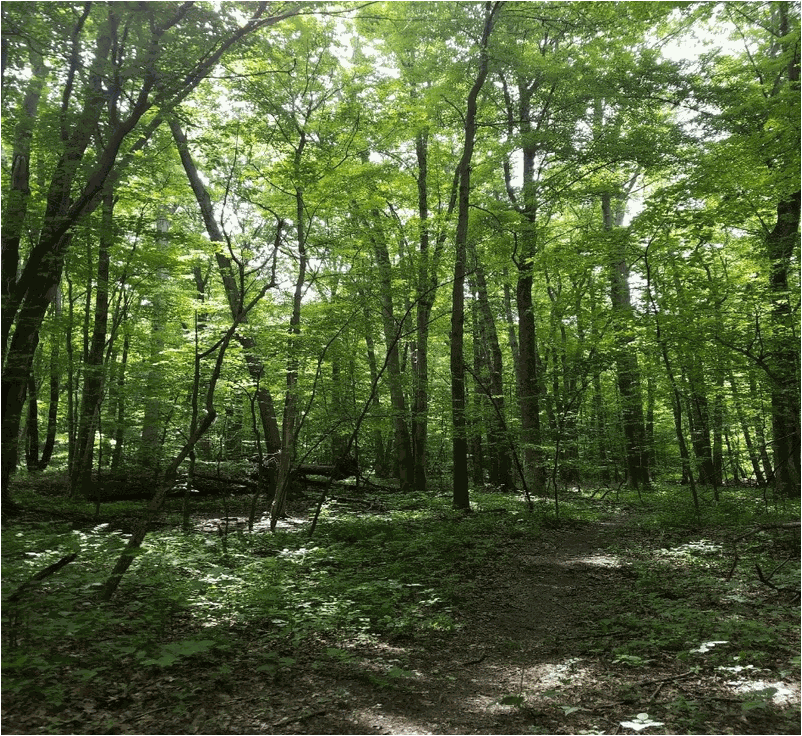
The beautiful emerald canopy found in the forests of the Bedford Reservation.
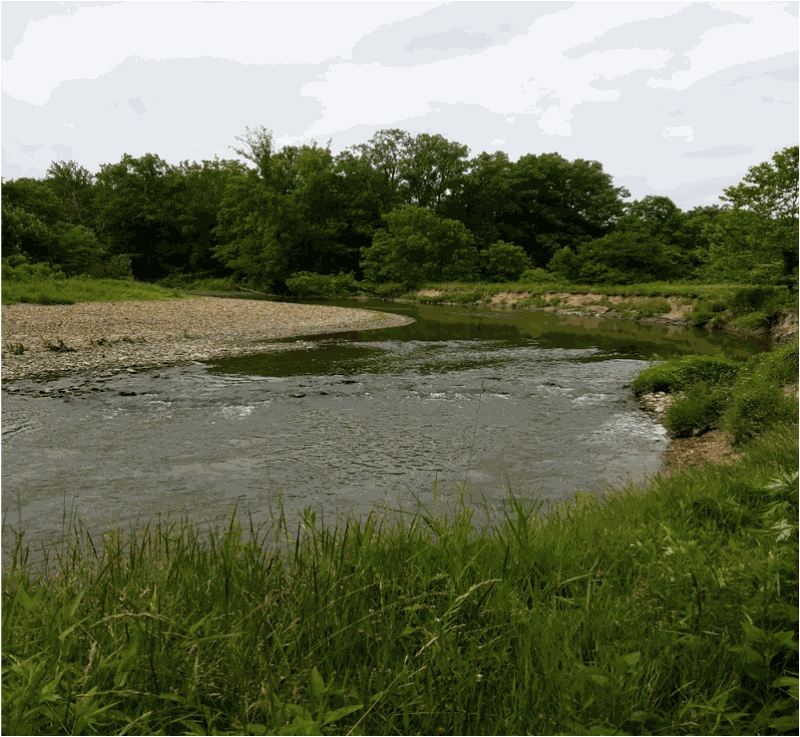
The gorgeous Chagrin River that feeds this impressive system.
Before I arrived in Cleveland, I tried to imagine what these reservations would be like. I had seen literally thousands of photos of the parks from camera data collected in the spring, so I thought my mental image would be accurate. But, wow, was I wrong – I dramatically underestimated the sheer beauty of these parks. They are a sight to behold and a wonder to the beholder. They offer such a variety of ecosystems that range from expanses of wetlands full of turtles basking in the sun to towering oak forests full of small mammals scurrying along the forests floor. But not only are the habitats simply breathtaking, but so are the myriad of creatures that inhabit them. The biodiversity that these parks house is astounding and the different stories that each park hold is enough to write dozens of books. The shadows cast by the forest canopy, the continuous hum of the cicada emerging throughout the park, the smell of a warm summer breeze against my face…all of these things awaken the little kid inside me that would be lost in wonder at the slightest detail that is found in nature. That same sense of awe that led me to follow my dreams of being a spatial ecologist. I know that many challenges lie ahead of me and that a lot of work is yet to be done through the remainder of my position, but as my fellow RECaP lab mates say: “Embrace the Challenge.”
 RSS Feed