RECaP Laboratory Research on the Ecology of Carnivores and their Prey
  • Home
  • Lab Members
  • Research
  • Publications
  • Snares to Wares
  • Focus on Wildlife
  • LIVEstock Initiative
  • Notes from the Field
  • Lab News
  • Contact Us

The Residents of the Greater Ruaha Ecosystem (Part 2) - Arthur Muneza

7/20/2015

0 Comments

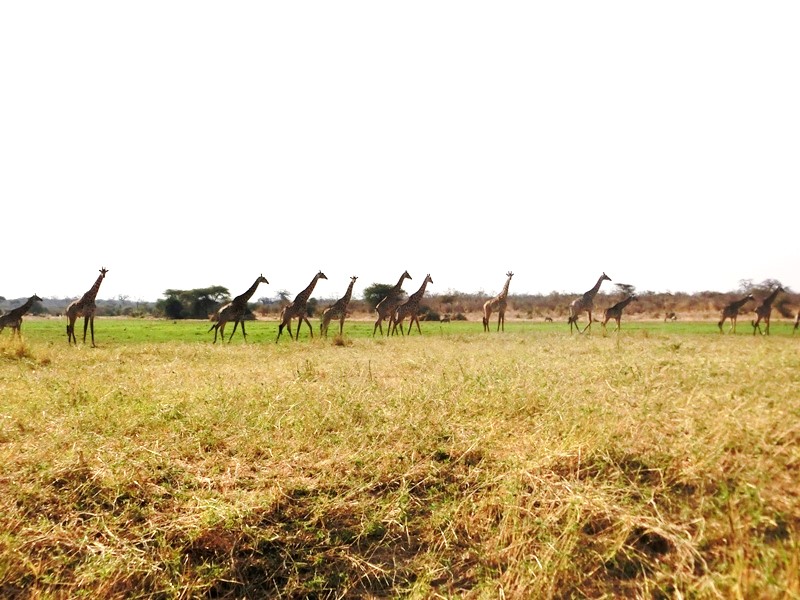
It is certainly a great time to be in Ruaha National Park (RNP). Usually, from mid-June to mid-November, the dry season sets in and the water levels of the Great Ruaha River gradually decrease. This results in large herds of animals that usually feed in the highlands in the north-western part of RNP moving south near the river to drink. This week, Zuberi (a field assistant at Ruaha Carnivore Project [RCP]) and I saw a very large herd of buffaloes, probably tens of thousands, near one of the marshes in the Jongomero area of RNP. Zuberi, who has worked in the Greater Ruaha Ecosystem since 1986, said it was the largest herd of buffaloes he had ever seen in the park. In the same area, we also saw a large herd of giraffes. It was a very beautiful sight. According to Zuberi, there were human settlements for the most part of the 20th century in the Jongomero area, which is located 60km west of RNP’s main gate, and more than 100km to the next ranger post, the Magangwe ranger post. The locals depended on farming and hunting for sustenance but were relocated from the park in the late 1970s, which also coincides with the time at which the world took notice of the drastic decline of rhino populations across East Africa. Rhinos were last spotted in Ruaha National Park in 1986. The people were relocated to nearby lands because they were reluctant to move far away from their ancestral land. Tense negotiations with park officials ensued but in the end, the local people were moved. This period marked the establishment of most of the villages surrounding RNP. In fact, Kitisi, the village where RCP is located, is a relatively recent village and is only a little over a decade old.
Picture
Large herd of giraffes walking across a marsh in the Jongomero area that was previously a human settlement area.
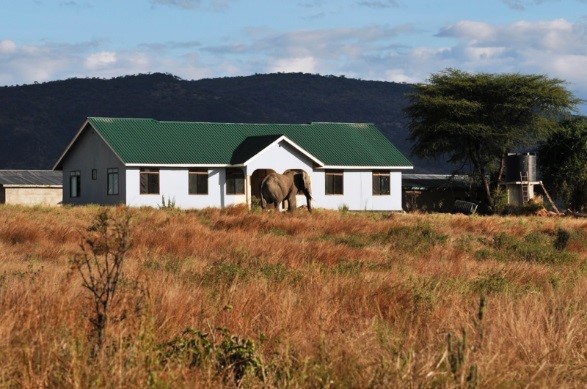
One of the toughest challenges facing conservation is preserving both cultural and biological diversity. When talking to Zuberi, he mentioned that government officials explained to the locals that the relocation of people from the park was a necessary precaution against human-wildlife conflict. The officials wanted the pastoralists to relocate further away from the park because the pastoralists were grazing their cattle inside the park. However, the park officials stood their ground and insisted that it was crucial to protect RNP’s wildlife and habitat so as to gain substantial benefits from tourism in the park. As a matter of fact, the park’s officials also moved the main gate of RNP about 6km south from where it is now because many people used to drive near the park in the Wildlife Management Areas (WMAs) and have extensive game drives observing a large diversity of wildlife without paying since they would never make it to the gate! Ruaha National Park is among the cheapest national parks in East Africa (the entrance fee is $30 for non-residents and about $2.5 for East African residents). Thus, the relocation of the main gate was also a necessary step to collect more revenue that contributes to the maintenance of the infrastructure of RNP and surrounding village lands. The main road that leads to RNP also passes through village lands, which depend on the road for transportation of goods and services. Zuberi, who has extensive knowledge of the road network in Ruaha, helped in constructing several bridges in the park and also transported building materials in the park during the construction period. Working with Zuberi was really a great learning experience and I now better understand how RNP’s landscape has changed over time.
Picture
The houses and offices of park officials were renovated using funds from tourism in RNP.
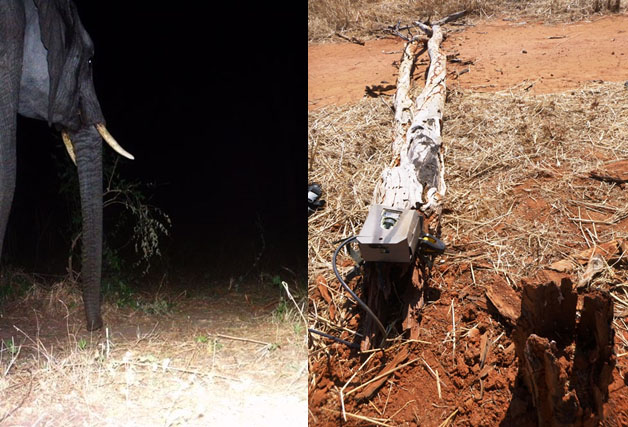
Leandro’s thesis, which seeks to determine the spatial distribution of large carnivores and mesocarnivores (non-dominant carnivores) and their prey across the landscape on a distance gradient from the park, is also progressing well. Leandro has been sorting the images from his camera traps, which he placed in a stratified random pattern from the park. He needs to check each photo for any passing animals. Some animals may be hard to identify, especially in photos taken at night. Thus, it is evident that the security of the cameras is top priority for Leandro’s success. This week however, when Leandro was checking on his cameras, he found that the tree on which he had affixed a camera had been felled. He noted that no tools were used to fell the tree, so the incident could not have been caused by human beings. The security box of the camera had some damage but the camera was still intact. When Leandro downloaded the photos from the camera, he discovered that the tree was actually felled by an angry elephant. It turns out the camera took a picture of the elephant at night, set off a flash which startled the elephant. The elephant then knocked down the tree, the source of the flash. Leandro admitted that he was very pleased that the camera was not damaged at all and was still in perfect condition.
Picture
The picture of the elephant that was taken at night, and the tree that the elephant knocked down after being startled by the light. The camera-trap, with the security box, was found still attached to the tree.
Leandro was certainly lucky that the elephant chose not to completely destroy the camera. He set the camera again in the same location and now we are waiting to see what will come up in the next batch of photos when he downloads them again. The wildlife of the Greater Ruaha Ecosystem has certainly been fascinating and, Leandro and I are continuously learning more about the landscape.
Picture
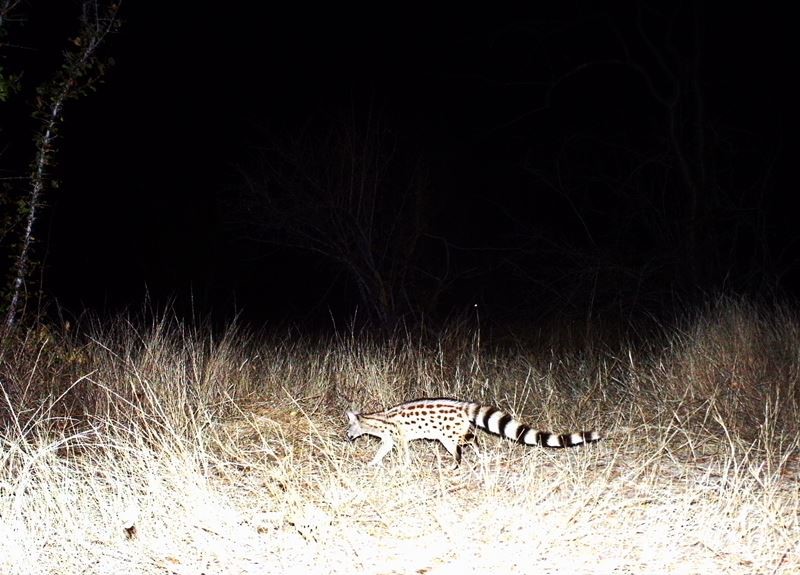
Picture of a genet from one of Leandro’s camera traps in the WMA.
0 Comments

Laying the foundation for a better future - Arthur muneza

7/13/2015

0 Comments

When I learned that I would be collaborating with the Ruaha Carnivore Project (RCP), I was tremendously excited. I have always wanted to participate in a community-based conservation project in one way or another. With increasing human populations, there is greater pressure on wild animals and wild places. For instance, across East African landscapes, pastoralists graze their livestock in many habitats traditionally used by wild animals, while farmers are increasingly using land nearer to protected areas as the need to bring crops to market intensifies. These elements are bringing people and wildlife in contact with greater frequency, which can lead to conflict. In addition to land access, humans and wildlife also compete for water resources. Here in the Greater Ruaha Ecosystem, the local people and wildlife travel great distances to access water from the Great Ruaha River, especially during the dry season. The river flows eastwards from Ruaha National Park where it joins the Rufiji River, an important river for the Selous Game Reserve, which is one of the largest game reserves in the world. Farming is a staple activity among the local people living around Ruaha National Park, while the local Maasai and Barabaig maintain pastoralist lifestyles and graze their livestock in the surrounding lands including the Wildlife Management Areas. Therefore, RCP has no shortage of work to do in pursuit of their motto: to have a positive impact “For Carnivores and people.”
Picture
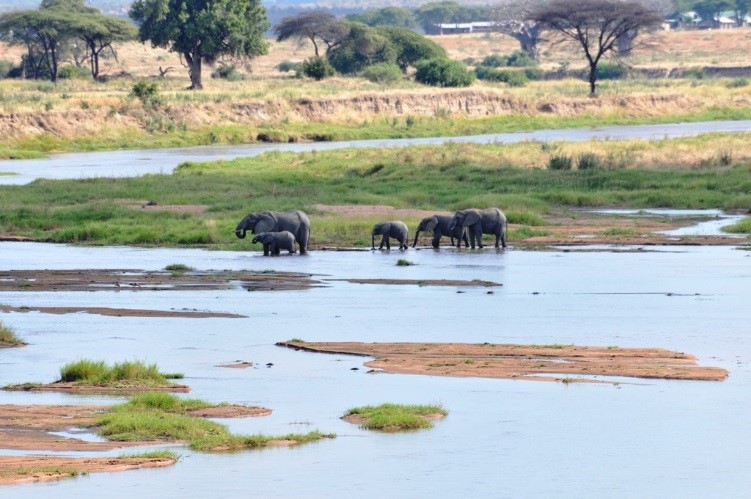
Elephants drinking from the Great Ruaha River. The water levels of the river have been on the decline in recent years.
During my time here in Ruaha, I have participated in RCP’s park visits (see “Sticking my Neck Out” post) and the specialized Anatolian shepherd dog checking activities (see “War on Ribs” and “War on Ribs – Part 2” posts). The staff at RCP recognize that for the project to be successful, the surrounding communities need to see tangible benefits associated with living with carnivores. While the communities get benefits such as medical and veterinary supplies through the community camera trap competition organized by RCP (see “Keeping an eye on Wildlife“ post), the project also seeks to train more local people and make education more accessible to these individuals. One of the ways that RCP fulfills this objective is by providing ‘Simba Scholarships’ for bright young students from local pastoralist families. These scholarships cover both tuition, accommodation in boarding school and school supplies for the students to attend secondary school in local institutions. The Simba Scholarships run for the entire duration of secondary school education. There is another RCP initiative, known as ‘Kids 4 Cats,’ where local schools partner with international schools, whereby the international schools donate supplies to the local schools. For instance, one international school donated money and equipment for the construction of laboratory for a village school in the Greater Ruaha Ecosystem. In addition to this, the village students are also connected with penpals from abroad where they have an opportunity to share stories about this wonderful landscape. In this manner, RCP provides tangible and relevant benefits for the villages they work with in the broader collaboration of carnivore conservation.
Picture
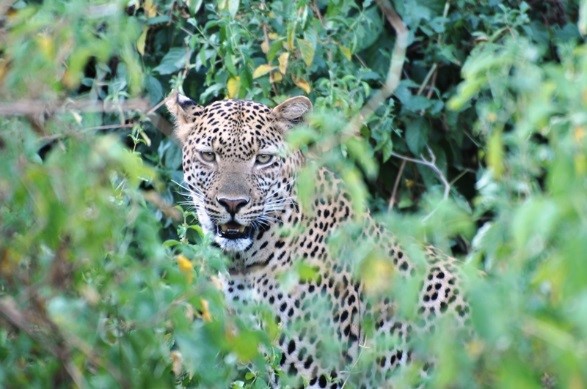
A leopard peeking through the thicket in Ruaha National Park. Carnivores regularly roam around the park and WMA and can reach the surrounding village lands.
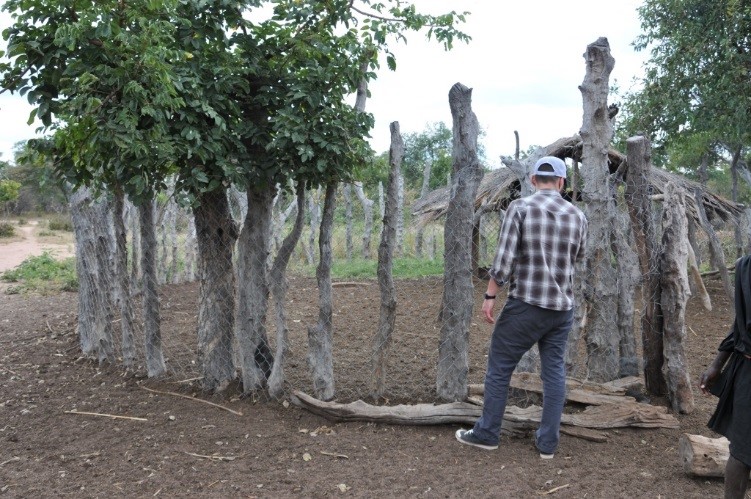
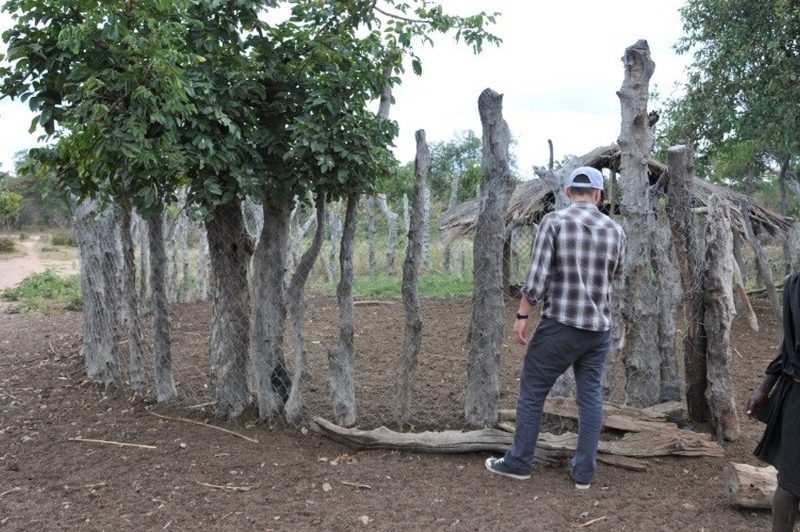
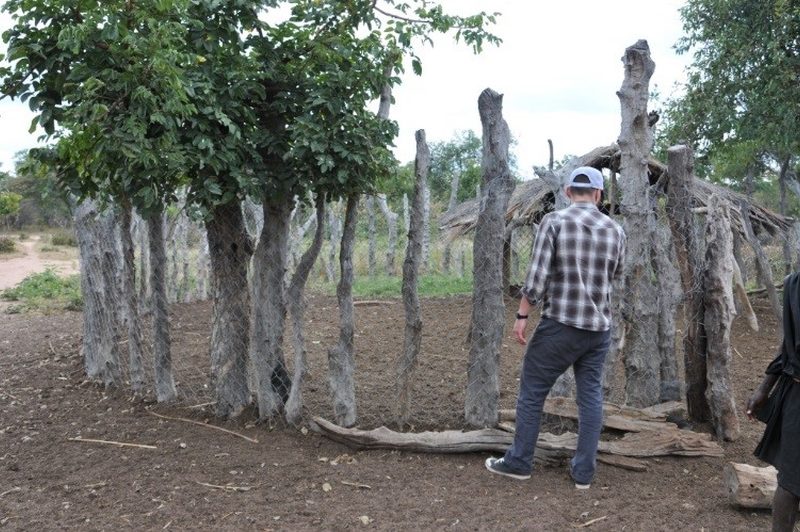
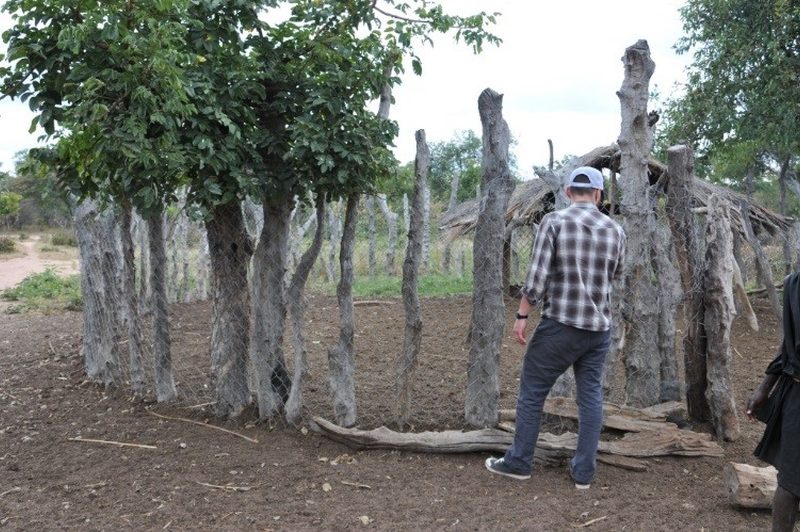
Along with making education more accessible to local villagers, RCP also helps in protecting the livestock of the pastoralists so as to mitigate human-carnivore conflict. This is important because large carnivores such as lions, hyenas and leopards have been spotted attacking wandering livestock by the villagers, which the villagers depend upon for their livelihood. Therefore, RCP contributes building materials for reinforced bomas (enclosure) to keep out the carnivores. The reinforced bomas have been very successful. Carnivore attacks on livestock have reduced by 60% and retaliatory killing of carnivores have decreased by 80% since RCP started working in the Greater Ruaha Ecosystem. The bomas are built using steel fencing wire and local hard wood poles. Usually, the local people use thorny shrubs for fencing. This week alone, Justin, the RCP staff member who oversees the construction of the bomas, received three requests from pastoralists who want to construct such bomas.  The villagers normally pay for half the cost and RCP covers the other half for the construction of the reinforced boma. This way, the bomas become accessible to more pastoralists who greatly wish to protect their livestock from carnivores.
Picture
Bob inspecting a reinforced boma in a nearby village. RCP has contributed in building several reinforced bomas.
Without a doubt I have learned a great deal since I arrived here in Ruaha and started working with staff at RCP. I have acquired a better appreciation and understanding of community-based conservation projects.  Through RCP’s work, the villagers are starting to recognize that carnivore presence can result in substantial benefits and thus villagers are also acknowledging that future generations will benefit from their work.

0 Comments

Keeping an Eye on Wildlife - Arthur Muneza

7/8/2015

0 Comments

Leandro and I are exactly halfway through this summer’s field season. In my case, I am now very familiar with my five transects in the park. Every day, I choose a transect and head out driving at a constant speed, on the lookout for giraffes. This may sound a bit formulaic, but this research, for me, is not routine, it is exciting. For instance, a few days ago I encountered a herd of 19 giraffes, with many young calves. Giraffes tend to give birth in June and July in Ruaha National Park and neonates (young calves) seem to be almost everywhere that I look. Fortunately, a majority of the young giraffe calves seem unaffected by the mysterious giraffe skin disease (GSD). While I have been conducting these incredible surveys, Leandro has been checking his camera-trap grids. He set up six camera trap grids within the village land and Wildlife Management Areas (WMA) to study how various carnivores use this landscape. At each check, Leandro must monitor the battery life, calculate the space remaining on the memory cards, and determine whether the cameras are still in good working order. These checks must be conducted at least once every month, meaning that he regularly has to cross rivers, valleys, and go under, over, and through bushes to get to each grid. Leandro has recently identified easier travel routes to access his cameras, which is great news.

Picture
Large herd of giraffes standing under a tree for shade.
Leandro’s research contributes to the Ruaha Carnivore Project’s (RCP) larger effort to understand the ecology of large carnivores (lions, hyenas, leopards, and cheetahs) in the Greater Ruaha Ecosystem and their effects on mesocarnivores (non-dominant carnivores). In these efforts, Leandro works closely with Mgogo (a research assistant tasked with setting and checking RCP’s camera traps) and Geoffrey (another RCP research assistant). One of the advantages of using camera traps is that they are remotely triggered by animal movement and inherently non-invasive. To gain an unbiased appreciation for animal occurrence, it is best that the cameras be put out in a stratified random pattern. This stratified random design was established using geostatistical software on Leandro’s computer. Upon our arrival in Ruaha we navigated to the coordinates returned from this method, affixed the cameras to a tree, and oriented the cameras so that they faced Ruaha National Park. We also made sure we communicated with the chiefs of the nearby villages to keep the local people informed of our research efforts and engaged in the process of learning more about carnivore occurrence in these lands.

Picture
Leandro and I setting up a camera in a nearby village.
The importance of keeping the villagers involved cannot be understated. After all, the cameras are sometimes set in areas the villagers regularly use, especially when grazing their cattle. In order to raise awareness on how RCP uses the data from the camera-traps, Mgogo oversees a project within RCP known as Community Camera Trapping (CCT). Ruaha Carnivore Project chose 4 villages near the base camp and gave them 8 camera-traps each so that the community could assess carnivore habitat use. Each village has a ‘camera trap officer’, who is in charge of finding a suitable area within its borders to set up a camera. Mgogo trained the officers on how to set and check the cameras. The officers are committed to their work because CCT has an inherent competitive component (on a points scale) to the initiative. A picture of the endangered African wild dog (a very rare species in this region) is worth the most points, followed by leopard, then lion and hyena. Every two months, the villages tally the points of the carnivore photos and gain access to additional resources (medical supplies, school supplies, veterinary supplies) distributed by RCP. One key criteria of the accessing the resources is that they must benefit the village as a whole, and not individuals. In the end all the participating villages will get supplies, but the scheme incentivizes the process in the hopes that villagers will begin to turn negative perceptions of carnivores into positive ones. Hopefully, the villagers will find interesting photos in their cameras.

Picture
A bat-eared fox from one of Leandro's camera traps in the village land.
Whether by safari or camera trap, Leandro and I are working to understand the ecology of wildlife in the Greater Ruaha Ecosystem via community engagement. By keeping an eye on wildlife, we hope to alleviate potential conflict with people and do our own bit to restore equity to human-animal interaction.

0 Comments

    Author

    Follow our 'Notes from the Field' as we document RECaP's research globally.

    Archives

    August 2018
    January 2018
    September 2017
    May 2017
    March 2017
    December 2016
    June 2016
    May 2016
    February 2016
    January 2016
    December 2015
    September 2015
    August 2015
    July 2015
    June 2015
    May 2015

    Categories

    All

    RSS Feed

Powered by Create your own unique website with customizable templates.