As Sophia, my long-term field assistant, and I pull up to the River Nile in our 4x4 truck I feel my heart pounding in my chest. It has been 5 months since my eyes have last seen the incredible landscape that is Murchison Falls National Park, since my nose has smelled the splash of this great river gouging out its earthen banks, since my ears have heard these mixed sounds of birds, boat motors, and car engines. For the past 5 months I have been working as a graduate student in Dr. Robert Montgomery’s RECaP Laboratory which conducts research on the ecology of carnivores and their prey. This lab is based at Michigan State University (MSU) which feels a world away from the banks of the Nile. I am smiling as I embrace this sensory overload and suddenly there is one sound, the voice of a friend that I have not seen in some time, which immediately wakes me from my almost meditative state.
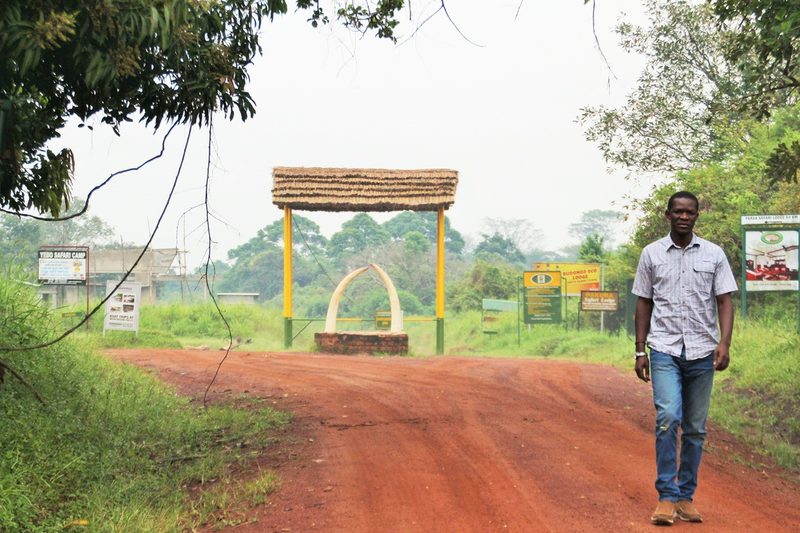
I am excitedly waiting to get across the Nile to see my friends…to return home.
“
Butcherman, the three-legged Delta pride head lion is long lost! George Atubo (20 + year Uganda Wildlife Authority (UWA) ranger) has retired. Tutilo Mudumba is lost and yet here you are my friend. Back to Murchison at last
!!!”
That is voice and words of my great friend Kwezi as he rushed forward with open arms embracing me after my long absence. This point marks the culmination of a 300 km drive, an 18-hour flight, and 5 months spent diligently working in East Lansing, Michigan preparing for my field work. Despite my long journey, I am back in the exact spot where I initiated my career in wildlife conservation all those many years ago: Murchison Falls National Park (MFNP).
In addition to being my good friend, Kwezi is a senior UWA range guide. He is a seasoned veteran in these parts eminently knowledgeable on all things MFNP. Kwezi heard a rumor that I would be returning to MFNP today. He was tipped off by lab mate and co-wildlife conservation conspirator Arthur Muneza. Arthur has been in MFNP working with Giraffe Conservation Foundation and UWA on Operation Twiga as detailed in our Notes from the Field. When Kwezi got wind of my return he did not sit idle. Instead, he found all sorts of our friends and organized them at the ferry crossing to meet me as I came into the park. To say that I was overcome by this welcome would be an understatement.
Greeted upon my arrival in MFNP by friends of myself and of Spartan Nation.
These people have been my friends for many years. We have dined together. We have laughed together. We have been deep in the field together. We have encountered lions and hyenas in the dead of night together. I guess with such experiences comes an unbreakable bond. I am glad to be here among friends. I am glad to be back in the field. I am glad to be home!
But why am I here, you may ask? I am here to quantify the effect of various disturbances on the ecology of lions. Murchison Falls is the largest national park in Uganda and the only protected area in Africa with active oil mining ongoing. Before the onset of the oil works inside MFNP, I was embedded in this beautiful park studying lions to understand key threats to their survival. The results of my study lead to the establishment of a snare removal program, called the ‘Snares to Wares’ initiative. Illegal snares are widely used by poachers, many of them are children recruited into this industry because they lack other opportunities, in MFNP to capture mammals for bush meat. In this way, small metal wire rings are placed along game trails and concealed where they indiscriminately capture and maim any unsuspecting animal that walks past, including lions. That is how Butcherman, the former alpha male lion of the Delta pride, impressively managed to guard over his territory for more than 3 years with just three legs. Imagine a lion being capable of defeating rival males when missing the better part of one of his hind legs?
But why am I here, you may ask? I am here to quantify the effect of various disturbances on the ecology of lions. Murchison Falls is the largest national park in Uganda and the only protected area in Africa with active oil mining ongoing. Before the onset of the oil works inside MFNP, I was embedded in this beautiful park studying lions to understand key threats to their survival. The results of my study lead to the establishment of a snare removal program, called the ‘Snares to Wares’ initiative. Illegal snares are widely used by poachers, many of them are children recruited into this industry because they lack other opportunities, in MFNP to capture mammals for bush meat. In this way, small metal wire rings are placed along game trails and concealed where they indiscriminately capture and maim any unsuspecting animal that walks past, including lions. That is how Butcherman, the former alpha male lion of the Delta pride, impressively managed to guard over his territory for more than 3 years with just three legs. Imagine a lion being capable of defeating rival males when missing the better part of one of his hind legs?
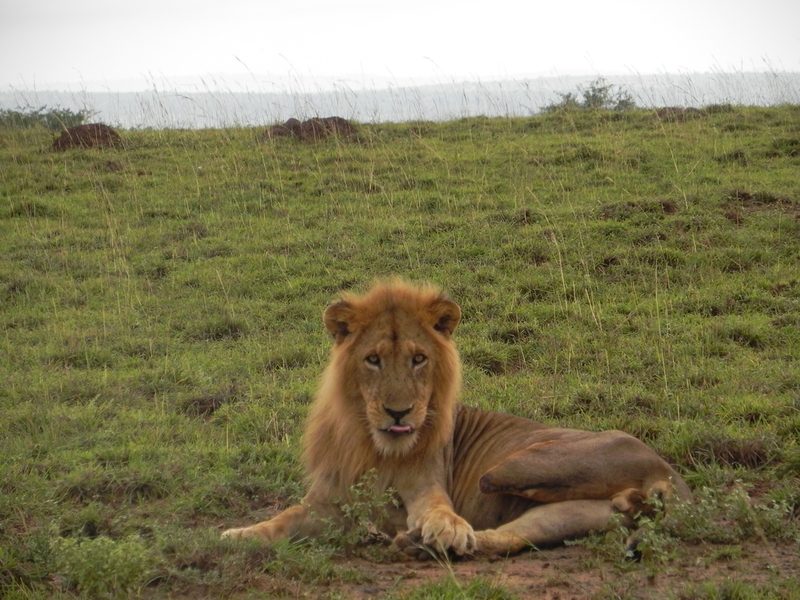
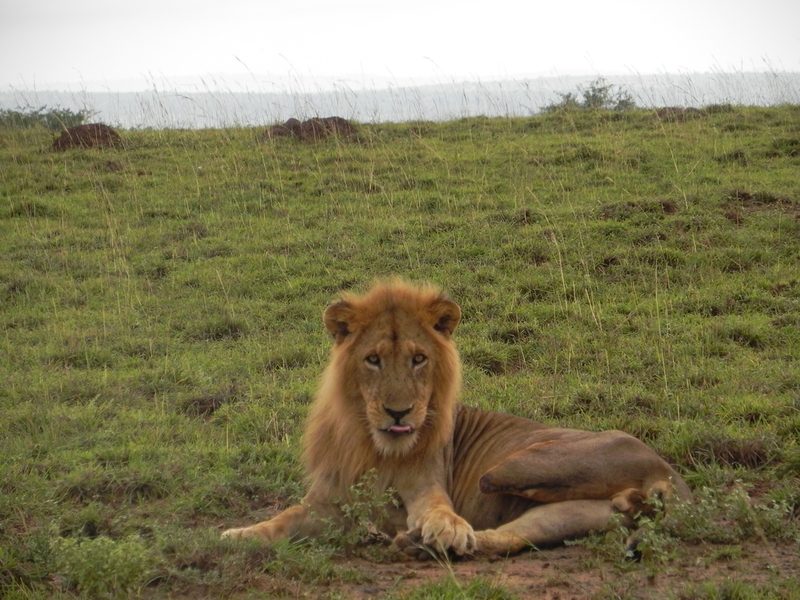
Butcherman, the famous 3-legged alpha male lion of Murchison Falls National Park. Butcherman’s rear left leg was taken by a poacher’s snare but he somehow managed to defend his territory from challengers to his throne for over 3 years. But Butcherman has now gone missing and we are keen to determine what has become of him.
Via the Snares to Wares initiative, I am keen to transform something that can do so much harm into something that can do so much good. In this way, I develop sophisticated quantitative models to most effectively retrieve snares from the landscape. Once these snares are removed I donate the metal wire to craftsman (those same boys who used to participate in poaching) in the market who turn this agent of death into a ware or craft that has a value and can be sold for profit. My return to MFNP is a follow up to this initial success story. I want to re-connect with the ex-poacher youth groups and document their amazing use of metal wires for crafts and sandals. And there is not time like the present. Despite my efforts, poaching via wire snares has increased during my absence from the park. Therefore, it is vital that I re-assess the Snares to Wares initiative and expand this fundamentally-important program with additional support from interested members of the public. Without the critical effort, there will be more three-legged lions, or three-legged kob, or leopards, or hyenas. Without this effort, tourists to this park will see the sights of horribly-maimed wildlife more often than is tolerable.
One of the other responsibilities that I feel is the need to share with the broader MSU community the pressing and important research that we are conducting in RECaP. You should know that Spartan Nation is strong in Uganda. “Go Green, Go White” works just as well in Breslin Arena as it does in this region as the Uganda Wildlife Authority uniforms share our school colors. Over these next two weeks and beyond, I will give you a window into what it is like to conduct research in East Africa searching for the large carnivores that stalk this landscape in the twilight. I will document how in RECaP we are using technological innovations to study carnivores and their prey with ever-more impressive detail. And I will provide you with photos of MFNP with its flowing savannah hills, thicketed combretum bushes, and lush impenetrable forests.
The joy of being back home in MFNP is overwhelming for me! And the first thing that I need to do, as Kwezi told me earlier today, is pay respect to my friend George Atubo. We know where George is: he is at his village home enjoying retirement. The next job will be a bit harder. We need to track down that missing three-legged lion Butcherman whose popularity is only eclipsed by his rival Cecil. We don’t know where Butcherman is or what has become of him. We can only hope that he too is enjoying his own type of retirement from the strenuous life of an alpha male. Stay tuned as we search for this impressive animal. We are glad to have you aboard!
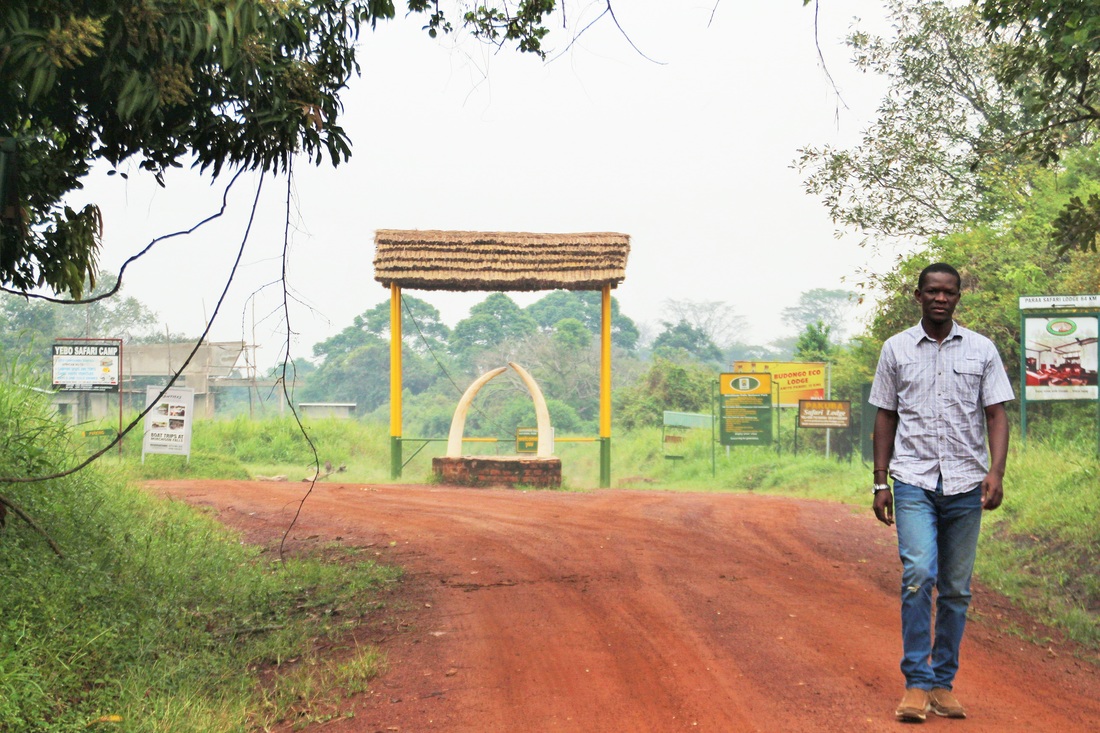
Murchison Falls National Park…This is where I call home.
 RSS Feed