There is a mysterious allure to nature. There is the sense that things are hidden, layered. You see a tree, you call it by its common name, “maple”. You don’t see the seed it once was, smaller than a penny, or the gust of wind that brought that seed to just the right place on the ground, a place with an ideal mixture of sun, water, soil acidity and temperature – the delicate conditions that enabled the inconsequential seed to become an 8,000 pound giant, towering over you with mighty arms spread to the sky, now a bastion for birds and a source of colorful inspiration for humans each autumn. The tree exemplifies nature’s hidden layers: we tend to view things as they appear, but a simple poke at the surface reveals a new world underneath the nature in front of our perceptions.
As an ecological researcher, I like to poke at the surface of things. I look for the rabbit holes – both real and metaphorical – that lead into the invisible infrastructure that undergirds nature. Once there, I ask questions: Why does the animal dig out a den here and not there? What do the communities of critters do in the dark of night? How do ecosystems change as winter snow gives way to spring sunshine? Investigating these questions reveals astonishing beauty, and answering them enables us to conserve our natural resources so that all creatures, humans and wildlife alike, can flourish.
To this end, I study the secret lives of carnivores. A city-dweller my whole life, I am fascinated by those carnivores that make a living among us, carving out a niche between the humans going about their daily business: raccoons and skunks and coyotes and foxes and, yes, the occasional bobcat. Despite sharing our cities with them, we know precious little about these species. The central theme of my PhD dissertation research in the RECaP Laboratory is to describe and predict the factors associated with the decision-making of these elusive urban carnivores.
But there is a problem: urban carnivores are among the most hidden of all nature’s beasts. They make their living on being shy and sly and cunning. So how can we learn about them?
Enter technology. I am part of a wonderful team of collaborators that relies on the latest cutting-edge technologies to peer into the layered world of carnivores. We at RECaP work together with the Cleveland Metroparks in Cleveland, Ohio, and one of our go-to technologies for studying urban wildlife is the camera-trap.
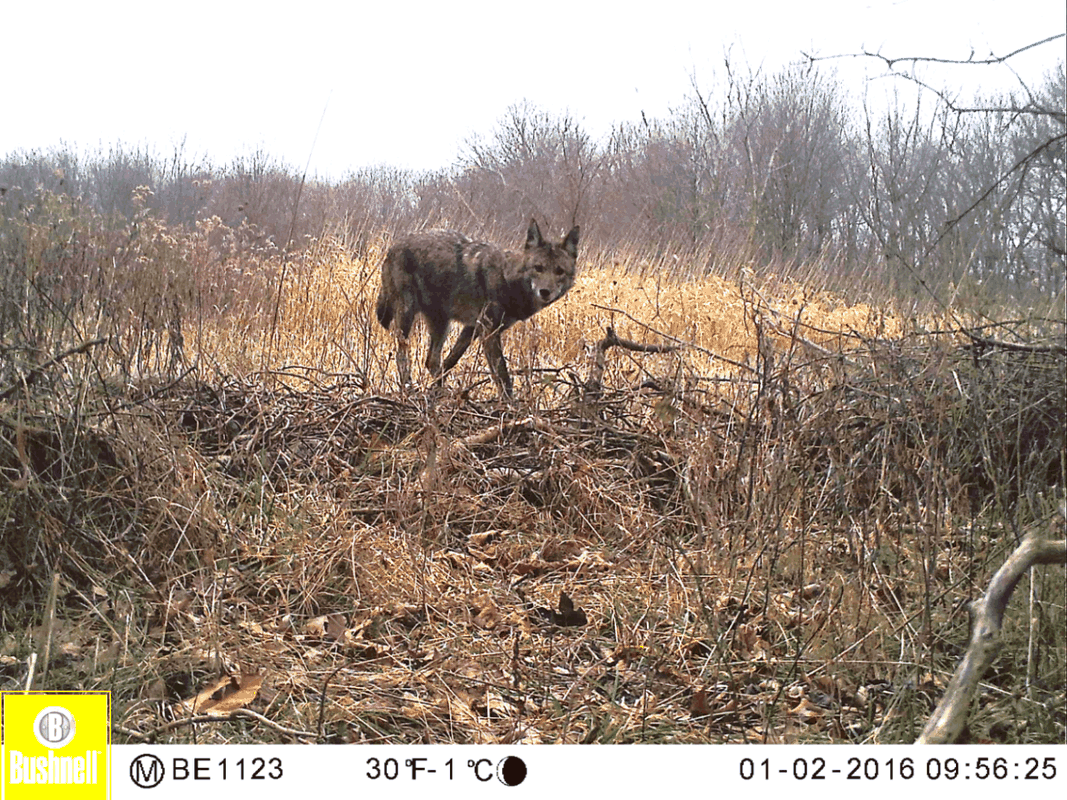
The coyote, a shy and secretive urban carnivore, as caught by one of our camera-traps in the Cleveland Metroparks.
The camera-trap looks rugged on the outside, but on the inside contains a constellation of delicate computer connections. It is delightfully sensitive – built specifically to detect our furtive wildlife friends. Camera traps sense changes in heat and movement from over 100 feet away. When something is detected, the camera snaps a picture in a mere tenth of a second. Even during a moonless winter night, our camera-traps document the secret lives of animals with brilliant clarity thanks to an array of infrared LEDs – the camera gets a crisp picture and the animals are not bothered by the infrared flash.
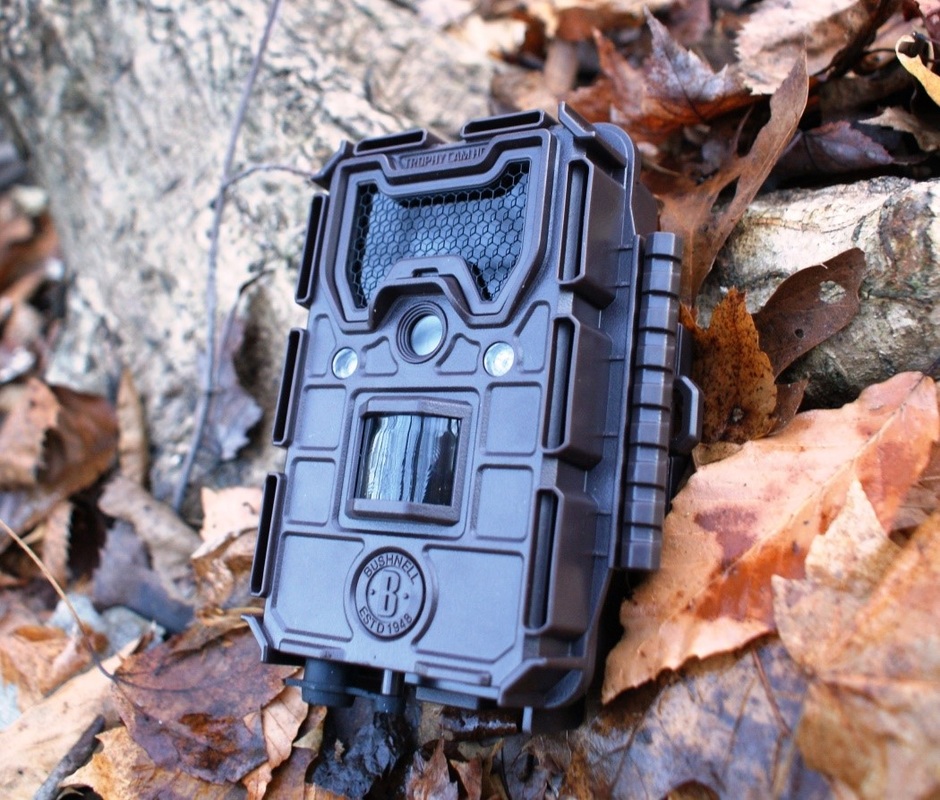
Our camera-trap, the Bushnell Aggressor. Fully equipped with a 14 megapixel camera that records pictures and videos, all triggered by a motion- and heat-detecting sensor.
This morning, our research team is heading out into the field to place three dozen camera-traps throughout the expansive Cleveland Metroparks system, which covers a massive 23,000 acres of urbanity. We gather at 7:00am in a decidedly unnatural place: a storage garage cram-packed full of field equipment. Cleveland Metroparks Wildlife Ecologist Jon Cepek provides us with instructions: “Alright, each team has an equipment set all ready to go – GPS units, datasheets, a cordless drill, bolts, an iPad, cablelocks, and, of course, cameras. Double-check everything and get geared up.” We assemble into our two-person teams, grab our equipment and load into trucks. The iPad, another crucial piece of technology, directs us to the locations throughout the Metroparks where we will place cameras in the landscape.
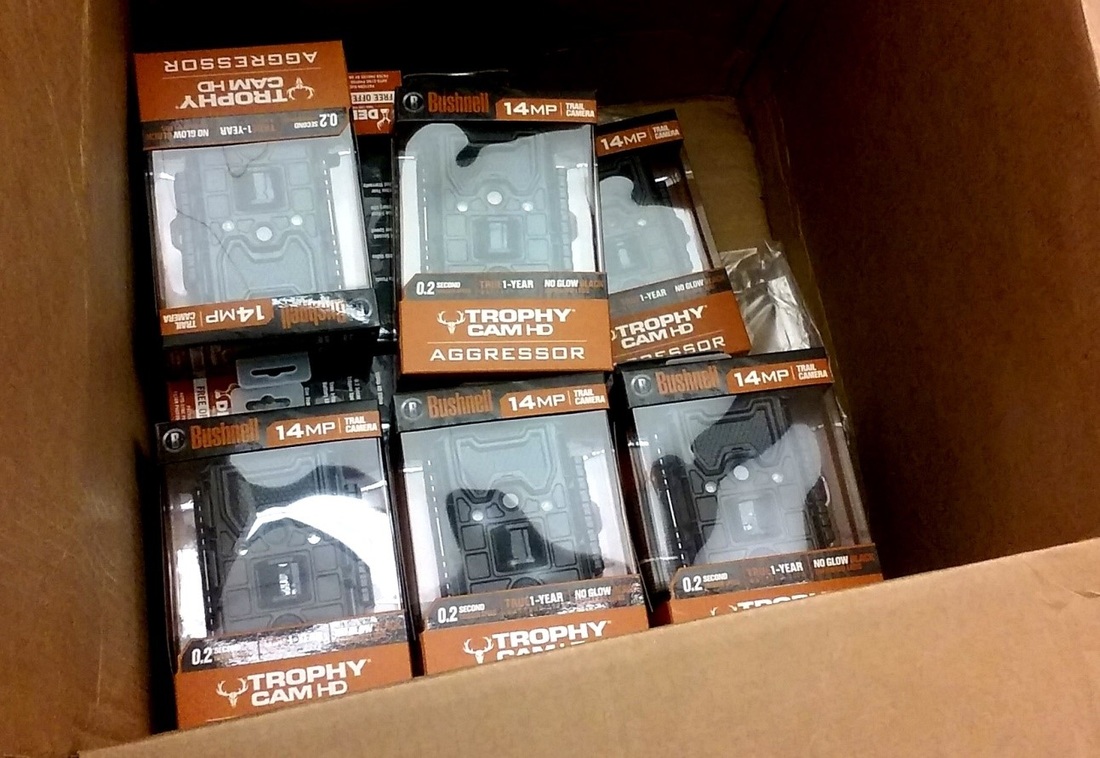
Our camera-traps ready to head to the field.
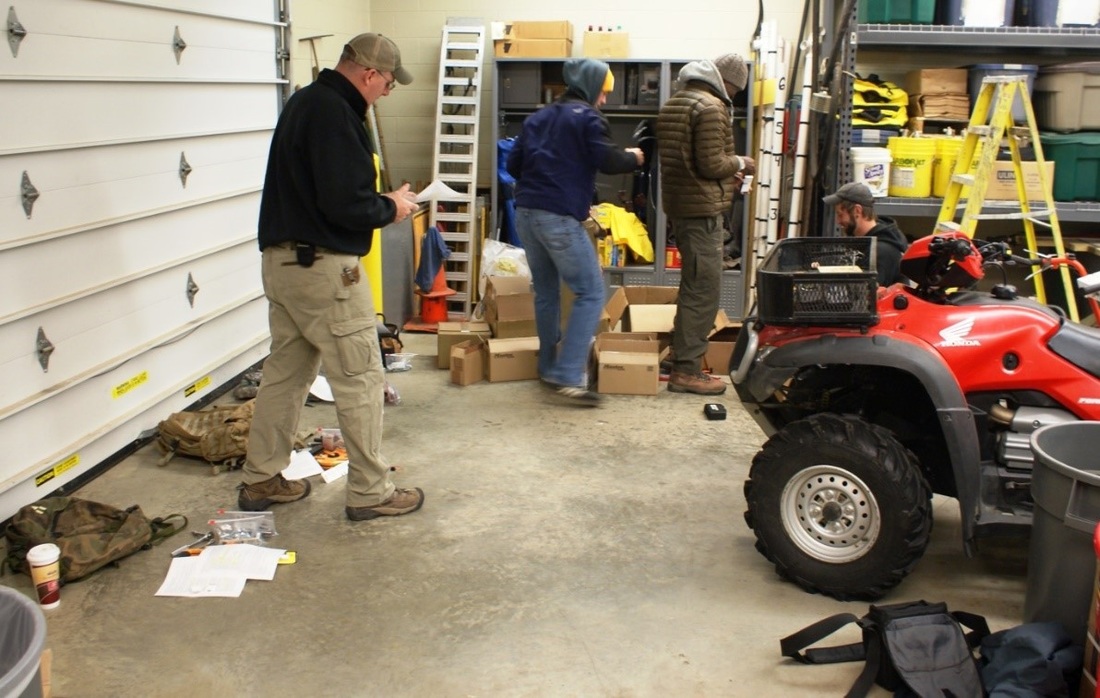
Some members of our awesome research crew. L-R: Cleveland Metroparks Wildlife Ecologist Jon Cepek, RECaP graduate students Kyle Redilla and Tutilo Mudumba, and Metroparks Field Technician Ben Piazza.
We head out. The next few hours are a blur of excitement. Cameras out of the box. Settings checked and re-checked (there are lots of them: time, date, shutter speed, flash intensity, megapixels, GPS coordinates). Cameras and SD storage cards labeled. Notes taken. Gear into backpacks. In and out of the truck. Navigating to research sites. Troubleshooting unanticipated situations (we have to climb up
that
?). Sites found. More checking. More notes taken. Finally, at each site, once we become satisfied with our work we leave our trusty camera-trap to keep watch over nature in our absence: sentinels out in the urban wild that will give us a glimpse into what that coyote is doing, where she is going and why she might be going there.
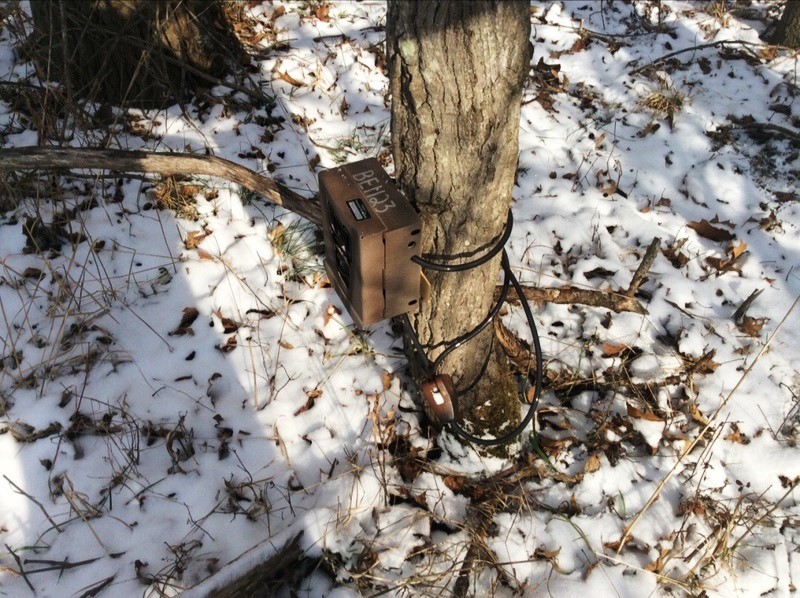
Finished product: this is “BE123”, a camera-trap established in the Bedford Reservation all ready to record the secret lives of urban carnivores.
So what
does
our camera-trap have to say about that beautiful coyote with dark eyes at the top of this blog post? What was she up to? It seems she was looking for dinner. On this occasion, our camera-trap network reveals her success. Tonight she will dine on a squirrel that she carries in her mouth, abating her hunger for at least one more winter night. Perhaps she will take it back to a den, eat it alone under a starry sky. Perhaps she will gobble it down while on the move, looking for a mate in this January breeding season. We will likely never be able to peel back all the layers of nature or know the full stories of these wonderful urban creatures. But, what a view we can get! We peer into the window of their world through the lens of our camera-traps. Some questions we answer, and a multitude of others emerge. With modern science, we will stitch together the stories of wildlife using not only camera traps, but the other technological innovations that we possess in RECaP. I, for one, feel privileged to take these glimpses, and I am filled with anticipation to see the other wonders our camera-traps will reveal over the course of this fascinating research project.
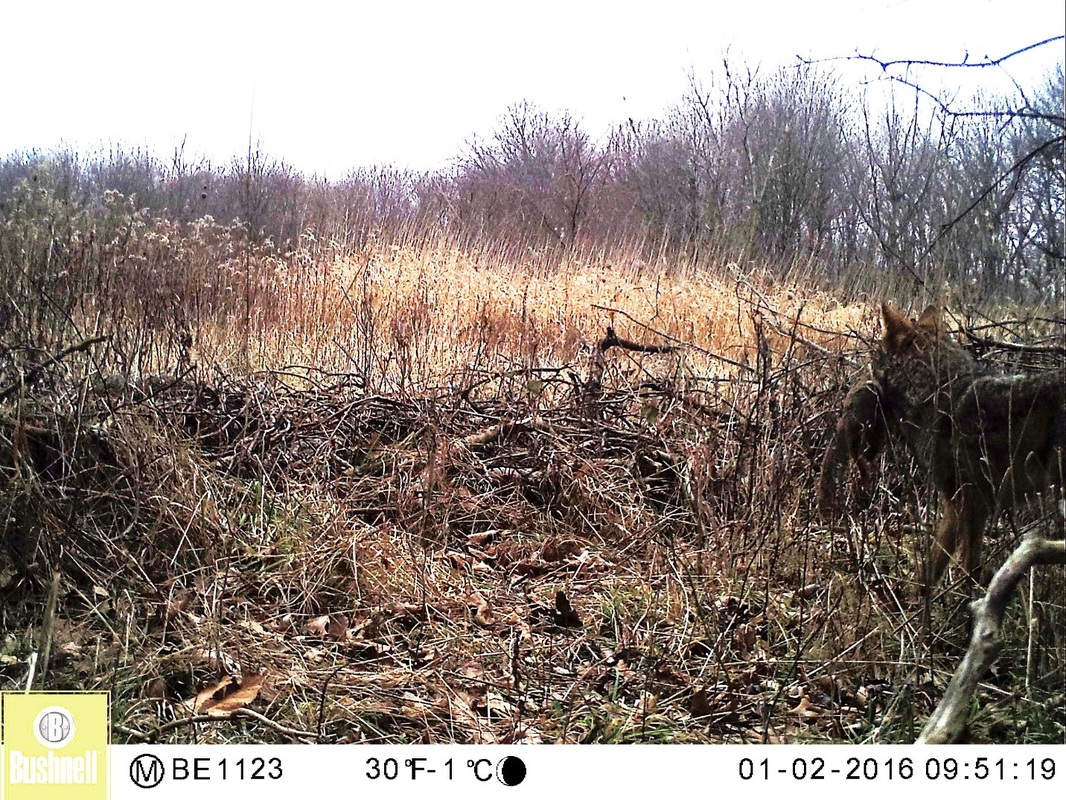
A coyote in the Bedford Reservation in the Cleveland Metroparks passes by our camera-trap with dinner in her mouth.
 RSS Feed