It is 8:00 AM on Christmas morning, and normally around this time I would be rolling out of bed and putting on some coffee. After my dose of liquid energy, I’d begin to help my mother with the preparation of a casserole for dinner or catching up with my sister, who would be teasing me for my lack of culinary skills. However, on Christmas morning 2015, I find myself in a very different environment. Where am I, you may ask? I am in the depths of an immense
flooding
, consisting of an intricate complex of dense marshes, boggy wetlands, and mixed woodlands in central Michigan. The flooding is remote, but it has a winding interconnected (almost) trail system that I have grown accustomed to navigating over the past 6 months. The flooding has been one of the primary locations in which I have been tracking an invasive large mammal. I gaze out into the woods and exhale. My breath crystalizes into a hoary frost. Today is a cold and blustery winter day, typical of Michigan in late December, and there is a fresh dusting of snow on the ground from the previous night. The only warmth being generated is from the engine of the ATV as I sit and wait for my radio to chime in on the 800 frequency. As I wait, perhaps a little impatiently given that it is Christmas day, I think back to a phone call I received earlier that morning.
“ Steven, we have a boar trapped in the flooding. Are you available for collaring? ”
“ …Yeah .” I say “ When and where should we meet? ”
“ East side at around 7:00 AM. Merry Christmas! ”
Without further context, this might seem like an odd and perhaps, random conversation. You see, the reason I am chasing that invasive mammal (the wild boar) around a wetland on Christmas morning is part of a large coordinated effort to document the spatial ecology of a species that we know very little about in the Northern part of the United States. The call came from the lead pig biologist for the Michigan Department of Natural Resources, a close partner and collaborator on this project.
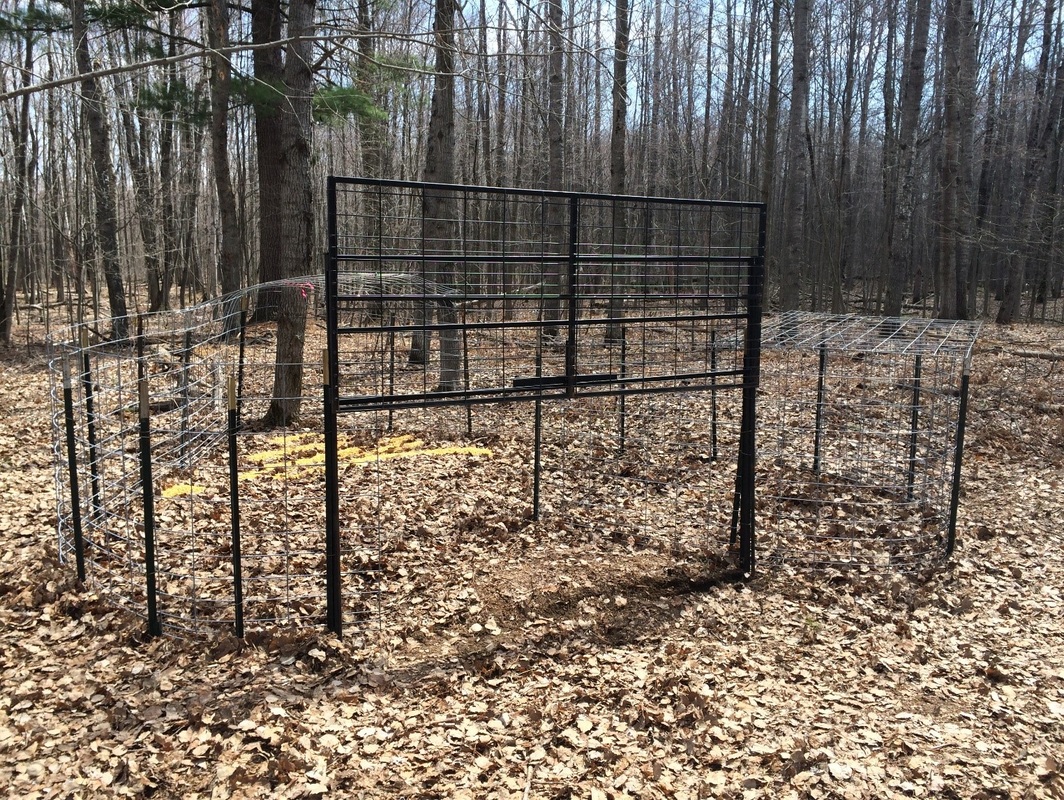
This is a typical corral trap, a method commonly used to capture wild boar.
These boars in Michigan are Eurasian in origin (Eurasian wild boar
Sus scrofa
). They were introduced in Michigan on private game ranches for the purpose of providing a “unique” hunting experience. Inevitably, some animals escaped from these ranches and became feral. In Michigan, these animals retain many of the characteristics you would commonly associate with wild boar: having long legs, thick bristled fur, an elongated snout, and in some cases, sharp curving tusks.
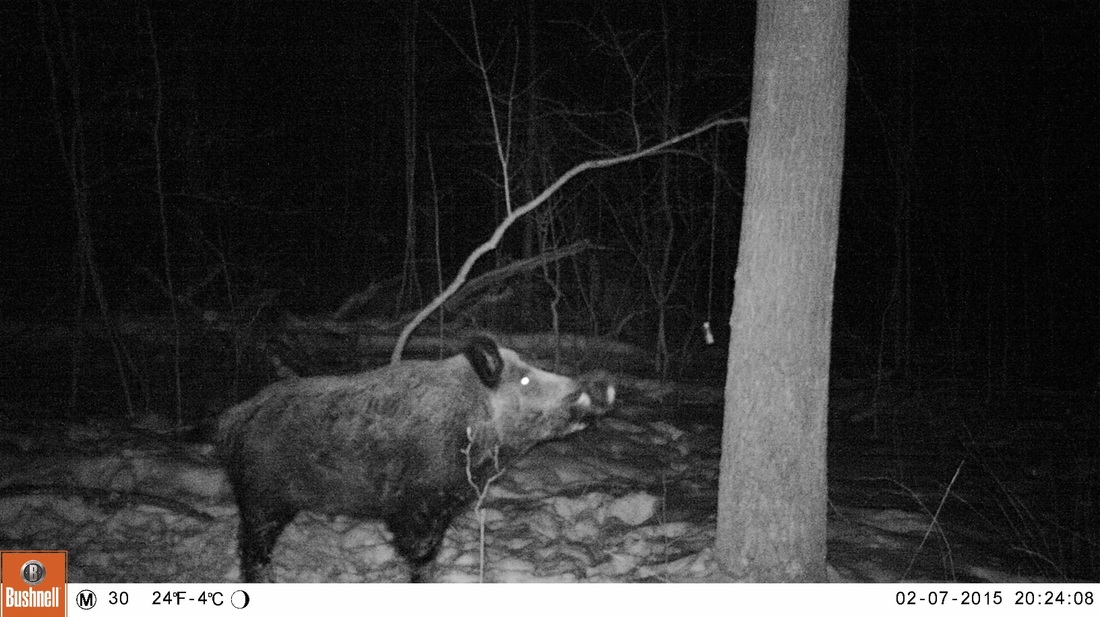
An example of a wild boar in Michigan. These animals have an elongated snout, thick bristled fur, and tusks.
As a member of the Applied Forest and Wildlife Ecology and RECaP (Research on the Ecology of Carnivores and their Prey) laboratories, I am interested in the spatial ecology of prey species. I find it fascinating to study the way in which invasive Eurasian wild boars use the landscapes of Michigan, such as these dense wetlands, to their own advantage. I wonder how they make a living? I wonder how many boars there are in Michigan? And I also wonder about the consequences that this invasive species presents to the Michigan landscape? Swine are voracious consumers, willing to eat almost anything, the veritable sharks of terra firma. Since feral swine are invasive and relatively new (< 15 years) to the Michigan landscape, very little is known about their behavior and movement. The aims of my research are to fill in these knowledge gaps so as to inform future management efforts for this species.
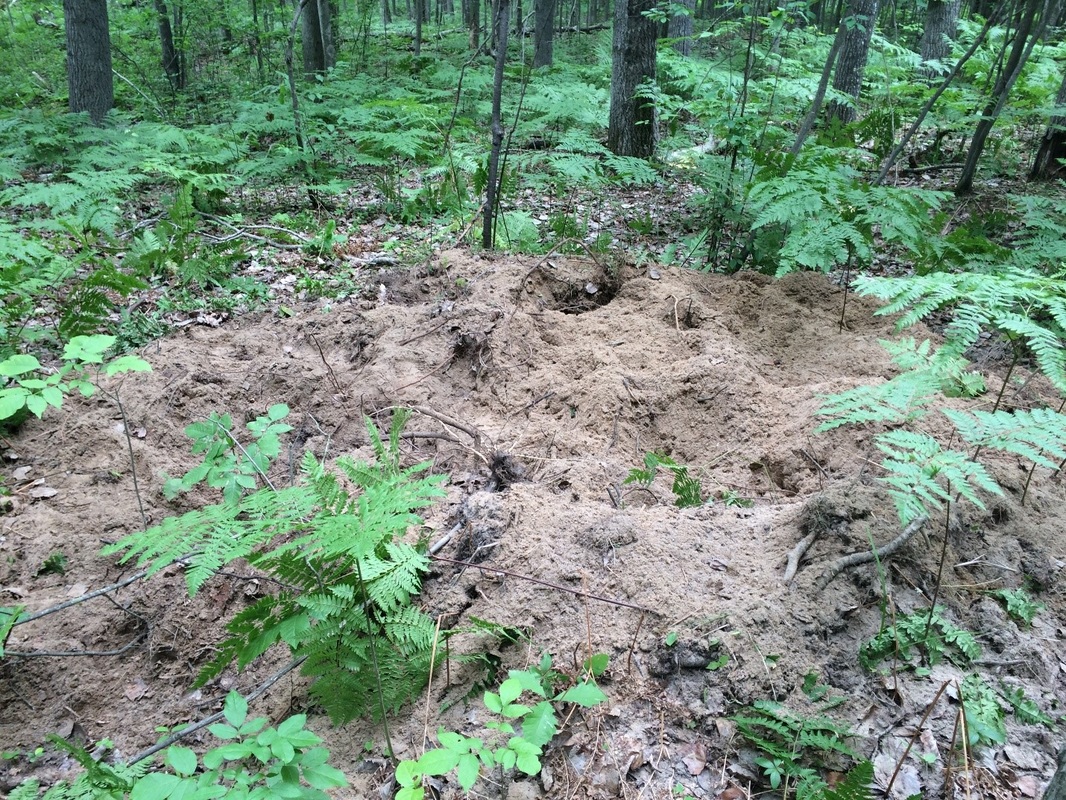
Wild boar have a big appetite and often look underground for food as they root through the soil. This is a site where I discovered damage to the environment attributable to wild boars. This picture represents but one instance in a series of rooted areas covering a ridgeline in central Michigan.
Back to the ATV where I sit huddled for warmth contemplating the events leading up to this moment. The radio crackles on again:
“ Pack things up Steve, the boar got out of the corral trap. It jumped over the top of the fence .” My DNR contact said with disappointment.
I drop my head in dismay. This exact event, a boar getting out of a trap, has become so typical on this research project. In just 6 months we have had boars escaping our efforts to capture them in almost every way imaginable. The one underlying take-home message is that Eurasian boar, even those that are on holiday in Michigan, are extremely clever.
I pack up my things and slowly begin my long, cold, and lonely ride through mud and thickets to reach the field truck. We pack up our things and begin our drive home from one of several disappointing excursions we’ve experienced during this project. Why are boar so challenging to catch? For one, they are extremely intelligent. They are also nocturnal and tend to avoid areas of high human activity ─ not to mention their superior sense of smell. These attributes make wild boar a relatively cryptic species and lead to many difficulties when conducting research that relies on capturing and attaching GPS collars to individual animals.
As we bump along the frozen potholed roads my mind turns to home, to dinner, and to Mom’s pumpkin pie.
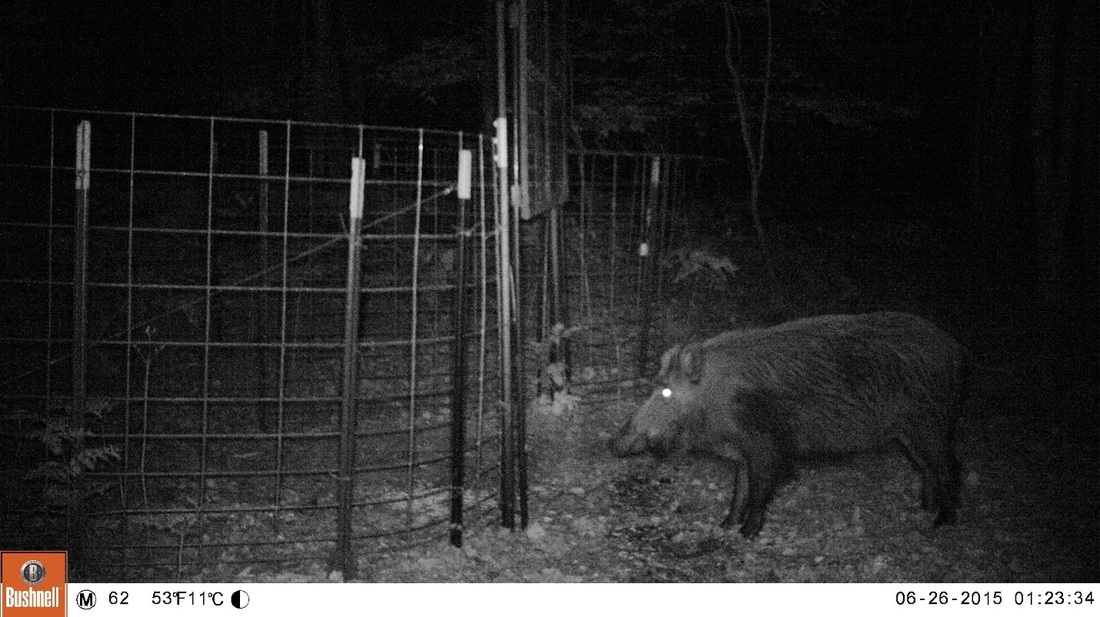
Wild boar are very intelligent, making them difficult to catch. This animal entered the corral trap but refused to go beyond the trip wire – the mechanism that drops the door to the trap. How could she possibly have known where the trip wire was?
Despite the frustration and heartbreak felt in the flooding that morning, the night of January 11th tells a different story. The one common denominator was that each story begins with a call. This time I was told that multiple boars were captured in two separate traps. Excitement! Finally, the break that I have been waiting for. If there are numerous animals then maybe we could fit GPS collars on 3 or 4, hell maybe even 5 of them. This would be a tremendous increase to our sample size. I scrambled to get ready, packed up the field vehicle, and got on the road. A mile away from the corral traps I met up with my colleagues and we all chatted excitedly about the large number of animals that may be in the traps. We were mobilized and ready. The darting crew, those individuals tasked with anesthetizing the animals for collaring, were already on the move and we were awaiting word from them. Thoughts began to race through my head, reminding me of the numerous close calls and near misses that we have had throughout this project. I could feel a knot starting to form in the pit of my stomach and every passing minute without contact from the darting crew was injecting doubt into my mind.
There is going to be nothing there
, my mind told me. Though the trip wire had been activated, the boars would have found some way out, just like the last few times.
My misgivings were not supported. In the first trap we found a total of 5 boars of which we were able to fit GPS collars on 2 of the larger individuals. Several hours later I’m driving an ATV across an expansive field; I’m squinting hard, and the bitter wind and heavy snow are so biting that my eyes well with tears. I am exhausted from the frenzied activity of monitoring and collaring multiple boars in the first corral trap, however, we have one more animal in a trap several miles away. I arrive at the trap and assist in collaring and drawing blood from a young female boar. We attach a GPS collar and harness that fits behind the front legs and around the torso of the animal. The harness is necessary since wild boars lack a distinct neck, and could easily slip a collar if it were not anchored by the harness. Before we pack up, I record the VHF frequency of the collar to help us locate the animal in the future using telemetry equipment.
My misgivings were not supported. In the first trap we found a total of 5 boars of which we were able to fit GPS collars on 2 of the larger individuals. Several hours later I’m driving an ATV across an expansive field; I’m squinting hard, and the bitter wind and heavy snow are so biting that my eyes well with tears. I am exhausted from the frenzied activity of monitoring and collaring multiple boars in the first corral trap, however, we have one more animal in a trap several miles away. I arrive at the trap and assist in collaring and drawing blood from a young female boar. We attach a GPS collar and harness that fits behind the front legs and around the torso of the animal. The harness is necessary since wild boars lack a distinct neck, and could easily slip a collar if it were not anchored by the harness. Before we pack up, I record the VHF frequency of the collar to help us locate the animal in the future using telemetry equipment.
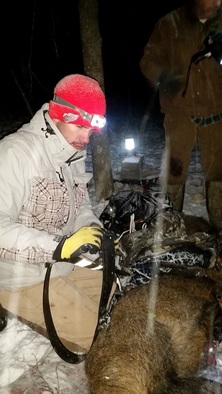
Myself trying to figure out the collar sizing for an anesthetized female. It was a cold night making it difficult to work quickly and efficiently.
After a well-deserved nights rest, I wake up the next morning, sit down at my desk and turn on my computer. I pull up a map that displays a satellite image of the world. The map pans towards Michigan and I select a handful of telemetry ID’s (referring to the collar of each individual animal). As the page updates, I zoom in to find a smattering of yellow and red points (illustrating the most-recent movements of the animals). We have real-time data! This information reveals a portion of the story as to how feral swine are using the Michigan landscape. I will be able to create utilization distributions, which will allow me to identify areas where a boar spends most of its time. I can build models by which I can assess the ways in which individual boars exploit resources and identify the corridors they use for travel. All of this information will help us develop effective techniques for managing this invasive species, and in the end, protect Michigan’s native flora and fauna. As the data accumulates, my excitement continues to grow.
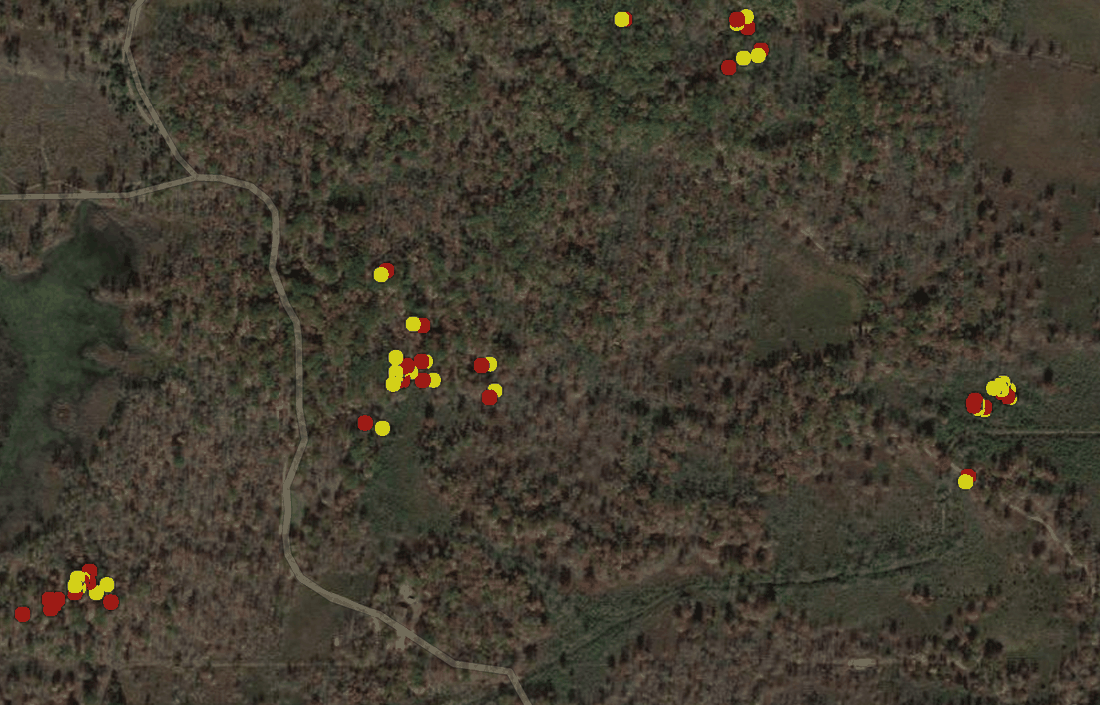
The view from my office chair. These are the GPS locations for two female boars that spend a lot of time together. This is the pay-off for all of our hard work.
Although I am encouraged about the data we are collecting, we still need to capture additional animals to strengthen our analyses and conclusions from this research. In addition, we need to find an animal that we captured last summer that has a malfunctioning collar. We have received photographs of her but are yet to pin down a location ─ the search for the missing boar is about to begin. Since these animals have managed to out maneuver us in every phase so far, we are considering a new method. We will be taking to the skies…
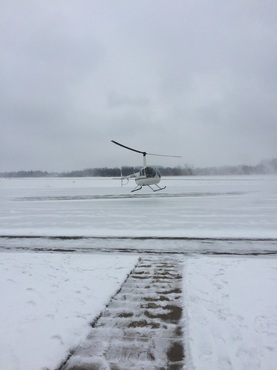
The helicopter that could prove to be the secret weapon in locating our wild boar with the malfunctioning collar.
 RSS Feed