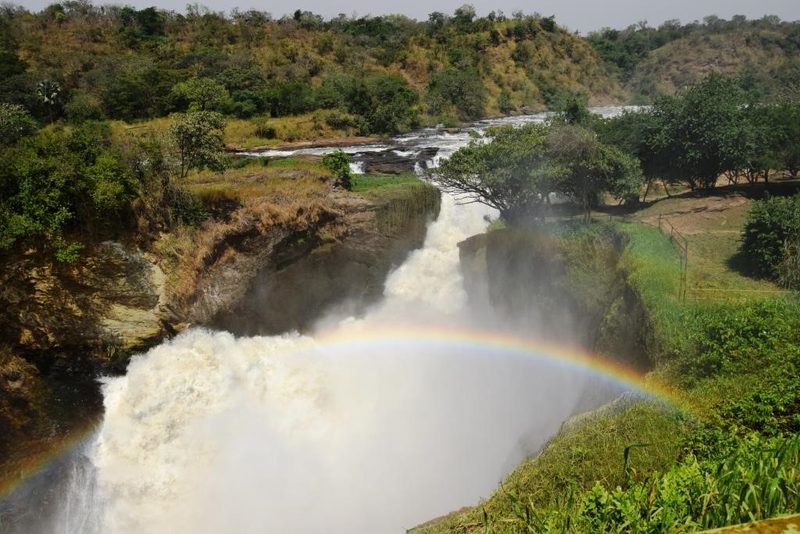
When visiting Murchison Falls National Park (MFNP), you can’t help but be swept away by the park’s vastness, its beauty, and its wildness. While conceptualizing such things it is logical that we look at it through our own perspective (through a human-eye viewpoint), appreciating this wildness from the protection of a large safari truck with conveniences including water and snacks as well as advanced-sensing equipment in the form of a Canon camera or a pair of Nikon binoculars. But what is more interesting to me is to examine this very same landscape through the eyes of a non-human animal. What would my experience be like if, for instance, I was a lion? What would I feel when roaming the lands of MFNP? How would I use my senses of smell, of touch, and of sight to full advantage? How would I decide where I wanted to go, where I wanted to hunt, where I wanted to satisfy the yearnings of my own genetic code? These are the questions that interest me as a scientist and those that my laboratory (RECaP) engages, as we use scientific research as a vehicle for generating conservation solutions.
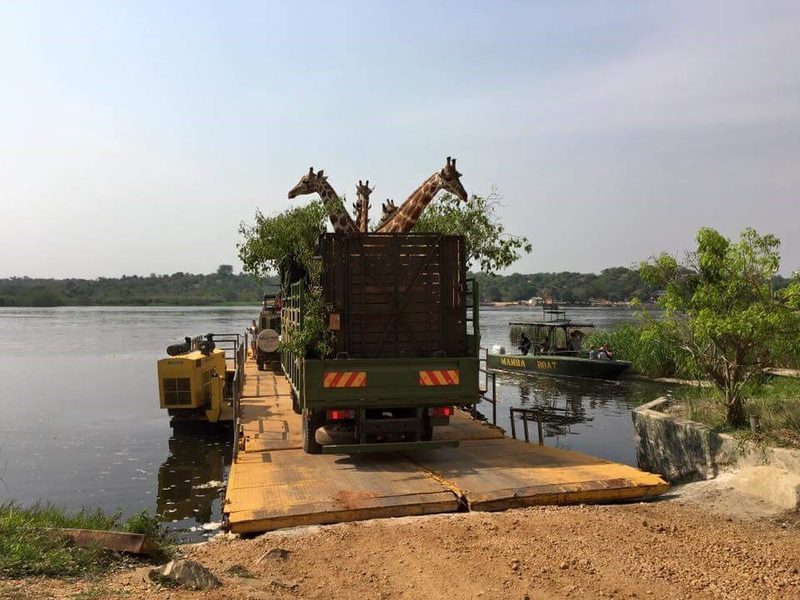
The beauty and vastness of MFNP is something to behold.
Embodying the perspective of the study species is relatively counter-cultural in the sciences. Standard wildlife scientific training tends to extinguish student inquiry into individual animal perceptions (that can be left to animal behaviorists). The tendency is to teach at the level of the population rather than the level of the individual. Why is that? There are a multitude of reasons, but a predominant one is that it is far easier to make hard decisions about individual animals if it done for the greater good of the population. We kill animals of an invasive species so that we preserve populations of native species. We cull individual animals so that the population can hit our predetermined abundance targets. We put GPS collars on a sub-sample of animals, and it must be greatly annoying if not compromising to wear a collar around one’s neck, so that we can understand how the population might respond to certain factors. If these actions are done for the greater good, then we as scientists can justify the sacrifices that we make individual animals endure and perhaps, sleep a bit better at night. In RECaP, we believe that you cannot conduct applied conservation work without considering the ethical and moral dimensions of the individual within this individual animal versus population-level paradigm. We believe that inquiry into the behavior and experience of individual animals is precisely how we gain insight into the requirements of the population. In this way, envisioning how an individual animal elects to live its life is immensely valuable.
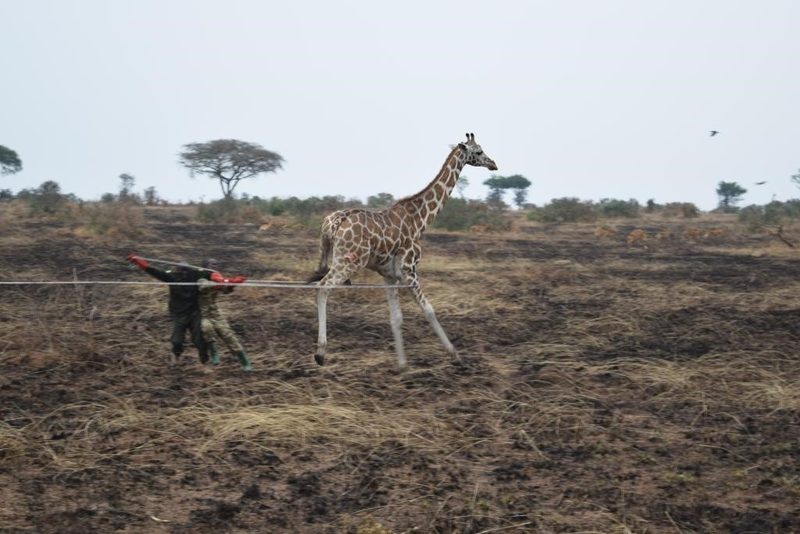
Tutilo and I working our way through the Delta Pride range in the RECaP LandCruiser.
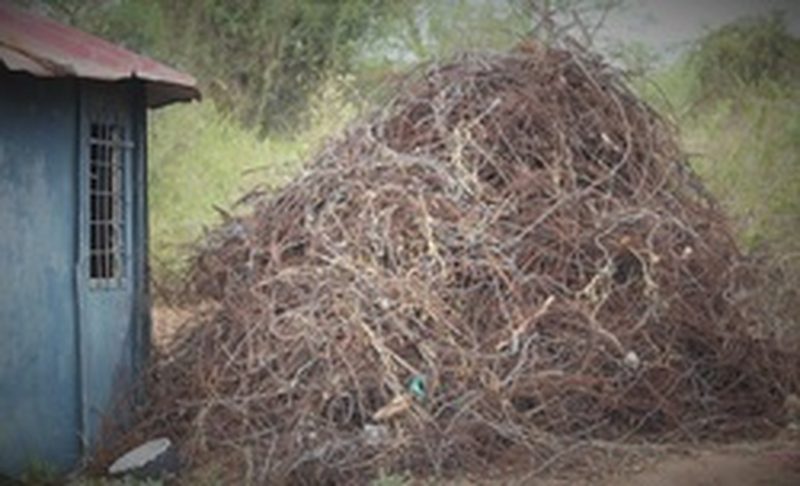
On this particular day, Tutilo and I are making our way through the territory of the Delta Pride of lions driving in the RECaP Toyota LandCruiser. With the African sun high overhead repainting the scene in sepia tones, my mind ruminates on one fundamental question. What must it be like for a lion to roam a landscape littered with wire snares? Wire snares are illegal wildlife traps built from the innards of disused vehicle tires. The structural integrity of certain tires is maintained by an inner skeleton of wire cables. These cables are braids of thin metal weaved together for strength and durability. Used tires are readily available as they accumulate in rubbish piles and garbage dumps where they remain largely forgotten along the roadsides of this world. But in the areas surrounding MFNP, these tires support poaching. The wires within the tires cannot be easily accessed. Cutting them out would be a laborious and impractical method. Instead, tires, which are part petroleum, burn easily producing a noxious black smoke. Eventually the tires smolder down to ash revealing the metal cables within. Men, and poaching is invariably an almost-exclusively male pursuit, gather as many wires as they can muster, load them into small wooden canoes, and paddle up the River Nile. Into MFNP they row searching for a location to make landfall while navigating waters that are both croc and hippo-infested. If the boat is tipped, the men will perish in the water. Those men that make it to land can be subsequently trampled by elephants or buffalo or attacked by a startled lion, leopard, or hyena. Even if the wildlife are not a problem, the men will have to contend with the Uganda Wildlife Authority (UWA). You see, these lands are very-capably patrolled by UWA rangers. Clearly, the risks associated with poaching are numerous.
The disused tires (left) and the internal wires (right) that can be harvested for snaring.
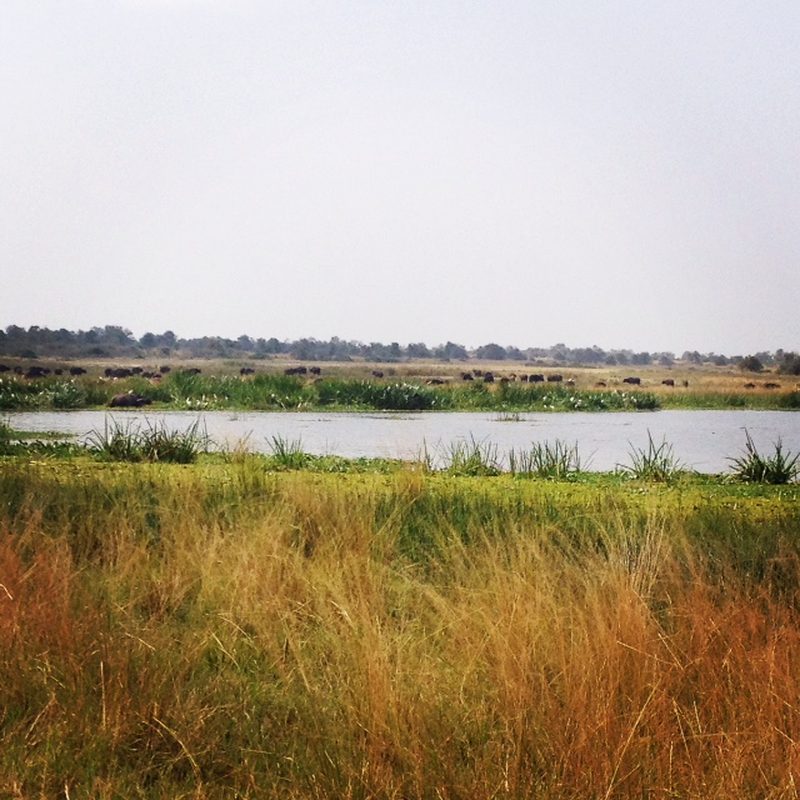
Given these risks, why would anyone choose to engage in this pursuit? The decision to snare wildlife is one that is born out of an inherent tension. Citizens of the villages surrounding MFNP need protein which, in its domestic form, is both difficult to manage (how can you acquire land, cattle, and husbandry know-how from scratch) and expensive to acquire (prices can be out of reach for many people in these villages). While domestic animal protein is controlled by others (cattle owners and market sellers), wild animal protein is abundant as seen from peoples’ backyards directly across the Nile within the boundaries of a protected area with seemingly porous boundaries. Poaching can appear to be rewarding when options are limited and your family needs to be provided for. And so, the tension that exists within the need to find animal protein informs poaching. So now we appreciate, at least partially, the human condition associated with poaching in this landscape. Given the risks, one might ask why poachers would not instead hunt with a firearm. Wouldn’t that be easier? Yes, of course it would. But I would counter with the question; where could someone in these villages find a rifle or the ammunition necessary to use it? The reason why snares are the common technique used to poach in this region is because the materials necessary to participate are freely available.
Part of the tension that exists within poaching involves the relative abundance of wild protein that can be seen from the villages bordering the national park.
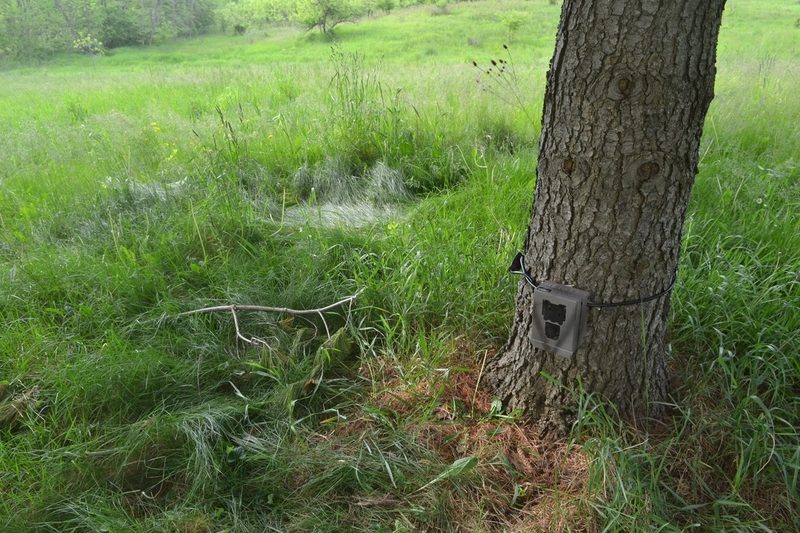
Once these men reach land they quickly locate a game trail, areas that wildlife use as super highways through the bush. They search for a sturdy tree to act as an anchor. They tie snares around the trunk laying the lassos of the wire along the game trails, concealed with vegetation. They repeat this process so that each tree might have as many as 10 or 20 snares, each diverging in a tangent off of the main tree trunk, like spokes off the hub of a wheel. There the snares sit, waiting to trap the leg of an unsuspecting animal that walks past. In this way, snares are indiscriminant killers. They are just as likely to capture a lion as they are a hartebeest. When the traps are set, the men wait. How can they remember where they put these traps, I wonder? It is not as if they are marking waypoints into a hand-held GPS unit. Undoubtedly, the locations of numerous snares can never be recalled and litter the MFNP landscape. Snares are landmines for wildlife with consequences that explode the moment that they are stepped on.
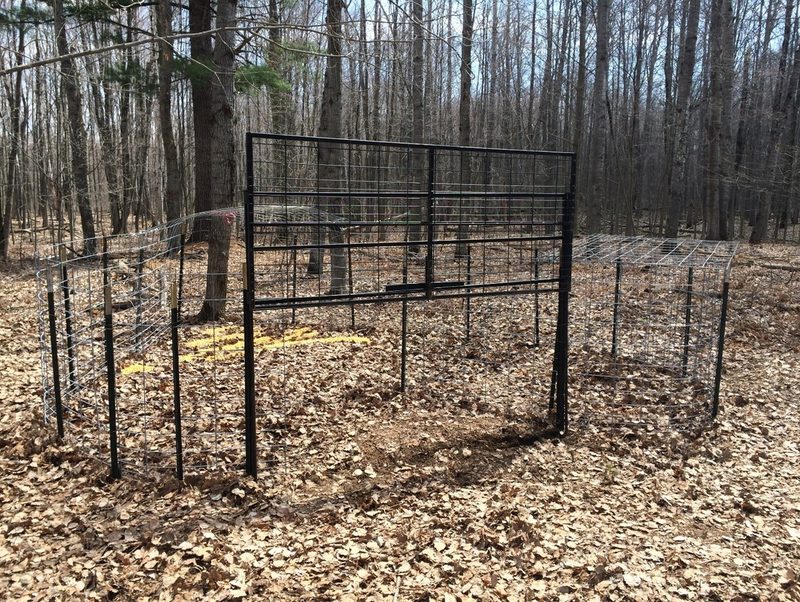
This wire snare caught the paw of a lion. These wire snares are landmines for lions.
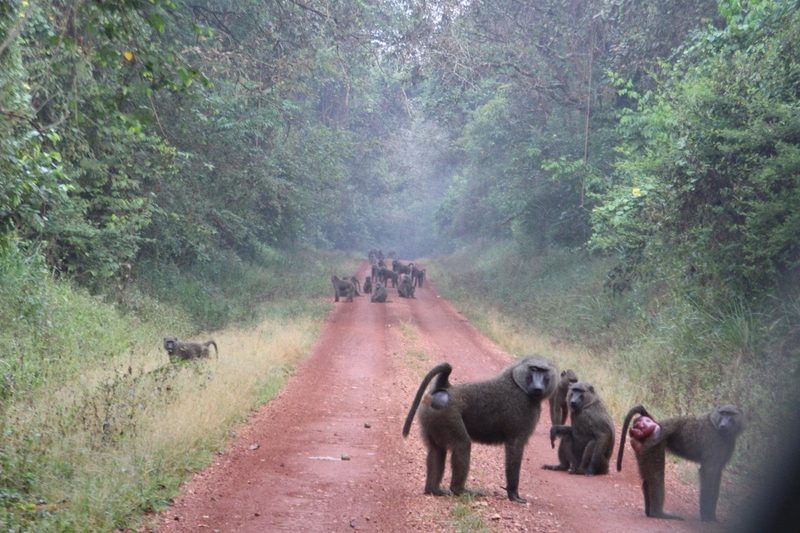
Back to the LandCruiser with Tutilo driving along the bumpy roads of MFNP and the mid-day sun encouraging an afternoon pumzika (Swahili word for ‘rest’). In a half-slumbering state I drift into a vivid day dream. In this day dream I am a Murchison lion. I am a young male who, perhaps earlier than I should have, challenged an older male and achieved alpha male status. This ascendance occurred just under 8 months ago. I am still trying to get comfortable as the commander of my pride, but I have several highly-supportive female lions and a litter of cubs of my very own. The cubs wake me early every morning desiring to play while the ambient temperature is still cool. This early in the morning I find the cubs to be simultaneously annoying and impossibly adorable. I engage with them, let them climb atop me, and then bowl them over and watch them tumble about in the dust of this dry earth. I yawn deeply and they clamber to grab my exposed tongue with their paws. They are cute, they are clever, they are mine. Without me these cubs wouldn’t stand a chance. Another male would take my place as alpha and instantly kill all pride cubs so as to return the females to estrus as soon as possible. Returning females to sexual-receptivity by killing young (infanticide) is one of the cruelest aspects of the natural world. In this way, I bear the weight of the cubs’ fate upon my shoulders. I must defend my territory, my family, and my cubs from rival males.
 The cubs successfully waking up Mummy.
A twig snaps and the cubs’ eyes shoot leftward. They realize that their mother is now rising and they scramble off to greet her, falling over each other along the way. I look across my territory to see the rising sun just clipping the horizon. The day is about to begin again. With another great yawn I elect to get up and mark my territory with the contents of my bladder. Off to my right is a tall acacia tree with a high trunk that is only obscured at the bottom by some grasses and scrubby woodland thicket. This will be a suitable signpost, reinforcing my dominance in these lands. I walk in that direction still half asleep. Another yawn and I gaze around proud of what I have accomplished. The cubs have found their mother and are harassing her just as they did to me only a few minutes ago. I can hear them squabbling over access to her affection. Five more strides to the tree now. Four, three, two… With that final step I feel something strangely cold against my leg, as if I have just stepped into the Nile. The feeling frightens me and I sprint away wishing to be free of this sensation. I get just 3 meters from the tree when the full power of my dash is shockingly halted. My body jerks to a stop with such force that my forearms and face slam down into the dirt. I can feel my rear left leg pulled sharply at a horribly-odd angle behind me. At that moment my body convulses with exquisite pain radiating from just below my left knee. Looking back to my leg I see a metal wire constricting itself around my leg slicing into my fur, slicing into my skin, my muscle, and my bone. I see the wire’s end, glinting in the light of the rising sun, attached to the acacia tree.
If the wire snare kills an alpha male lion his cubs will die when the next male takes over the Delta Pride.
With dread in my gut I realize that I am caught. My mind immediately turns to my cubs. Looking back at the 20 meters from which I have come, all excitement is gone in my cubs’ movements. They are now cowering beneath their mother’s legs, with shocked expressions on their faces. I can’t stand this. To be imprisoned against my will without committing an offense is unjust. I will not tolerate it. Intent to rip the tree from its foundation, if that is what it takes, I pull against the wire with all my might. I thrash about, running in a circle around the tree, trying to find a weakness in the wire, and trampling the undergrowth in the process. To my horror the tree does not budge and the pain only intensifies. I am in agony. I pass out momentarily due to the pain and awake with a lioness licking my face in an effort to revive me. I look into her eyes resigned to my fate. I know now that I will die in this snare. I can see my cubs hiding just over the hill with the other members of my pride. With me gone, the cubs will follow not long thereafter. The sobering reality is that a rival male will take my spot as the leader of the pride and the collateral damage of this one snare will reveal its true brutality when my offspring are killed as well. I am drifting in and out of consciousness. My last sensations are the sound of car engines and the sight of my pride fleeing over the hill, the females traveling swiftly into the cover of the dense thicket each of them with a cub in their mouth…
Uganda Wildlife Authority vehicles arriving.
|
The pride members fleeing the vehicles.
|
Tutilo hits a pot hole and my temple connects with the crossbar of our LandCruiser. I am affected by the clarity, detail, and dreadfulness of my dream. Tutilo looks at me knowing that I am not right, “Yukosawa boss?” (‘are you ok?’). I answer yes, though I am, of course, lying through my teeth. I am not ok. In fact, I am far from it. Once you engage with the cruel reality that is the life of a lion living in snaring country, you cannot shake it. You see, this dream is not an apparition. It is the story of Butcherman, the young alpha male of the Delta pride in MFNP who was caught in a wire snare losing his left hind leg at the knee. The pothole made my dream incomplete. The full story involves Tutilo and UWA rangers in the seats of those vehicles arriving on site and finding Butcherman in a beleaguered state with a circular dirt track, created by his ferocious efforts to free himself, surrounding the tree where he was ensnared. The full story finds Tutilo being sprayed with Butcherman’s dark necrotic blood as the UWA vets conducted a field amputation of Butcherman’s lower leg. The full story includes Butcherman’s miraculous recovery, details his ability to relocate his pride, where the females helped him to regain his alpha male position, as he protected his cubs from infanticide for an unprecedented three years until he was toppled in December, 2015. The way in which Butcherman ruled for three years with just three legs is something of mythology. Butcherman is a lion of legend and Tutilo and I are devastated to think that this legend might be over.
The field amputation of Butcherman's lower left leg by the Uganda Wildlife Authority with assistance from Tutilo.
We have failed to locate Butcherman on this trip. No one knows what has become of him and the trail has gone cold. His distinct three-legged tracks in the MFNP dirt seem to have vanished. Butcherman’s story underscores the severity of snaring in this landscape where victims are not just the lions that get caught, but their offspring as well. Is this why the population of lions in MFNP is smaller (~150 animals north of the Nile) than it ought to be given the area and the abundance of available prey. That remains to be quantified scientifically (the cornerstone of our work currently). Though we won’t concede this fact and give up the search, Butcherman may very well be lost. But Brenda, an old female lion with a dark scar encircling her neck, is still here. Raphael, an alpha male missing four toes on his left hind leg, is still here. And Pamela, a female lion missing her right forelimb, is still here. Despite Butcherman’s absence, snaring damage continues to be apparent in this landscape.
Scenes of maimed lions living compromised lifestyles because of wire snares are unfortunately common.
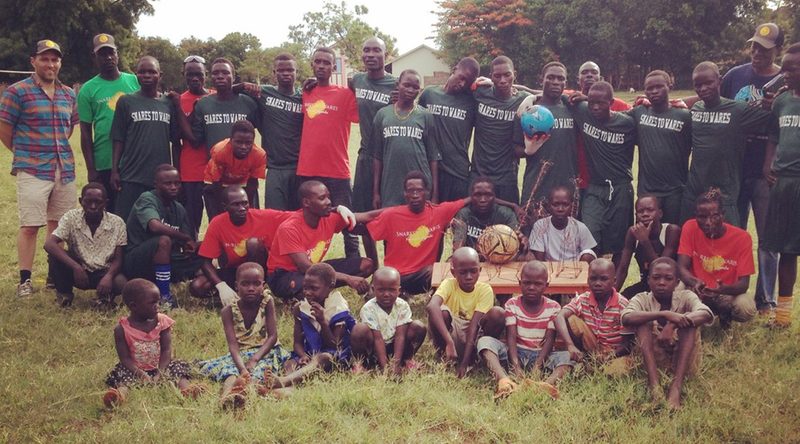
RECaP Laboratory is not only diagnosing when and where snaring tends to occur, it is also working to develop innovative solutions to decrease the amount of snaring in this park. Via our ‘Snares to Wares Initiative’ we are working to empower Lost Boys – those individuals recruited into poaching at an impressionable age – to make an honest living as Crafts Boys in the local village of Pakwach. We develop predictive models that can identify hotspots of snaring in the landscape to prioritize snare removal. Via these activities we have stockpiles of confiscated wire snares. We bring these wires to the Crafts Boys of Pakwach who masterfully convert these agents of destruction into art. The Crafts Boys are working to sculpt the wire into statues of elephants, of giraffes, of leopards, and of lions – some of the species most affected by poaching in the wild – which are sold for profit in the market. This is but one example of the way in which in RECaP we are developing community-based conservation out of a foundation of cutting-edge science.
The Crafts Boys of Pakwach town that convert illegal wire snares into wares for sale in the market.
We are not going to save lions by continuing to suggest that African people must change the way that they live their lives. Conservation of lions is not an issue that only affects people living on the edge of a protected area in Sub-Saharan Africa. No, the conservation of lions is an issue that affects all members of society including those living on the edge of a subdivision in middle-class middle-America. In this way, we must all change the way that we think, the way that we conceptualize a problem, and the way that we act to solve that problem. If you feel motivated to make a difference, we strongly encourage you to be a part of the solution and join RECaP in our Snares to Wares Initiative.
The RECaP team implementing the Snares to Wares initiative in MFNP in collaboration with Uganda Wildlife Authority and the Crafts Boys of Pakwach. From left to right, Sophia, Tutilo, and Bob.
 RSS Feed